

Pull to refresh
Logo
Daily Brief
Following
Why Ranks Sign Up
Trump customs order makes importers certify supply chains and post bonds

Trump customs order makes importers certify supply chains and post bonds

Rule Changes

A June 2026 executive order shifts compliance burden and liability onto anyone bringing goods into the United States

December 30th, 2026: Core importer rules due

Overview

For decades, importing into the United States mostly meant filing forms and paying duties. A new executive order changes the deal. Importers must now certify their supply chains comply with sanctions and anti-smuggling law, disclose who really owns their business, and hold enough U.S. assets to cover what they owe.

Published in the Federal Register on June 10, the order tells Customs and Border Protection to police imports far more aggressively. Companies that cannot prove they are in 'good standing' could lose the right to import. Foreign sellers face the tightest new limits.

Why it matters

Anyone importing goods into the U.S. now faces new certifications, bonds, and personal liability for what's inside their supply chain.

Questions about this story

No questions yet — be the first to ask.

Key Indicators

$3.3T
Annual U.S. goods imports
The flow of trade the new rules cover.
180 days
Deadline for core changes
CBP must stand up asset, bond, and good-standing rules by late December 2026.
50%
Minimum penalty floor
Penalties can be set no lower than half the assessed amount.
90 days
Deadline for penalty and export rules
Revised penalties and foreign export-document rules are due by September 2026.

Voices

Curated perspectives — historical figures and your fellow readers.

Ever wondered what historical figures would say about today's headlines?

Sign up to generate historical perspectives on this story.

Play

Exploring all sides of a story is often best achieved with Play.

Log in to play. Track your picks, climb the leaderboards. Log in Sign Up
Predict 4 ways this could play out. Contrarian picks score more — points lock when the scenario resolves. Log in to play
Higher or Lower Two numbers from this story. Guess which is bigger. 5 rounds to set a streak. Log in to play
Connections Sixteen names from the news. Find the four hidden groups of four. Log in to play

People Involved

Organizations Involved

Timeline

August 2025 December 2026

6 events Latest: December 30th, 2026
Tap a bar to jump to that date
  1. Core importer rules due

    Latest Deadline

    Within 180 days, CBP must set asset, bond, and good-standing requirements for every importer of record.

  2. Penalty and export-document rules due

    Deadline

    Within 90 days, CBP must revise penalties and require foreign export documentation for entries.

  3. Legislative recommendations due

    Deadline

    DHS owes the President proposals for laws to back the new enforcement regime within 45 days.

  4. President signs the customs order

    Executive Action

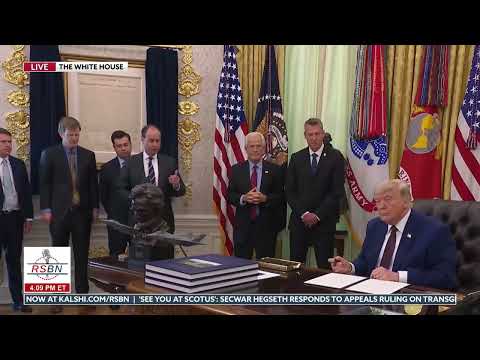
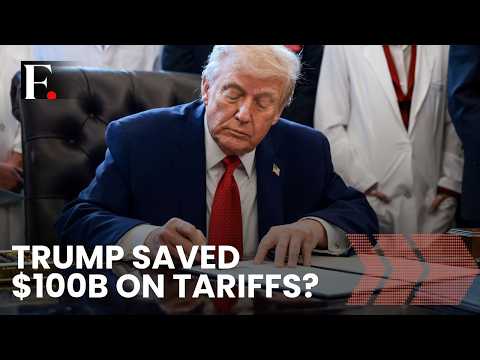
    Trump signs 'Strengthening Customs Enforcement,' directing CBP to remake importer requirements.

  5. De minimis loophole closed

    Policy

    An earlier order ended duty-free treatment for low-value parcels, a precursor to broader import enforcement.

Historical Context

3 moments from history that rhyme with this story — and how they unfolded.

December 1993

Customs Modernization Act (1993)

Congress passed the 'Mod Act' as part of the NAFTA implementing law. It introduced 'informed compliance' and 'reasonable care,' shifting the duty of getting entries right onto importers rather than Customs. Importers became legally responsible for correctly valuing and classifying their own goods.

Then

Importers faced new recordkeeping rules and the threat of penalties for negligent errors.

Now

It set the template for a self-policing import system that the 2026 order now extends further.

Why this matters now

Both moves push compliance work and liability onto importers. The new order builds on the burden the Mod Act first created.

November 2001 to 2002

Customs-Trade Partnership Against Terrorism (2001-2002)

After the September 11 attacks, Customs launched a voluntary program letting companies earn faster clearance by proving their supply chains were secure. Members opened their logistics to inspection in exchange for fewer delays at the border.

Then

Thousands of firms joined to avoid slower processing as security tightened.

Now

It created a two-tier system where vetted 'trusted traders' move faster than everyone else.

Why this matters now

The new order leans on this trusted-trader idea. Validated CTPAT members get smoother paths while others face heavier vetting.

December 2021, effective June 2022

Uyghur Forced Labor Prevention Act (2021-2022)

Congress barred goods made wholly or partly in China's Xinjiang region unless importers could prove no forced labor was used. The law created a 'rebuttable presumption' that placed the burden of proof on the importer to trace its supply chain.

Then

CBP detained billions of dollars in shipments as companies struggled to document origins.

Now

It normalized demanding deep supply-chain traceability from importers as a condition of entry.

Why this matters now

The new order generalizes that demand. It asks importers to certify and document supply chains across many laws, not just forced labor.

Sources

(6)