Pull to refresh
Logo
Daily Brief
Following
Why Ranks Sign Up
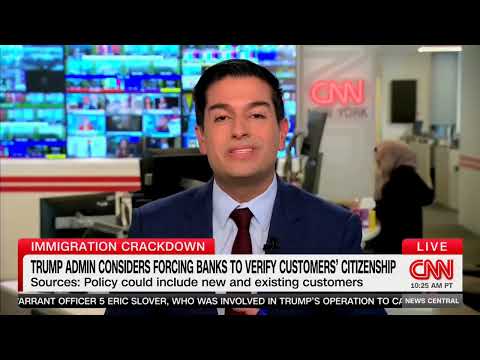
Trump executive order ties bank account access to immigration status

Trump executive order ties bank account access to immigration status

Rule Changes

Treasury directed to make immigration status a Bank Secrecy Act red flag, with first guidance due in 60 days

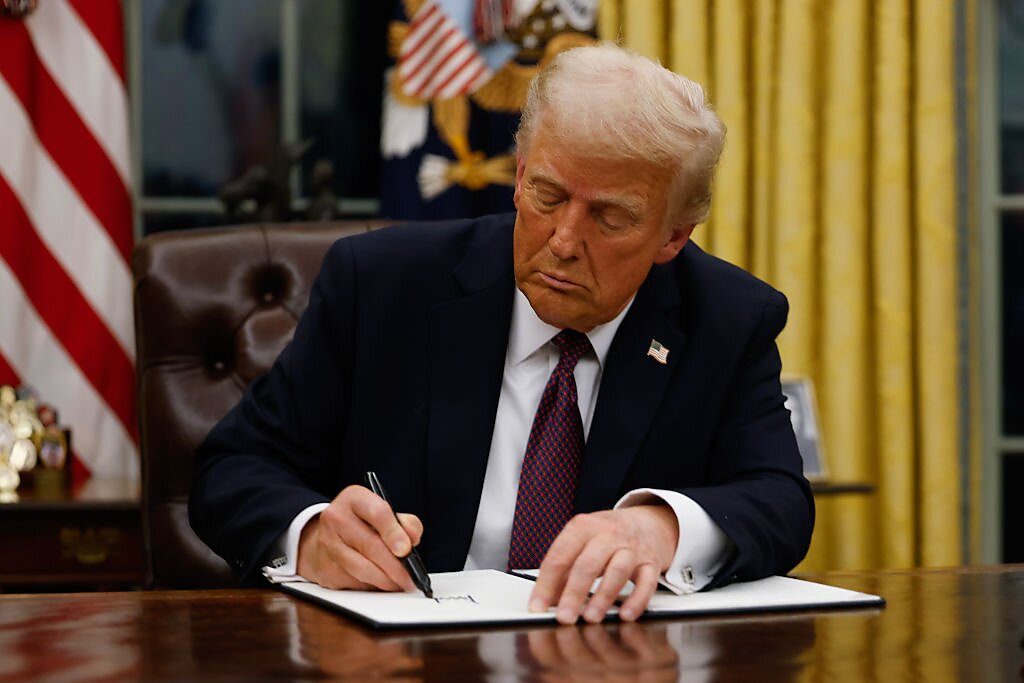
4 days ago: Trump signs 'Restoring Integrity to America's Financial System'

Overview

For 23 years, federal rules let Individual Taxpayer Identification Numbers stand in for Social Security numbers when opening a bank account. A Trump executive order now tells regulators to treat ITIN use as a potential fraud and trafficking red flag, moving the compliance burden onto banks.

The order also directs the Consumer Financial Protection Bureau to revise 'ability-to-repay' lending standards within 60 days so lenders can treat potential deportation as a credit risk. UnidosUS, a Latino civil rights organization, warned that bank-held immigration data gives the government a tool to 'track down and harass people in communities.'

Why it matters

Immigrant workers risk losing both bank accounts and access to credit if lenders adopt deportation as a borrower risk factor.

Key Indicators

60 days
Treasury red-flag guidance deadline
Treasury must publish Bank Secrecy Act red-flag guidance to banks within 60 days of the order.
60 days
CFPB lending rule rewrite
The Consumer Financial Protection Bureau must revise ability-to-repay standards within 60 days so lenders can treat potential deportation as a credit risk factor.
180 days
Customer ID rule proposal
A joint Treasury-regulator proposal to rewrite customer identification rules is due within 180 days.
~5,800
ITIN mortgages outstanding
Urban Institute estimate of U.S. mortgages held by customers using Individual Taxpayer Identification Numbers.
1970
Bank Secrecy Act enacted
The 56-year-old anti-money-laundering law is the legal hook Treasury cites for the new red flags.

Voices

Curated perspectives — historical figures and your fellow readers.

Ever wondered what historical figures would say about today's headlines?

Sign up to generate historical perspectives on this story.

Play

Exploring all sides of a story is often best achieved with Play.

Log in to play. Track your picks, climb the leaderboards. Log in Sign Up
Predict 5 ways this could play out. Contrarian picks score more — points lock when the scenario resolves. Log in to play
Higher or Lower Two numbers from this story. Guess which is bigger. 5 rounds to set a streak. Log in to play
Timeline Five events from this story — drag them oldest to newest. Log in to play
Connections Sixteen names from the news. Find the four hidden groups of four. Log in to play

People Involved

Organizations Involved

Timeline

October 1970 May 2026

6 events Latest: 4 days ago
Tap a bar to jump to that date
  1. Trump signs 'Restoring Integrity to America's Financial System'

    Latest Executive Order

    The order directs Treasury and bank regulators to treat immigration status as a financial risk factor under the Bank Secrecy Act.

  2. Final order drops mandatory citizenship documents

    Report

    Semafor reports the executive order will not force banks to collect citizenship documents from every customer, a win for the banking lobby.

  3. Bessent signals stricter bank-account rules

    Statement

    Treasury Secretary Scott Bessent tells CNBC the administration wants banks to collect more customer data, including citizenship status.

  4. Treasury CIP rule allows ITINs

    Regulation

    Treasury's customer identification program rule under the USA PATRIOT Act permits banks to accept ITINs when opening accounts.

  5. IRS creates Individual Taxpayer Identification Number

    Policy

    ITINs let tax filers without Social Security numbers pay federal income tax. The number quickly becomes an identification document for immigrants.

Historical Context

3 moments from history that rhyme with this story — and how they unfolded.

October 2001

USA PATRIOT Act Section 326 (2001)

Congress passed Section 326 of the USA PATRIOT Act six weeks after September 11. The provision required Treasury to write rules forcing banks to verify the identity of every new customer.

Then

Treasury issued the customer identification program rule in 2003. Banks rebuilt account-opening procedures and added staff to handle document verification.

Now

The 2003 rule has governed bank account-opening for two decades. It also affirmed that banks could accept ITINs for non-citizens, the comfort the new Trump order targets.

Why this matters now

Trump's executive order asks Treasury to rewrite that same 2003 rule. The Patriot Act framework that opened the door to ITIN banking is now being used to close it.

March 2013 - August 2017

Operation Choke Point (2013)

The Obama Justice Department investigated banks doing business with payday lenders, firearms dealers, and other legal-but-disfavored industries. Examiners used informal pressure rather than formal rules to push banks to drop these customers.

Then

Many banks closed accounts for legal businesses rather than face regulatory friction. Republican lawmakers and the targeted industries called the program an end-run around Congress.

Now

DOJ formally ended the operation in 2017. The FDIC settled lawsuits by agreeing to stop issuing 'informal' suggestions to banks about which customers to drop.

Why this matters now

The same mechanism, examiner pressure pushing banks to drop disfavored customers, is what immigrant advocacy groups are warning about now.

July 1996

IRS creates the ITIN (1996)

The IRS created Individual Taxpayer Identification Numbers so that people with U.S. tax obligations but no Social Security number could file returns. The program grew quickly as immigrant workers used ITINs to pay income tax.

Then

ITIN issuance grew steadily through the 2000s. By the mid-2010s, ITIN filers were paying billions of dollars in federal income tax each year.

Now

ITINs became the de facto identification document immigrants without SSNs use to open bank accounts, file taxes, and build credit. Banks accepting ITINs has been settled policy for more than twenty years.

Why this matters now

The Trump order targets the ITIN as a banking risk flag, unwinding the practical accommodation banks have made since the 1990s.

Sources

(11)