

Pull to refresh
Logo
Daily Brief
Following
Why Sign Up
States adopt rules treating customer batteries and solar as grid power plants

States adopt rules treating customer batteries and solar as grid power plants

Rule Changes
By Newzino Staff |

Pew analysis documents distributed-energy shift across twelve states and Puerto Rico as electricity rates climb

Today: Pew releases distributed-energy roadmap

Overview

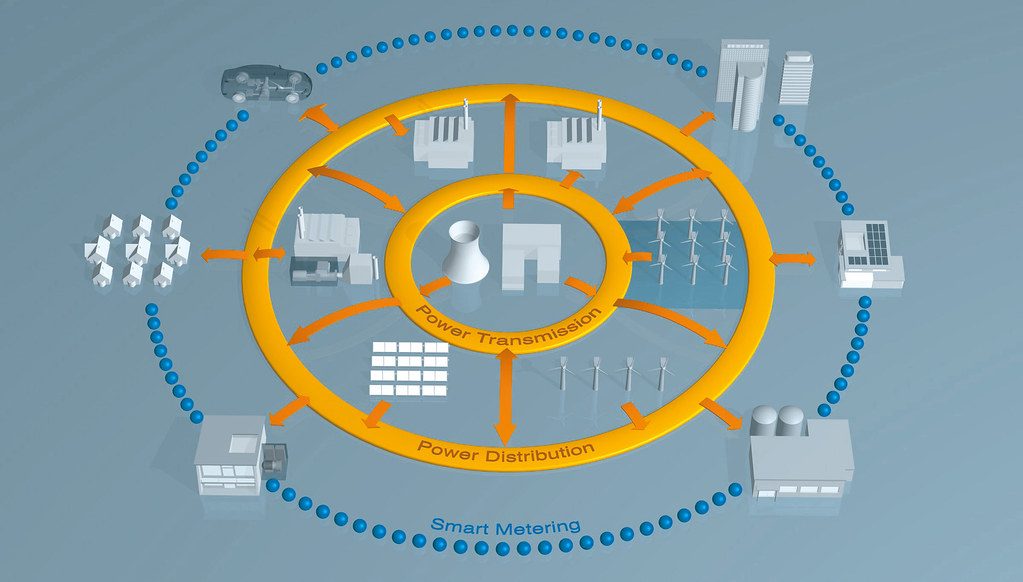
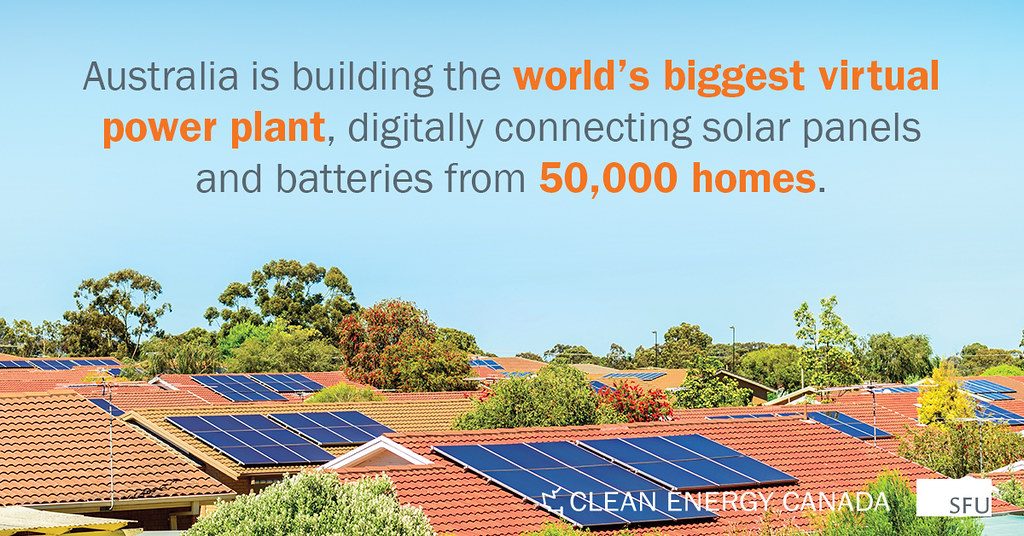
For most of the twentieth century the U.S. power grid moved electricity in one direction: from large central plants to homes and businesses. A Pew Charitable Trusts report released April 28 documents how twelve states and Puerto Rico have now written rules letting aggregated rooftops, batteries, water heaters, and thermostats be dispatched together as a single power plant. The category has a name—virtual power plant, or VPP—and for the first time it is moving from utility pilots into mainstream state regulation.

Why it matters

If states scale virtual power plants on the trajectory federal forecasters expect, customer-owned batteries and solar could absorb roughly a fifth of peak demand by 2030 at half the cost of new gas plants—blunting future rate hikes.

Key Indicators

12+1
States and territories with VPP policies
Twelve U.S. states plus Puerto Rico have enacted rules enabling virtual power plants, per Pew's policy explorer.
6%+
Annual retail rate increase
U.S. retail electricity prices rose more than 6% in the year ending December 2025, with double-digit growth in some regions.
78%
Projected demand growth 2023-2050
Total U.S. electricity demand is forecast to grow 78% by 2050, driven by data centers, factories, and electrification.
217 GW
Projected DER additions 2024-2028
Distributed energy additions over five years equal the total capacity of all U.S. coal-fired power plants.
40-60%
VPP cost vs new generation
Department of Energy estimates VPPs deliver peak capacity at 40% to 60% of the cost of traditional alternatives.
$1.1T
Investor-owned utility grid spend 2025-2029
Planned five-year capital spending by U.S. investor-owned utilities on grid upgrades.

Interactive

Exploring all sides of a story is often best achieved with Play.

Ever wondered what historical figures would say about today's headlines?

Sign up to generate historical perspectives on this story.

Sign Up

Debate Arena

Two rounds, two personas, one winner. You set the crossfire.

People Involved

Organizations Involved

Timeline

  1. Pew releases distributed-energy roadmap

    Report

    Pew publishes its distributed-energy report documenting twelve states plus Puerto Rico with VPP policies and issuing six recommendations to state regulators.

  2. Pew launches DER State Policy Explorer

    Tool Launch

    Pew and NCCETC release an interactive database of more than 400 distributed-energy laws enacted in 2021-2025, organized for use by state regulators.

  3. Retail electricity rates jump 6%+ year-over-year

    Market Data

    U.S. average retail electric rates show more than 6% growth over the prior twelve months, with some regions in double digits, intensifying pressure on regulators.

  4. Puerto Rico VPP prevents blackout

    Operational Event

    CBES batteries discharge 48 megawatts simultaneously during a summer demand peak, averting a rolling blackout on the island.

  5. Colorado sets VPP capacity target

    Legislation

    Colorado S.B. 24-218 establishes a virtual power plant target of approximately 125 megawatts by 2031 and aligns utility planning with DER deployment.

  6. Puerto Rico launches battery sharing program

    Program Launch

    LUMA Energy launches the Customer Battery Energy Sharing program, enabling aggregation of residential solar-plus-storage systems for grid services.

  7. DOE publishes VPP 'Liftoff' analysis

    Federal Analysis

    Department of Energy report estimates VPPs could meet 10% to 20% of national peak demand by 2030 at 40% to 60% the cost of new generation and transmission.

  8. Virginia mandates 450 MW VPP pilot

    Legislation

    Virginia H.B. 2346 directs the state utility to pilot a virtual power plant program of up to 450 megawatts using both utility- and customer-owned distributed resources.

  9. Modern state DER policy era begins

    Policy

    Pew's policy explorer marks 2021 as the start of a wave of state action on distributed energy resources, with 400-plus laws enacted over the next five years.

Scenarios

1

VPPs supply a fifth of U.S. peak demand by 2030

Discussed by: U.S. Department of Energy 'Pathways to Commercial Liftoff' analysis; Pew Charitable Trusts; Utility Dive

States with active VPP rules continue scaling, federal tax credits for batteries and rooftop solar drive enrollment, and aggregators reach the DOE-projected 80 to 120 gigawatts of dispatchable capacity by 2030. Under this path, distributed resources absorb a meaningful share of data-center and electrification load growth and slow the pace of utility rate increases.

2

Utility resistance and rate-design fights stall deployment short of pilot scale

Discussed by: Energy Storage News; state public utility commission filings; consumer advocates

Investor-owned utilities, whose returns depend on building rate-based capital assets, push back on compensation rules that pay third-party aggregators. Disputes over net-metering successor tariffs, demand charges, and capacity payments slow VPP enrollment and keep deployment at single-digit percentages of peak demand.

3

Data-center load outpaces DER deployment, forcing more gas plants

Discussed by: Grid operators (PJM, ERCOT); North American Electric Reliability Corporation; financial analysts covering utilities

Even with VPPs scaling, hyperscale data-center buildouts and electrification add load faster than distributed resources can be enrolled. Utilities and regional grid operators approve large new gas-fired capacity and accelerated transmission, leaving VPPs as a complement rather than a substitute and limiting their effect on rates.

4

Federal-state jurisdictional fight reshapes VPP market access

Discussed by: FERC commissioners; state utility regulators; energy law journals

As VPPs grow, contests intensify over which distributed resources can bid into wholesale markets under FERC Order 2222 versus operating only in state-jurisdictional retail programs. A Supreme Court or D.C. Circuit ruling could redraw market access nationally, accelerating or constraining the model regardless of state-level rules.

Historical Context

Public Utility Regulatory Policies Act (1978)

November 1978

What Happened

Congress passed PURPA in response to the 1970s energy crisis, requiring utilities to buy power from non-utility 'qualifying facilities' at avoided cost. The law for the first time legalized independent power producers and broke the assumption that only vertically integrated utilities could generate electricity.

Outcome

Short Term

PURPA created a market for cogeneration and small renewable projects, particularly in California, where wind farms and small hydro proliferated through the 1980s.

Long Term

It became the legal foundation for every subsequent expansion of non-utility generation, including independent power producers, merchant generators, and ultimately the wholesale market restructuring of the 1990s.

Why It's Relevant Today

VPP rules extend the same principle PURPA established—that the grid can buy power from entities other than the utility itself—down to the level of individual customers' batteries and solar arrays.

Texas grid failure during Winter Storm Uri (February 2021)

February 2021

What Happened

A multi-day cold snap drove electricity demand to record levels while freezing gas wellheads, wind turbines, and a nuclear plant. ERCOT shed firm load for days; at least 246 people died and damages exceeded $130 billion.

Outcome

Short Term

Texas legislators passed weatherization mandates and reformed market rules; ERCOT's CEO and several PUC commissioners resigned.

Long Term

The failure became a recurring reference point for grid planners and accelerated investment in distributed resources, behind-the-meter batteries, and demand response as resilience tools across multiple states.

Why It's Relevant Today

Uri made the fragility of centralized generation a household concern and pushed state regulators to treat customer-sited resources as resilience infrastructure—an argument the Pew report builds on directly.

California NEM 3.0 net-metering reform (April 2023)

April 2023

What Happened

The California Public Utilities Commission cut compensation for new rooftop solar exports by roughly 75%, replacing retail-rate net metering with an avoided-cost framework that strongly favored pairing solar with batteries.

Outcome

Short Term

Standalone rooftop solar installations dropped sharply across California while solar-plus-storage installations grew, reshaping the residential market.

Long Term

NEM 3.0 became the test case for how regulators value distributed resources and exposed the political stakes of compensation design—the same questions every state adopting VPP rules must now answer.

Why It's Relevant Today

It shows that VPP rules are inseparable from compensation design: how regulators price exports and capacity determines whether distributed energy scales as Pew envisions or stalls under disputed economics.

Sources

(8)