

Pull to refresh
Logo
US high schoolers' mental health improves from record lows

US high schoolers' mental health improves from record lows

Rule Changes

CDC data shows sadness and suicide risk falling while school mental-health funds face termination

Yesterday: Advocates warn funding cuts could stall progress

Overview

Updated 1 hour ago

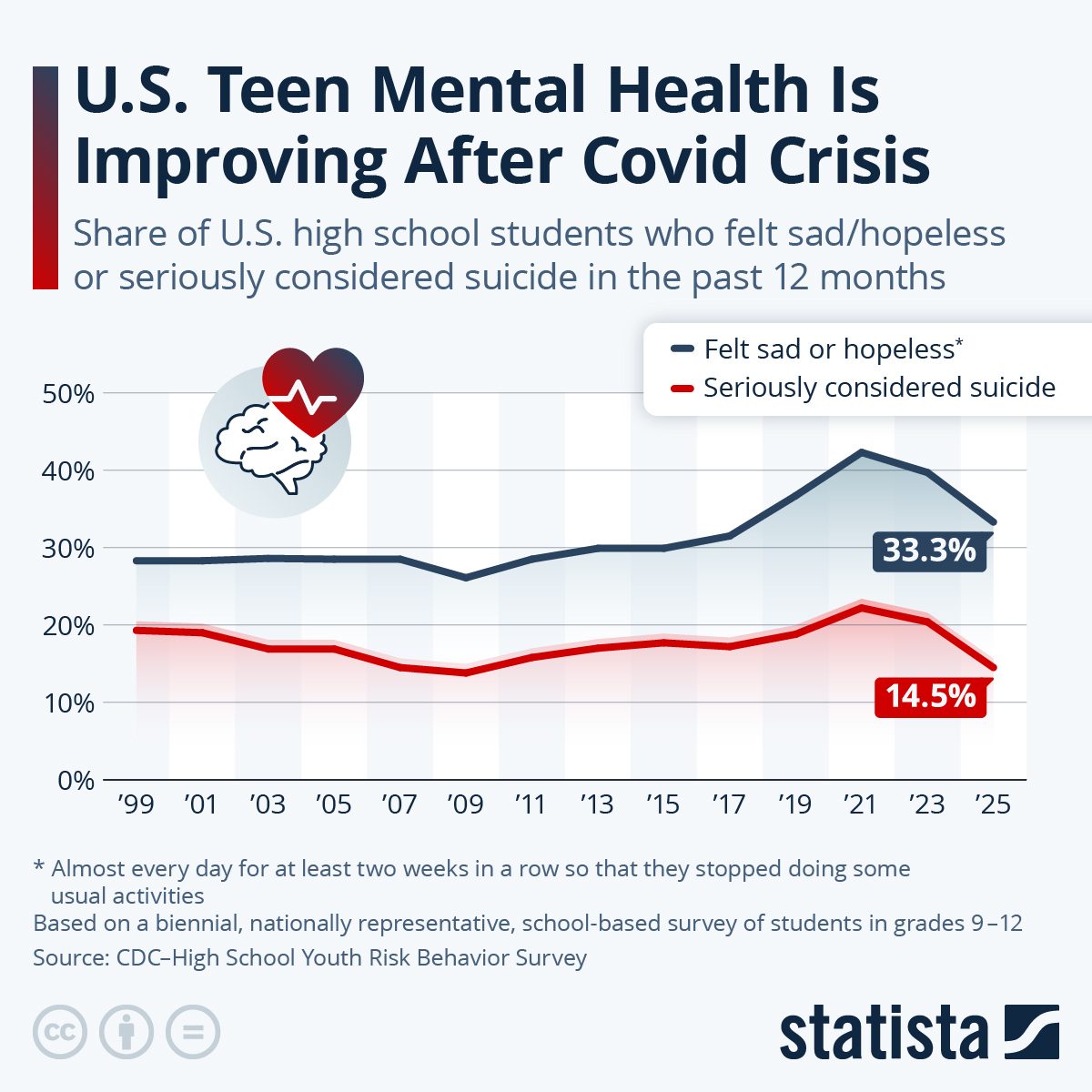
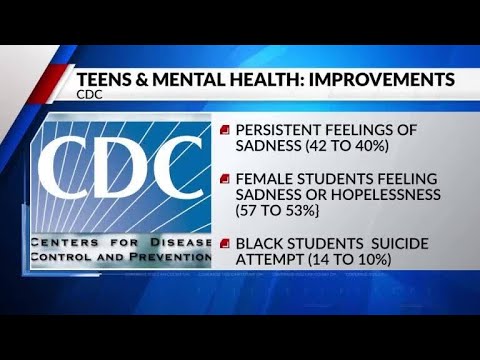
One in three American high school students felt persistently sad or hopeless in 2025, down from two in five in 2023 and the lowest share since before the pandemic. The share who seriously considered suicide fell from 20% to 14% in the same two-year stretch.

The CDC released the figures Sept. 21 in its Youth Health in Focus report, built from the 2025 Youth Risk Behavior Survey of more than 10,700 students. The gains look genuine but fragile: federal grants that helped schools hire mental-health staff are being terminated, and the report dropped the substance use, violence, and LGBTQ+ data that past editions tracked.

Why it matters

Teen mental health is rebounding from a record low, but the federal grants behind the recovery are being cut—the gains are at risk.

Questions about this story

Free account needed to ask — your question is kept and asked for you right after sign-up. Answers are public.

No questions yet — be the first to ask.

Key Indicators

33%
Students with persistent sadness or hopelessness in 2025
Down from 42% in 2021 and 40% in 2023; still above the 31.5% recorded in 2017.
14%
Students who seriously considered suicide in 2025
Down from 22% in 2021 and 20% in 2023.
23%
Students reporting poor mental health in 2025
Down from 29% in both 2021 and 2023.
63%
Students who feel close to people at school in 2025
Up from 55% in 2023; school connection is a protective factor tied to better mental health.
12%
Students who made a suicide plan in 2025
Down from 18% in 2021 and 16% in 2023.

Voices

Curated perspectives — historical figures and your fellow readers.

Ever wondered what historical figures would say about today's headlines?

Sign up to generate historical perspectives on this story.

People Involved

Organizations Involved

Timeline

April 2021 September 2026

4 events Latest: Yesterday
Tap a bar to jump to that date
  1. Advocates warn funding cuts could stall progress

    Latest Statement

    School psychologists and superintendents flag terminated federal mental-health grants as a threat to the trend.

  2. CDC releases Youth Health in Focus report

    Report

    2025 data shows sadness at 33% and suicide consideration at 14%, plus gains in diet and school connection.

  3. CDC releases 2023 data showing first improvement

    Report

    Persistent sadness fell from 42% to 40%; the CDC noted early signs the COVID-era peak was receding.

  4. 2021 survey records worst teen mental health on record

    Survey data

    42% of high schoolers reported persistent sadness, 22% considered suicide—both all-time highs since 1991.

Scenarios

1

Teen mental health gains hold through the 2027 survey

Possible Resolves by Sep 1, 2028

Discussed by: CDC officials and school mental-health advocates

If schools keep the counselors and programs added since 2021, the next Youth Risk Behavior Survey (2027 data) should show persistent sadness at or below 2025's 33%. The jump in students who feel connected at school, from 55% to 63%, is a protective factor that predicts durable improvement.

2

Federal grant cuts stall the recovery

Possible Resolves by Sep 1, 2028

Discussed by: Kelly Vaillancourt Strobach, National Association of School Psychologists

The federal School-Based Mental Health Services and Mental Health Service Professional grants were mostly ended in 2025-2026; dozens of grantees are fighting in court. If districts lose counselors and training pipelines, the 2027 survey could show a plateau or a rebound toward 2023 levels.

3

CDC restores dropped survey measures

Possible Resolves by End of 2027

Discussed by: Public health researchers including Mike Feuer and Alexander Hadland

This year's report omits substance use, dating violence, firearm exposure, and LGBTQ+ breakdowns that past editions tracked. Persistent criticism could push the CDC to restore these measures for the next cycle, renewing the ability to track disparities by race and sexual identity.

Historical Context

2 moments from history that rhyme with this story — and how they unfolded.

1997-2024

Teen smoking collapse (1997-2024)

In 1997, 36.4% of US high school students smoked cigarettes. A generation of tobacco-tax increases, advertising bans, and school-based prevention programs cut the rate to below 5% by 2024.

Then

Smoking fell steadily year over year through the 2000s and 2010s.

Now

The decline showed that teen health behavior responds durably to sustained, coordinated federal and school policy.

Why this matters now

Same mechanism as mental health now—what schools and federal policy invest in, teen health metrics reward.

2020-2021

COVID-era teen mental health spike (2020-2021)

The 2021 Youth Risk Behavior Survey recorded 42% persistent sadness or hopelessness, the worst since the survey began in 1991. School closures and social isolation accompanied the spike.

Then

Both 2023 (40%) and 2025 (33%) showed improvement toward pre-pandemic levels.

Now

The 2025 rate remains above the 31.5% recorded in 2017, so the recovery is partial, not complete.

Why this matters now

Frames today's report as a return toward—not yet below—the pre-COVID baseline.

Sources

(11)