


Pull to refresh
Logo
Daily Brief
Following
Why
College mental health reverses course

College mental health reverses course

New Capabilities
By Newzino Staff |

After a Decade of Decline, Student Depression and Anxiety Rates Fall for Three Consecutive Years

January 30th, 2025: Third Year of Improvement Confirmed

Overview

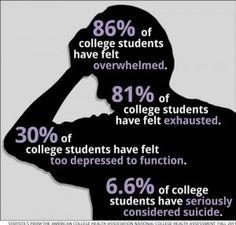
College student depression rates climbed almost every year from 2007 to 2022—a 15-year deterioration that made "campus mental health crisis" a fixture of education headlines. That trend has now reversed. The 2024-2025 Healthy Minds Study, surveying 84,000 students across 135 universities, finds severe depression down to 18% from a 2022 peak of 23%, anxiety down to 32% from 37%, and suicidal ideation down to 11% from 15%.

This marks the third consecutive year of improvement. Researchers point to increased distance from the COVID-19 pandemic, expanded institutional mental health services, and what one principal investigator calls "a public health approach" that treats student wellbeing as a population-level challenge rather than solely an individual counseling problem. The improvements are broad but uneven: transgender and gender-expansive students still report depression rates three times the overall average, and more than half of all students continue to experience loneliness.

Key Indicators

18%
Severe Depression Rate
Down from 23% in 2022—a five-percentage-point drop over three years
11%
Suicidal Ideation
Lowest rate since tracking began; down from 15% in 2022
37%
Receiving Treatment
Students using therapy or counseling in the past year
52%
High Loneliness
Still elevated despite mental health gains; down from 58% in 2022

Interactive

Exploring all sides of a story is often best achieved with Play.

Ever wondered what historical figures would say about today's headlines?

Sign up to generate historical perspectives on this story.

Sign Up

Debate Arena

Two rounds, two personas, one winner. You set the crossfire.

People Involved

Sarah Ketchen Lipson
Associate Professor, Boston University School of Public Health (Principal Investigator, Healthy Minds Network)
Justin Heinze
Justin Heinze
Associate Professor, University of Michigan School of Public Health (Co-Principal Investigator, Healthy Minds Study)
Daniel Eisenberg
Daniel Eisenberg
Professor of Health Policy and Management, UCLA Fielding School of Public Health (Founder and Co-Principal Investigator, Healthy Minds Network)
Sasha Zhou
Sasha Zhou
Assistant Professor, Department of Public Health, Wayne State University (Co-Principal Investigator, Healthy Minds Study)

Organizations Involved

Healthy Minds Network
Research Consortium
Status: Administers the nation's largest college mental health study

A multi-university research consortium that administers the Healthy Minds Study, an annual web-based survey examining mental health among college students.

Timeline

  1. Third Year of Improvement Confirmed

    Research

    2024-2025 Healthy Minds Study reports severe depression at 18%, anxiety at 32%, and suicidal ideation at 11%—all the lowest since the 2022 peak.

  2. Second Consecutive Year of Gains

    Research

    2023-2024 study confirms the trend: moderate-to-severe depression falls to 38%, severe depression to 19%, and treatment-seeking among symptomatic students rises to 61%.

  3. First Year of Improvement

    Research

    2022-2023 data shows the first decline in student mental health problems since tracking began. Severe depression drops from 23% to 20%.

  4. Crisis Peaks

    Research

    Healthy Minds records highest rates on record: 44% moderate-to-severe depression, 37% anxiety, 15% suicidal ideation—the worst numbers in the study's 15-year history.

  5. Federal Funding Expands

    Policy

    Biden administration encourages colleges to use Higher Education Emergency Relief Funds for mental health services. Bipartisan Safer Communities Act later invests $1 billion over five years.

  6. COVID-19 Disrupts Campus Life

    Context

    Universities shift to remote learning. Social isolation and uncertainty accelerate existing mental health trends.

  7. Treatment Utilization Nearly Doubles

    Research

    Treatment rate reaches 34%, up from 19% in 2007. Students with lifetime diagnoses increase from 22% to 36% over the same period.

  8. Sustained Decline Begins

    Research

    Healthy Minds data shows the start of a steady increase in depression, anxiety, and suicidal ideation among college students that would continue for nearly a decade.

  9. Smartphone Adoption Passes 50%

    Context

    Smartphones become majority-owned among young adults. Researchers later identify this period as an inflection point when youth mental health metrics begin deteriorating.

  10. Healthy Minds Study Launches

    Research

    National survey begins tracking college mental health. Initial data shows 19% of students receiving treatment and 22% with lifetime mental health diagnoses.

Scenarios

1

Sustained Recovery: Student Mental Health Returns to Pre-2012 Levels

Discussed by: Healthy Minds Network researchers, Inside Higher Ed

If current trends continue, student depression and anxiety rates could approach the levels recorded before the smartphone-era deterioration began. This would require maintaining expanded mental health services, continued post-pandemic social reconnection, and possibly shifts in how young people use digital technology. Researchers note that institutional investment and a "public health approach" appear to be contributing factors that could sustain the trajectory.

2

Plateau: Improvement Stalls Above Historical Norms

Discussed by: University researchers, mental health policy analysts

Gains could level off with depression and anxiety rates remaining elevated compared to pre-2012 baselines. Researchers caution that even with three years of improvement, current rates remain high—one in eight students still reports suicidal ideation. Persistent factors like social media use, academic pressure, and economic uncertainty could prevent a full return to earlier levels.

3

Reversal: External Shocks Worsen Student Mental Health

Discussed by: Mental health researchers, economists

Economic recession, geopolitical instability, or new public health crises could reverse recent gains. Research on the 2008 Great Recession shows that economic downturns increase depression, anxiety, and suicidal behavior, with effects concentrated among younger adults. A severe external shock could overwhelm expanded campus services and interrupt recovery.

4

Disparity Focus: Vulnerable Populations Remain in Crisis

Discussed by: Sasha Zhou (Wayne State), equity-focused researchers

Overall averages may continue improving while certain student populations—particularly transgender students, students of color, and international students—remain at elevated risk. Current data shows transgender students experience depression at three times the overall rate. If disparities persist, policy focus could shift from broad-based interventions to targeted support for high-risk groups.

Historical Context

Great Recession Mental Health Impact (2008-2010)

2008-2010

What Happened

The 2008 financial crisis triggered the worst economic downturn since the Great Depression. Unemployment peaked at 10%, foreclosures displaced millions of families, and economic anxiety spread across all demographics. Young adults entering the job market faced especially bleak prospects.

Outcome

Short Term

Depression, anxiety, and substance use disorders increased roughly 1.5 times during the recession. Suicide rates rose at more than four times the pre-crisis pace, with over 4,500 excess suicide deaths linked to the economic shock.

Long Term

Research established that economic downturns produce measurable mental health deterioration, particularly among younger adults and those without strong safety nets. These findings inform current concerns about potential future recessions.

Why It's Relevant Today

The Great Recession demonstrates how external economic shocks can reverse mental health gains. As college mental health improves post-pandemic, economic instability remains a risk factor that could interrupt recovery.

Smartphone Adoption Inflection Point (2012-2015)

2012-2015

What Happened

Smartphone ownership among American teenagers crossed 50% around 2012. Social media platforms rapidly expanded, with 70% of teens using social media multiple times daily by 2017 compared to one-third in 2012. Researchers Jean Twenge and Jonathan Haidt identified this period as a global inflection point when youth mental health metrics began deteriorating simultaneously across developed nations.

Outcome

Short Term

Depression, anxiety, loneliness, and self-harm among adolescents began rising sharply. The increase was particularly pronounced among girls and young women. College students entering university after 2012 arrived with higher baseline mental health challenges.

Long Term

The "phone-based childhood" thesis became a major public health debate. While researchers disagree on the magnitude of social media's causal role, the temporal correlation drove policy discussions about age restrictions, school phone bans, and digital wellness.

Why It's Relevant Today

The 2012 inflection point marks when the current college mental health crisis began accelerating. The recent three-year improvement represents the first sustained reversal of trends that started over a decade ago.

COVID-19 Campus Closures (2020-2021)

March 2020 - 2021

What Happened

Universities abruptly shifted to remote learning in March 2020. Students experienced prolonged social isolation, uncertainty about academic and career prospects, and disruption to normal developmental milestones. Campus mental health services scrambled to adapt to virtual delivery.

Outcome

Short Term

Mental health symptoms increased significantly within four months of the pandemic's onset. The crisis accelerated existing deterioration, pushing depression rates to 44% and suicidal ideation to 15% by 2022—the highest levels recorded.

Long Term

The pandemic forced universities to adopt "public health approaches" to mental health, treating it as a population-level challenge. This institutional shift, along with increased funding, may be contributing to the current recovery. Researchers note that current improvements likely reflect both pandemic recovery and expanded services.

Why It's Relevant Today

The pandemic both worsened the crisis and catalyzed institutional changes that may be driving current improvements. The three-year recovery timeline aligns with students' increasing distance from pandemic disruption.

13 Sources: