
Pull to refresh
Logo
Justice Department opens antitrust probe into TV networks' White House coverage halt

Justice Department opens antitrust probe into TV networks' White House coverage halt

Rule Changes

The investigation targets five broadcasters that suspended presidential coverage after the White House barred CNN, MS NOW and Politico.

Today: Justice Department confirms probe

Overview

Updated 1 hour ago

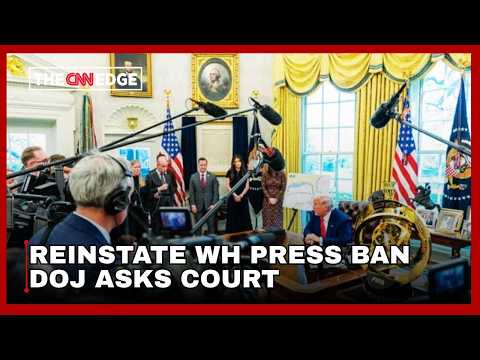
Five major television networks stopped covering President Donald Trump in September after his administration barred CNN, MS NOW and Politico from the White House. The Justice Department is now investigating whether that collective suspension violated federal antitrust law.

The probe applies the Sherman Act, written to break up commercial cartels, to editorial decisions. Press groups call it retaliation for the networks' stand; the Justice Department says it is checking whether a group boycott broke the law.

Why it matters

The probe tests whether the government can use antitrust law to punish news outlets for coverage decisions, and pressure media to keep covering the president.

Questions about this story

Free account needed to ask — your question is kept and asked for you right after sign-up. Answers are public.

No questions yet — be the first to ask.

Key Indicators

5
TV networks under investigation
ABC, CBS, CNN, Fox News and NBC make up the White House television pool.
3
outlets barred from the White House
CNN, MS NOW and Politico had their credentials revoked on Sept 19.
6 days
duration of the credential ban
Credentials were revoked Sept 19 and restored Sept 24 by court order.

Voices

Curated perspectives — historical figures and your fellow readers.

Ever wondered what historical figures would say about today's headlines?

Sign up to generate historical perspectives on this story.

People Involved

Organizations Involved

Timeline

September 2026 October 2026

6 events Latest: Today
Tap a bar to jump to that date
  1. TV pool suspends coverage

    Action

    The five-network television pool halted White House coverage in solidarity with the barred outlets.

  2. White House revokes credentials

    Action

    The White House barred reporters from CNN, Politico and MS NOW, calling access a "privilege, not a right."

  3. Trump announces ban on three outlets

    Statement

    Trump said he would bar CNN, MS NOW and Politico from the White House.

Scenarios

1

DOJ closes probe without bringing charges

Possible Resolves by End of 2027

Discussed by: Press-freedom groups and lawyers, including former antitrust chief Jonathan Kanter

The networks argue the suspension was political expression, not a commercial restraint on trade. Kanter and the Reporters Committee for Freedom of the Press point to Supreme Court precedent protecting boycotts as speech. If the DOJ concludes that argument wins, it closes the case. A new administration after January 2029 could also end it quietly.

2

Justice Department sues the networks for antitrust violations

Unlikely Resolves by Q2 2028

Discussed by: Antitrust observers noting the DOJ won the 1945 Associated Press case against a news cooperative

The DOJ could argue the five networks, as competitors, conspired to withhold presidential coverage, a group boycott that harmed the public. Such a lawsuit would land in federal court in Washington and test whether the Sherman Act reaches coordinated editorial decisions. A suit remains unlikely given First Amendment precedent, but the AP case shows news organizations are not automatically immune.

3

Networks resist DOJ document demands, sparking a court fight

Possible Resolves by Q2 2027

Discussed by: The Washington Post and Wall Street Journal, which reported the DOJ is seeking pool records

The DOJ has demanded communications among the networks about the pool's formation and operation. The networks may refuse, arguing the demands burden newsgathering and editorial decisions. A judge would then rule on whether to enforce the subpoenas, setting early precedent on how far the antitrust probe can reach.

Historical Context

3 moments from history that rhyme with this story — and how they unfolded.

1945

Associated Press v. United States (1945)

The Justice Department sued the Associated Press over bylaws that let member newspapers veto new members, blocking rivals like the Chicago Sun from joining. The Supreme Court ruled 5-3 that the rules restrained trade, rejecting AP's argument that press freedom immunized the cooperative.

Then

AP revised its membership rules, letting competitors join without veto.

Now

Established that news organizations can face antitrust liability, though later courts drew lines protecting editorial decisions.

Why this matters now

The case shows antitrust can reach news cooperatives, which is central to the DOJ's question here.

March 1982

NAACP v. Claiborne Hardware Co. (1982)

The NAACP organized a boycott of white-owned shops in Port Gibson, Mississippi, pressing for equal rights. Merchants sued for damages, alleging an illegal conspiracy.

Then

The Supreme Court ruled 9-0 that the boycott was protected political speech under the First Amendment.

Now

Established that nonviolent boycotts aimed at political change are not antitrust conspiracies, the key precedent the networks' defense relies on.

Why this matters now

If the networks frame their suspension as political expression, this ruling gives them strong legal cover.

1970-1974

Nixon administration vs. the Washington Post (early 1970s)

After the Post investigated Watergate, the Nixon White House backed challenges to the licenses of Post-owned television stations and the company faced antitrust and tax pressure from the government.

Then

The Post fought the license challenges and kept its stations; Nixon resigned in 1974.

Now

Became the standard example of a president using regulatory power against the press, and of the press resisting.

Why this matters now

Today's probe mirrors that pattern of White House leverage over media, with antitrust as the tool.

Sources

(10)