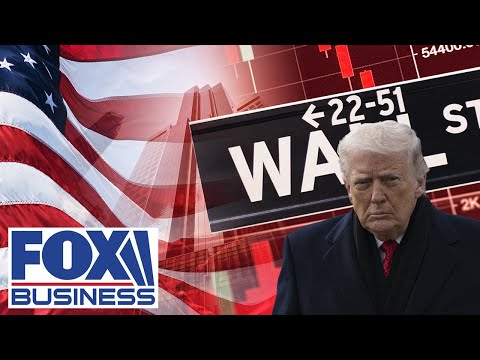
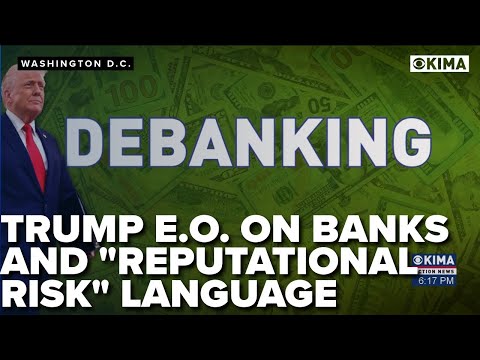
Donald Trump banked with JPMorgan Chase for decades; after the January 6 Capitol attack, the bank gave him 60 days to move hundreds of millions of dollars. As sitting president, he's suing the bank and its CEO for $5 billion, alleging political discrimination.
The lawsuit tests a fundamental question: Can banks refuse customers based on reputational risk—or does that become illegal political discrimination? Trump has issued an executive order banning debanking, and the OCC has cited nine major banks for restricting legal businesses. Congress is considering legislation to remove 'reputational risk' from banking regulations, and the JPMorgan case could establish whether these moves survive court scrutiny.
Questions about this story
Free account needed to ask — your question is kept and asked for you right after sign-up. Answers are public.
No questions yet — be the first to ask.
Key Indicators
$5B
Damages Sought
Amount Trump seeks from JPMorgan in his Florida state court lawsuit
9
Banks Cited by OCC
Major national banks the OCC found maintained 'inappropriate' restrictions on legal businesses between 2020-2023
300+
Accounts Closed
Trump Organization accounts terminated by Capital One in 2021, per separate lawsuit
60
Days Notice
Time JPMorgan gave Trump to move his accounts in February 2021
15 events
Latest: January 22nd, 2026 · 9 months ago
Showing 8 of 15
JK to step
Tap a bar to jump to that date
Jump to
January 2026
Trump Sues JPMorgan and Dimon for $5 Billion
LatestLegal
Lawsuit filed in Miami-Dade County court alleges trade libel, breach of good faith, and violations of Florida's deceptive trade practices law.
Dimon Criticizes Trump at Davos
Statement
Day before lawsuit, Dimon says he doesn't like Trump's immigration enforcement and calls himself 'a globalist' and 'not a tariff guy.'
Trump Publicly Threatens JPMorgan Lawsuit
Statement
Trump announces he will be 'suing JPMorgan Chase over the next two weeks for incorrectly and inappropriately DEBANKING me after the January 6th Protest.'
December 2025
OCC Cites Nine Major Banks for Debanking
Regulatory
OCC finds JPMorgan, Bank of America, Citi, Wells Fargo, and five others maintained 'inappropriate' restrictions on legal businesses between 2020-2023.
August 2025
Trump Signs Debanking Executive Order
Executive Action
Executive order directs banking regulators to investigate debanking, remove 'reputational risk' guidance, and refer violations to the Attorney General.
July 2025
Dimon Meets Trump at White House
Political
JPMorgan CEO meets with President Trump in Oval Office to discuss economy, trade, and financial rules.
March 2025
Trump Sues Capital One
Legal
Trump Organization files lawsuit over 300+ account closures in 2021, seeking damages for alleged political discrimination.
FIRM Act Introduced in Senate
Legislative
Senate Banking Chairman Tim Scott introduces legislation to remove 'reputational risk' from banking supervision, backed by all 13 committee Republicans.
January 2024
Dimon Praises Trump on NATO
Statement
At Davos, Dimon says Trump was 'kind of right' on NATO and other issues, signaling possible thaw in relationship.
May 2022
JPMorgan Closes Religious Nonprofit Account
Banking
National Committee for Religious Freedom discovers JPMorgan closed its account without notice, sparking political backlash from 19 Republican attorneys general.
March 2021
Capital One Closes 300+ Trump Accounts
Banking
Capital One notifies Trump Organization that over 300 accounts will close on June 7, 2021.
February 2021
JPMorgan Notifies Trump of Account Closures
Banking
JPMorgan Chase informs Trump and his entities that accounts will close on April 19, 2021—60 days notice, no explanation provided.
January 2021
January 6 Capitol Attack
Political
Trump supporters storm the U.S. Capitol, triggering corporate backlash including banking relationship terminations.
August 2017
Operation Choke Point Ends
Regulatory
DOJ officially terminates Operation Choke Point, but critics argue informal pressure on banks continues.
August 2013
Operation Choke Point Launches
Regulatory
DOJ initiative pressures banks to stop serving firearms dealers, payday lenders, and other legal but disfavored industries—later cited as origin of modern debanking controversy.
Scenarios
1
JPMorgan Settles, Updates Policies
Possible
Discussed by: Banking industry analysts at Banking Dive, legal observers noting pattern of corporate settlements with Trump administration
JPMorgan calculates that prolonged litigation with a sitting president creates unacceptable regulatory and reputational risk. The bank settles for an undisclosed amount and publicly commits to anti-debanking policies. Other banks follow with preemptive policy changes. This outcome would establish a de facto standard without judicial precedent.
A Florida court rules that JPMorgan's account closures violated state law prohibiting political discrimination in banking. Trump wins significant damages. The precedent creates substantial liability exposure for banks that close accounts of politically controversial clients, fundamentally shifting the risk calculus for 'reputational risk' decisions.
3
JPMorgan Wins, Debanking Claims Fail Judicial Test
Possible
Discussed by: Banking industry defense lawyers, skeptics of debanking claims at publications like New Lines Magazine
JPMorgan successfully argues that banks have broad discretion to end customer relationships and that Trump cannot prove political motivation. The court dismisses the case or rules for JPMorgan after discovery. This would suggest executive orders and regulatory pressure have limits—banks retain contractual freedom to manage customer relationships.
Litigation proceeds slowly through discovery and motions while Congress passes the FIRM Act or similar legislation. Statutory changes render the lawsuit's specific claims moot or reshape the legal landscape before any verdict. The case becomes a footnote to legislative reform rather than a precedent-setting ruling.
Historical Context
3 moments from history that rhyme with this story — and how they unfolded.
1 of 3
August 2013 - August 2017
Operation Choke Point (2013-2017)
The DOJ pressured banks to stop serving firearms dealers, payday lenders, and other legal businesses deemed 'high risk for fraud.' Federal banking agencies used 'reputational risk' ratings to encourage account closures. Critics called it 'de facto regulation through the back door' that bypassed due process.
Then
Hundreds of legal businesses lost banking access. Gun dealers and payday lenders reported widespread account closures.
Now
DOJ ended the program in 2017, but 'reputational risk' remained in banking guidance. Conservatives cite it as proof of government-directed debanking; critics argue its impact was overstated.
Why this matters now
Trump's lawsuit and executive order explicitly invoke Operation Choke Point as precedent for politically motivated debanking. The FIRM Act directly targets the 'reputational risk' standard that enabled the program.
2 of 3
September 2022 - 2023
PayPal's Deplatforming Controversies (2022-2023)
PayPal proposed a policy allowing $2,500 fines for 'misinformation,' withdrew it after backlash, but continued closing accounts of controversial figures including Gays Against Groomers and the Free Speech Union UK. CEO Dan Schulman faced shareholder revolt.
Then
PayPal stock dropped 6% after the misinformation policy controversy. Multiple state attorneys general opened investigations.
Now
Became a rallying point for conservative 'debanking' claims. Contributed to Florida and other states passing laws restricting financial discrimination based on viewpoints.
Why this matters now
Demonstrates how payment platform decisions became political flashpoints, extending debanking concerns beyond traditional banks to the broader financial ecosystem Trump now targets.
3 of 3
January 2021
Parler and AWS Deplatforming (2021)
After January 6, Amazon Web Services terminated hosting for social media platform Parler, taking it offline. Apple and Google also removed its app. Parler sued AWS for antitrust violations and breach of contract.
Then
Parler went offline for weeks, eventually returned with new hosting. Its lawsuit against AWS was dismissed in 2022.
Now
Established that private companies can terminate controversial clients post-January 6 without immediate legal consequences. Became template for corporate 'derisking' that Trump now challenges.
Why this matters now
The JPMorgan account closures occurred in the same post-January 6 corporate backlash wave. Trump's lawsuit tests whether banking services receive different legal treatment than platform hosting.