

Pull to refresh
Logo
US sanctions Rwanda's defence ministry over M23 support in eastern Congo

US sanctions Rwanda's defence ministry over M23 support in eastern Congo

Force in Play

Washington freezes the assets of Rwanda's military leadership and Zigama bank, ten months after brokering a peace deal both sides signed

Overview

Updated 1 hour ago

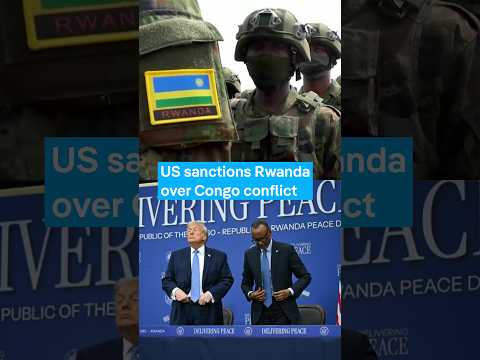
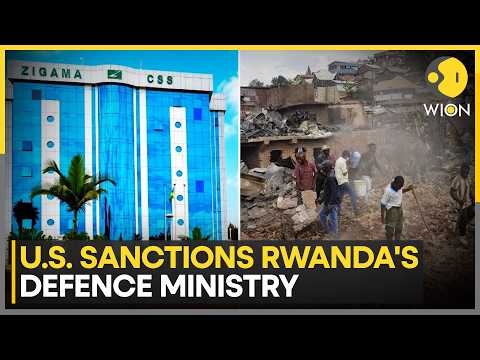
On October 28, the US Treasury designated Rwanda's Ministry of Defence and Zigama Credit and Savings Society, the bank that handles payments for the country's security services. The ministry oversees the Rwanda Defence Force, which Treasury says has sent thousands of troops into eastern Congo to fight alongside the M23 rebel group.

The designations freeze any assets the two hold under US jurisdiction and bar American individuals and companies from dealing with them. They arrive ten months after Washington brokered a peace deal between Rwanda and Congo that both governments signed and neither has fully carried out.

Why it matters

Any bank, arms supplier or mineral trader working with Rwanda's military now risks losing access to the US financial system.

Questions about this story

Free account needed to ask — your question is kept and asked for you right after sign-up. Answers are public.

No questions yet — be the first to ask.

Key Indicators

2
Entities designated on October 28, 2026
The Rwandan Ministry of Defence and Zigama Credit and Savings Society.
4
Senior commanders sanctioned with the RDF in March 2026
The earlier round targeted the army itself and individual officers.
3
Mining companies sanctioned in June 2026
Designated alongside the Gasabo gold refinery over conflict-mineral smuggling.
Thousands
Rwandan troops Treasury says are deployed in eastern Congo
The department says they operate alongside M23 with weapons, logistics and training.

Voices

Curated perspectives — historical figures and your fellow readers.

Sign up to generate historical perspectives on this story.

People Involved

Organizations Involved

Timeline

2025 October 2026

8 events Latest: 2 days ago
Tap a bar to jump to that date
  1. Rwanda rejects the sanctions and cites unmet FDLR commitments

    Latest Statement

    A government spokesperson says Kigali is ready to implement the accords once Congo does.

  2. Treasury sanctions Rwanda's defence ministry and Zigama bank

    Sanctions

    OFAC blocks the ministry and the security-services bank, citing troops and financing for M23.

  3. Tshisekedi demands concrete sanctions on Rwanda

    Statement

    Congo's president asks the international community to increase pressure for peace.

  4. New political front replaces the Congo River Alliance

    Statement

    The Front for the Refoundation of the Nation announces itself as the Alliance's successor.

  5. US sanctions gold refinery and three mining companies

    Sanctions

    The Gasabo refinery and three firms are accused of smuggling conflict minerals.

  6. US sanctions Rwanda's army and four commanders

    Sanctions

    OFAC designates the Rwanda Defence Force over support for M23.

  7. Congo and Rwanda sign the Washington Accords

    Treaty

    The US-brokered deal covers security commitments, trade and transparency in critical minerals.

  8. M23 captures Goma and Bukavu

    Conflict

    The rebels take the capitals of North and South Kivu provinces in early 2025.

Scenarios

1

Rwanda withdraws its troops from eastern Congo

Unlikely Resolves by Q2 2027

Discussed by: The US Treasury and Congo's foreign ministry, which both tie the sanctions to a withdrawal

The designations are meant to make continued deployment costly for Kigali by cutting its military off from dollar financing. Compliance would require Rwanda to pull troops back across the border and for M23 to leave Goma and Bukavu. Rwanda says it will implement the accords once Congo neutralizes the FDLR, so a withdrawal depends on a joint security mechanism neither side has set up.

2

Washington extends sanctions to Rwandan mineral exporters

Possible Resolves by Q1 2027

Discussed by: Human Rights Watch, which argues designations should be paired with measures against the mineral trade

Treasury has escalated in steps: army, then refinery and mining companies, then the defence ministry. The next rung is the exporters and trading houses that Treasury says absorb minerals from M23-held territory. That step would hit a larger share of Rwanda's formal economy, which is why it carries more diplomatic risk than targeting the security services.

3

Fighting continues and the Washington Accords lapse

Likely Resolves by Q2 2027

Discussed by: The EU's Great Lakes envoy and Ugandan President Yoweri Museveni, who have both raised alarm over stalled talks

The accords set out security and trade commitments but no enforcement body. If M23 keeps Goma and Bukavu and no joint monitoring mechanism convenes, the deal becomes a document both sides cite against each other. That is close to the current state: Congo says Rwanda violates it, Rwanda says Congo does.

4

Sanctions lifted after a verified withdrawal

Unlikely Resolves by End of 2027

Discussed by: Rwanda's government, which says it remains ready to implement the accords in full

OFAC can delist targets that change behavior, and Kigali has said it will honor the accords if Congo does. Lifting the designations would require the US to certify a withdrawal and an end to financing for M23. No such certification process has been announced, and Treasury has escalated rather than eased in each round so far.

Historical Context

3 moments from history that rhyme with this story — and how they unfolded.

November 2012

M23's capture of Goma (2012)

The first incarnation of M23 marched into Goma, the provincial capital of North Kivu, and held it for about ten days. A UN Group of Experts report accused Rwanda and Uganda of backing the group, and several Western donors suspended or withheld aid to Kigali. M23 withdrew under regional pressure and was later militarily defeated by the Congolese army and UN forces.

Then

M23 pulled out of Goma and a regional peace framework was signed in 2013.

Now

The rebels were routed, but the underlying dispute over Rwanda's role and Congo's mineral trade went unresolved for a decade.

Why this matters now

The same group, the same city and the same accusation. The 2012 episode is the benchmark for whether financial pressure actually moves Kigali, and it took military defeat, not sanctions alone, to end that round.

July 2010

Dodd-Frank conflict minerals rule (2010)

The Dodd-Frank financial reform law included a section requiring US-listed companies to disclose whether their products contained tin, tantalum, tungsten or gold from Congo or its neighbors. The rule created supply-chain audits and a formal tracing system for minerals from the region.

Then

Companies built auditing programs and some buyers avoided the region entirely.

Now

Traceability improved, but researchers found mixed effects on armed groups and documented harm to artisanal miners who lost buyers.

Why this matters now

This is the precedent for treating mineral supply chains as a lever in the Congo conflict. Treasury's claim that Rwanda exports more minerals than it mines is an argument that the lever is still being pulled.

1994-2000s

Rwanda's genocide and the FDLR (1994 onward)

After the 1994 genocide, Hutu-led forces and militias crossed into eastern Congo. The Democratic Forces for the Liberation of Rwanda (FDLR) formed there and included people linked to the genocide. Rwanda invaded Congo in 1996 and again in 1998, citing cross-border security.

Then

Rwanda's incursions helped topple Congo's government and drew in multiple African armies.

Now

The FDLR survived as a justification for Rwandan military involvement in eastern Congo that persists today.

Why this matters now

Rwanda's answer to the sanctions rests on this history: Kigali says Congo has never neutralized the FDLR, so its security concerns remain. That argument is why the Washington Accords paired a Rwandan withdrawal with a Congolese commitment.

Sources

(8)