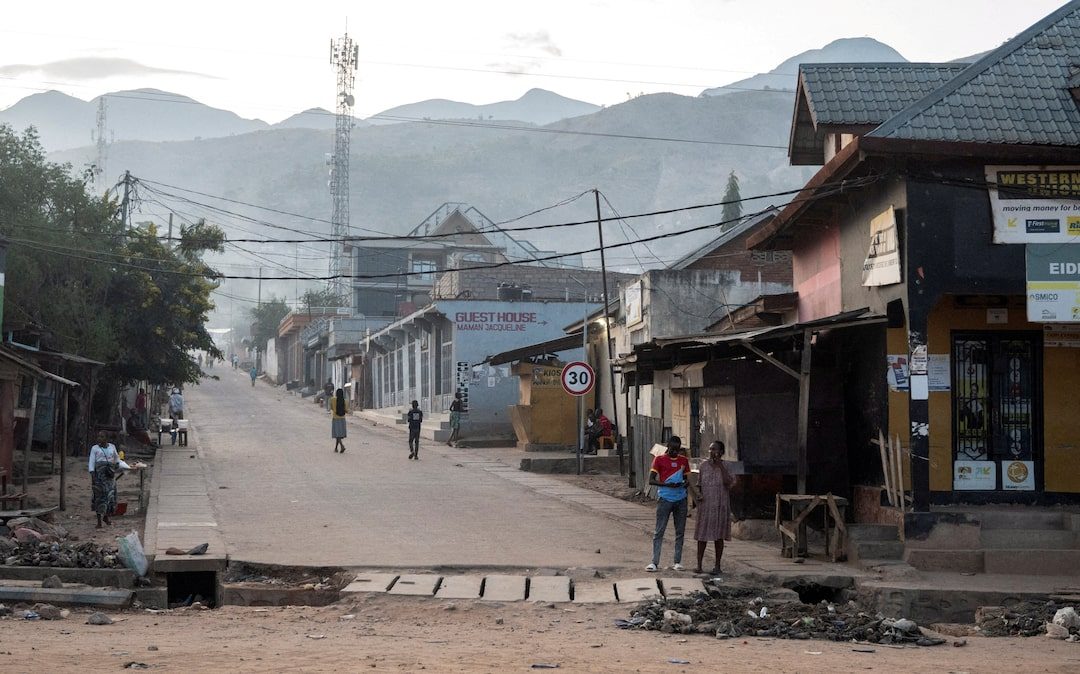
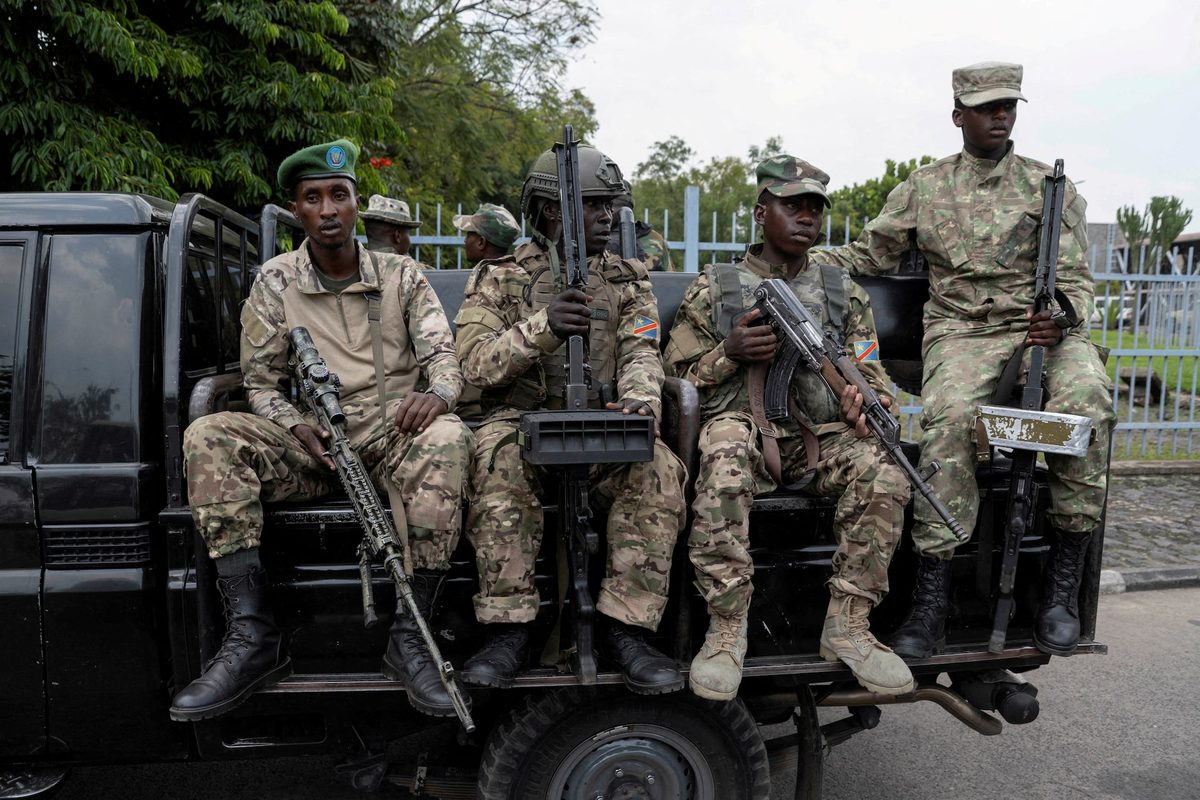
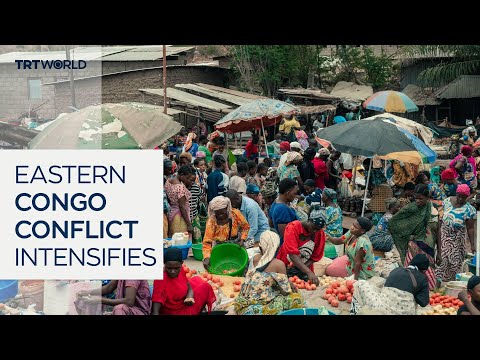
Congolese authorities have uncovered at least 171 bodies in two mass graves on the outskirts of Uvira, an eastern DRC city. M23 withdrew from the city in January after the United States requested the pullback as a trust-building gesture. Local officials and civil society groups say the victims were killed by M23 fighters who suspected them of ties to the Congolese army or pro-government militias, though M23 denies involvement.
The discovery undermines an already-fragile peace process. Two diplomatic tracks — the Washington Accords (DRC and Rwanda, December 2025) and Qatar-mediated talks between the DRC and M23 — have failed to stop the fighting, which has displaced over seven million people. Three days before the graves were found, the Congolese military killed M23's spokesperson in a drone strike; both sides now accuse each other of ceasefire violations.
Questions about this story
Free account needed to ask — your question is kept and asked for you right after sign-up. Answers are public.
No questions yet — be the first to ask.
Key Indicators
171+
Bodies discovered in Uvira mass graves
Found in two sites in Kavimvira and Kiromoni neighborhoods after M23's withdrawal
7M+
Internally displaced people in the DRC
One of the largest displacement crises in the world, concentrated in eastern provinces
6,000+
Rwandan soldiers deployed in eastern DRC
United Nations experts have documented direct Rwandan military support for M23 operations
$1B
Estimated annual DRC mineral revenue lost to smuggling
Conflict minerals including coltan flow through M23-controlled territory into Rwanda
Images from Openverse under Creative Commons licenses.
Videos from YouTube.
Voices
Curated perspectives — historical figures and your fellow readers.
Oscar Wilde
(1854-1900) ·Victorian · wit
Fictional AI pastiche — not real quote.
"How very civilised of them to have two competing peace processes — one imagines the diplomats are rather relieved, for a single failure is a misfortune, but two failures simultaneously has the appearance of a policy."
0% found this insightful
Ever wondered what historical figures would say about today's headlines?
Sign up to generate historical perspectives on this story.
13 events
Latest: February 27th, 2026 · 7 months ago
Showing 8 of 13
JK to step
Tap a bar to jump to that date
Jump to
February 2026
Mass graves with 171 bodies found in Uvira
LatestAtrocity
South Kivu governor Jean-Jacques Purusi announces the discovery of two mass graves containing at least 171 bodies in neighborhoods on the outskirts of Uvira. Civil society groups allege M23 killed the victims during its occupation of the city.
A Congolese army drone strike near the Rubaya coltan mine kills Lieutenant Colonel Willy Ngoma, M23's military spokesperson and a sanctioned individual. M23 commander Sultani Makenga narrowly escapes the same strike.
DRC and M23 sign ceasefire monitoring terms in Doha
Diplomatic
The two sides agree on terms of reference for a ceasefire monitoring and verification mechanism under the Doha framework, with Qatar, the United States, and the African Union as observers.
January 2026
M23 completes withdrawal from Uvira
Military
M23 pulls its last units out of Uvira, completing the withdrawal that had been framed as a confidence-building step for the peace process.
December 2025
M23 announces Uvira withdrawal at US request
Diplomatic
M23 announces it will withdraw from Uvira as a unilateral trust-building measure requested by Washington, to give the Doha peace process a chance to succeed.
M23 captures Uvira six days after peace ceremony
Military
M23 and Rwandan forces seize Uvira using drones and heavy artillery, killing at least 74 civilians according to the United Nations. Regional authorities estimate over 1,500 killed, with 300,000 displaced.
Formal Washington Accords signing at the White House
Diplomatic
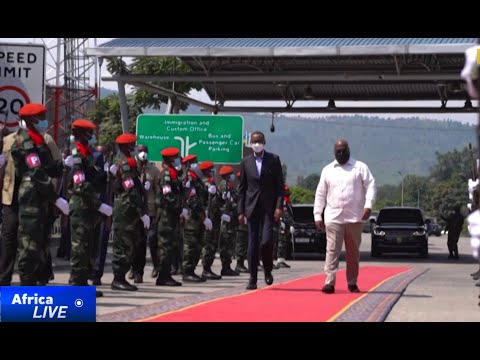
Presidents Tshisekedi and Kagame attend a formal signing ceremony presided over by US President Trump, alongside other African leaders.
November 2025
DRC and M23 sign Doha Framework Agreement
Diplomatic
In a separate track from the Washington Accords, the DRC and M23 sign a framework agreement mediated by Qatar to end their conflict through further negotiations.
July 2025
M23 executes over 140 civilians near Virunga National Park
Atrocity
M23 fighters summarily execute over 140 civilians, largely ethnic Hutu, in at least 14 villages near Virunga National Park during operations against rival armed groups. Documented by Human Rights Watch.
June 2025
DRC and Rwanda sign initial Washington Accords
Diplomatic
Presidents Tshisekedi and Kagame sign the Washington Accords for Peace and Prosperity, committing to Rwandan troop withdrawal and a framework for mineral trade cooperation.
February 2025
M23 captures Bukavu, South Kivu's capital
Military
Following a rapid southward advance, M23 takes Bukavu, giving the group control of both provincial capitals in eastern DRC for the first time.
January 2025
M23 captures Goma, North Kivu's capital
Military
M23 seizes Goma, a city of roughly two million people and the capital of North Kivu. Between 900 and 2,000 people are killed in the fighting, with 400,000 displaced.
March 2022
M23 resumes armed campaign in eastern DRC
Military
After nearly a decade of dormancy following its 2013 defeat, M23 launches a renewed military campaign in North Kivu province with documented Rwandan military support.
Scenarios
1
Doha talks produce a binding ceasefire; Washington Accords lead to phased Rwandan withdrawal
Unlikely
Discussed by: United Nations mediators, the International Crisis Group, and the US State Department, which has invested significant diplomatic capital in the Washington Accords framework
International pressure following the mass graves discovery forces both sides back to the table with renewed urgency. The Doha process produces a binding ceasefire with robust verification, while the Washington Accords' mineral trade provisions give Rwanda an economic incentive to withdraw its forces. M23 fighters are integrated into the Congolese military or demobilized. This outcome requires Rwanda to calculate that continued occupation carries reputational and economic costs exceeding the benefits of mineral access — a calculation that has not held in three decades of similar dynamics.
2
Peace talks stall as M23 consolidates a de facto state in eastern DRC
Likely
Discussed by: The International Crisis Group, Foreign Policy analysts, and regional security observers who note M23's established administrative structures in Goma and Bukavu
Diplomatic frameworks remain nominally active but produce no meaningful change on the ground. M23 retains control of Goma, Bukavu, and key mining areas while continuing negotiations to buy time. Rwanda maintains its military presence under various pretexts. The mass graves harden both sides' positions — the DRC demands accountability as a precondition, M23 demands government concessions before any disarmament. The conflict settles into a frozen state with periodic flare-ups, similar to other protracted armed occupations where the occupying force has economic incentives to stay.
3
Atrocity evidence triggers international accountability measures against M23 and Rwanda
Possible
Discussed by: Human Rights Watch, European Union officials calling for action, and United Nations human rights experts who have warned about escalating M23 violence
The mass graves, combined with the documented Virunga killings and Goma executions, build sufficient evidence for expanded international sanctions, potential International Criminal Court referrals, or targeted restrictions on Rwandan mineral exports. This path requires Western governments — particularly the United States, which brokered the Washington Accords — to prioritize accountability over the strategic and mineral-trade relationships they have cultivated with Rwanda. Historical precedent suggests this pressure would be limited and slow-moving.
4
DRC military offensive recaptures territory, triggering wider regional escalation
Possible
Discussed by: Critical Threats analysts and regional security observers noting the DRC's drone strike that killed M23's spokesperson and intensifying FARDC offensives in multiple provinces
Emboldened by the drone strike on Willy Ngoma and public outrage over the mass graves, the DRC escalates military operations to retake Goma or Bukavu. Rwanda responds by openly deploying additional forces, dropping the pretense of non-involvement. Neighboring countries are drawn in as the conflict expands beyond the current theater. This scenario carries the highest humanitarian risk but also the conditions under which Rwanda's support for M23 could be most directly challenged.
Historical Context
3 moments from history that rhyme with this story — and how they unfolded.
1 of 3
July 1995
Srebrenica massacre and the collapse of the Srebrenica safe area (1995)
Bosnian Serb forces under General Ratko Mladic overran the United Nations-designated 'safe area' of Srebrenica in eastern Bosnia and systematically killed over 8,000 Bosniak men and boys. Dutch UN peacekeepers in the enclave were unable to prevent the killings. Mass graves were discovered in the weeks and years that followed, many deliberately concealed by the perpetrators.
Then
The massacre accelerated NATO military intervention and contributed to the Dayton Peace Accords that ended the Bosnian War in November 1995.
Now
Srebrenica became the catalyst for the International Criminal Tribunal for the former Yugoslavia, which convicted Mladic and Radovan Karadzic of genocide. It reshaped international norms around peacekeeping mandates and the 'responsibility to protect.'
Why this matters now
Like Uvira, mass graves discovered after an armed group's withdrawal from a contested city forced the international community to confront the gap between diplomatic frameworks and atrocities on the ground — and raised questions about whether peacekeeping forces had the mandate and capacity to protect civilians.
2 of 3
1996-2003
Rwandan-backed occupation of eastern Congo and the Mapping Report (1996-2003)
Rwanda and Uganda invaded Zaire (now DRC) twice — first in 1996 to topple President Mobutu, then in 1998 in what became known as Africa's World War, involving nine African nations. Rwandan-backed forces committed widespread atrocities against Hutu refugees and Congolese civilians. A 2010 UN 'Mapping Report' documented 617 incidents that, if proven in court, could constitute crimes against humanity or genocide.
Then
Peace agreements in 2002-2003 officially ended the war but left eastern DRC fragmented among dozens of armed groups with various state backers.
Now
The cycle of Rwandan military intervention, rebel proxies, mineral extraction, and mass atrocity established the pattern that M23's current campaign directly continues — making the Uvira graves not an anomaly but the latest iteration of a 30-year dynamic.
Why this matters now
The current M23 conflict is structurally continuous with the Congo Wars. Many M23 commanders served in earlier Rwandan-backed armed groups, the same mineral-smuggling routes remain active, and the same fundamental tension — Rwanda's security interests versus Congolese sovereignty — remains unresolved.
3 of 3
November 2013
M23's first defeat and the Nairobi Declarations (2013)
A UN intervention brigade with an unprecedented offensive mandate joined Congolese forces to defeat M23 militarily, pushing the group out of its strongholds including Goma, which it had briefly captured in 2012. M23 fighters retreated into Rwanda and Uganda. The Nairobi Declarations committed M23 to disarm and the DRC to address the political grievances that fueled the rebellion.
Then
M23 went dormant, and eastern DRC experienced a relative reduction in large-scale armed group activity, though dozens of smaller militias continued operating.
Now
The Congolese government failed to implement key provisions of the Nairobi Declarations, including security sector reform and political integration of M23 members. This unresolved grievance became M23's stated justification for rearming in 2021-2022.
Why this matters now
The 2013 precedent shows that military defeat alone does not resolve M23's underlying dynamic — without addressing the political and economic structures that sustain the group, it reconstitutes. The current peace efforts face the same question: whether diplomatic agreements can succeed where previous ones failed.