


Pull to refresh
Logo
Vizgen launches Velocity Lab to generate spatial biology data at scale

Vizgen launches Velocity Lab to generate spatial biology data at scale

New Capabilities

The Waltham company is building a data foundry for AI models of tissue, starting with 3D imaging and same-slide RNA-protein detection.

Overview

Updated 39 minutes ago

A standard tissue slice for spatial biology is about 10 micrometers thick. Vizgen's new Velocity Lab images up to 100. The Waltham, Massachusetts company launched the foundry on November 10, 2026, to produce spatial data at a scale it says AI models of biology need.

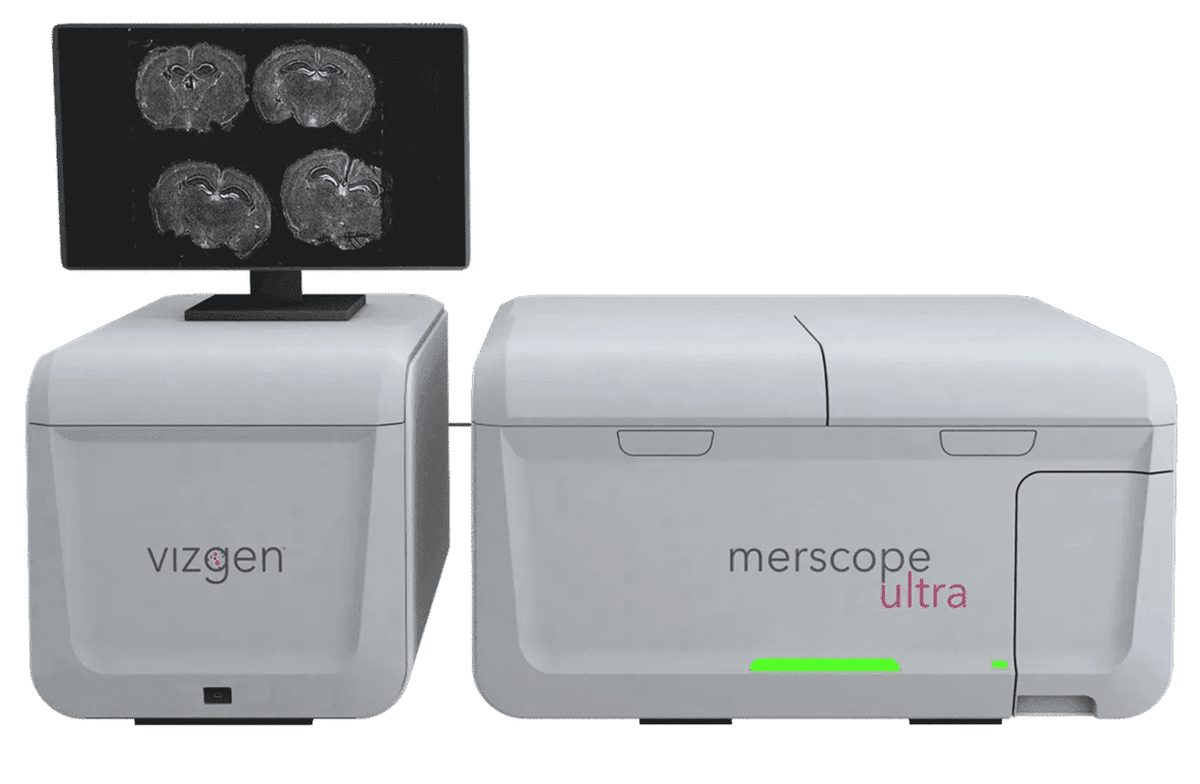
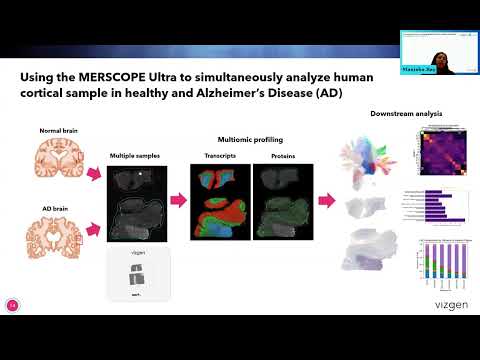
Velocity Lab pairs two products: Volumetric Tissue Mapping, which captures three-dimensional cell neighborhoods in thick tissue, and MERSCOPE CoMap, which reads RNA and proteins on the same slide. Vizgen aims to profile hundreds of millions of cells per week by 2027. The bet is that drug discovery models trained on tissue context will outperform those trained on dissociated cells.

Why it matters

If Vizgen hits its 2027 target, AI models of disease could train on tissue-level data at a scale that is currently unavailable.

Questions about this story

Free account needed to ask — your question is kept and asked for you right after sign-up. Answers are public.

No questions yet — be the first to ask.

Key Indicators

100 µm
Imaging depth, Volumetric Tissue Mapping
Up to 10 times the depth of a standard tissue section.
~4×
More neighboring cells captured per cell
Vizgen's estimate for thick-tissue imaging versus thin sections.
100M+
Cells per week, 2027 target
Vizgen's stated scale goal for Velocity Lab.
2
New data products at launch
Volumetric Tissue Mapping and MERSCOPE CoMap.

Voices

Curated perspectives — historical figures and your fellow readers.

Sign up to generate historical perspectives on this story.

People Involved

Organizations Involved

Timeline

2024 November 2026

5 events Latest: Today
Tap a bar to jump to that date
  1. Velocity Lab opens to partners

    Today Launch

    Vizgen launches a data foundry with Volumetric Tissue Mapping and MERSCOPE CoMap, targeting hundreds of millions of cells per week in 2027.

  2. Volumetric Tissue Mapping debuts at HCA

    Launch

    Vizgen shows 3D MERFISH data in brain tissue and launches tissue-mapping services and a Cell Atlasing Hub.

  3. New panels and AI segmentation tools

    Product

    Vizgen expands gene panels and adds AI-powered cell segmentation to its post-processing tool.

  4. Vizgen previews 3D imaging at AGBT

    Roadmap

    The company outlines thick-tissue imaging and analysis as part of its spatial multiomics roadmap.

  5. Vizgen acquires Ultivue

    Acquisition

    The deal adds spatial proteomics expertise that later underpins MERSCOPE CoMap.

Scenarios

1

Velocity Lab hits its 2027 scale target

Possible Resolves by End of 2027

Discussed by: Vizgen executives and spatial biology trade coverage

Vizgen says Velocity Lab will scale toward transcriptome-scale profiling of hundreds of millions of cells per week in 2027. Hitting that mark would make it one of the largest dedicated spatial data generators. The trigger is operational: instrument throughput, tissue handling, and data processing all have to hold at scale.

2

A pharma partner publishes drug-discovery data generated at Velocity Lab

Possible Resolves by End of 2027

Discussed by: Vizgen and its unnamed multinational biopharma partner

Vizgen says a large multinational biopharma partner is already using Volumetric Tissue Mapping for neuroscience drug discovery. The next test is whether that work produces public data or a disclosed program. A publication or regulatory filing would show the foundry's output is decision-grade, not just exploratory.

3

A competitor launches comparable volumetric spatial profiling

Possible Resolves by Q2 2027

Discussed by: Spatial biology industry analysts and conference attendees

Vizgen's Volumetric Tissue Mapping is a differentiator only if rivals do not match it. 10x Genomics, Bruker, and other spatial platform vendors could announce thick-tissue 3D profiling at a major conference. That would compress Vizgen's advantage and shift competition toward data scale and price.

Historical Context

3 moments from history that rhyme with this story — and how they unfolded.

1990–2003

Human Genome Project (1990–2003)

An international consortium set out to sequence all 3 billion base pairs of the human genome. The work shifted genomics from small labs to large sequencing centers with industrial data pipelines. The project finished ahead of schedule and under its original budget.

Then

Produced a reference human genome and drove sequencing costs down sharply.

Now

Established the model of centralized, large-scale data generation as a foundation for biomedical research.

Why this matters now

Vizgen is making the same bet for spatial biology: that a dedicated data factory can accelerate a field faster than scattered labs.

2016–present

Human Cell Atlas (2016–present)

A global consortium began mapping every cell type in the human body using single-cell and spatial methods. The effort created open reference maps and data-sharing standards. It also exposed how much tissue context single-cell sequencing loses.

Then

Built public cell atlases and normalized large-scale data release.

Now

Created demand for spatial methods that preserve where cells sit in tissue.

Why this matters now

Vizgen explicitly targets the cell atlasing community, and the Allen Institute is an early Velocity Lab partner.

2003–2006

Allen Mouse Brain Atlas (2003–2006)

The Allen Institute for Brain Science built a genome-wide map of gene expression in the mouse brain. It used industrialized data production rather than one-off studies. The atlas was released as a public resource.

Then

Gave neuroscientists a searchable, standardized map of the mouse brain.

Now

Demonstrated that a nonprofit data factory could produce reference resources at a scale individual labs could not.

Why this matters now

The Allen Institute is now using Vizgen's CoMap through Velocity Lab, extending the data-factory model to human tissue.

Sources

(6)