
Pull to refresh
Logo
First whole-body cell atlas maps an adult vertebrate

First whole-body cell atlas maps an adult vertebrate

New Capabilities

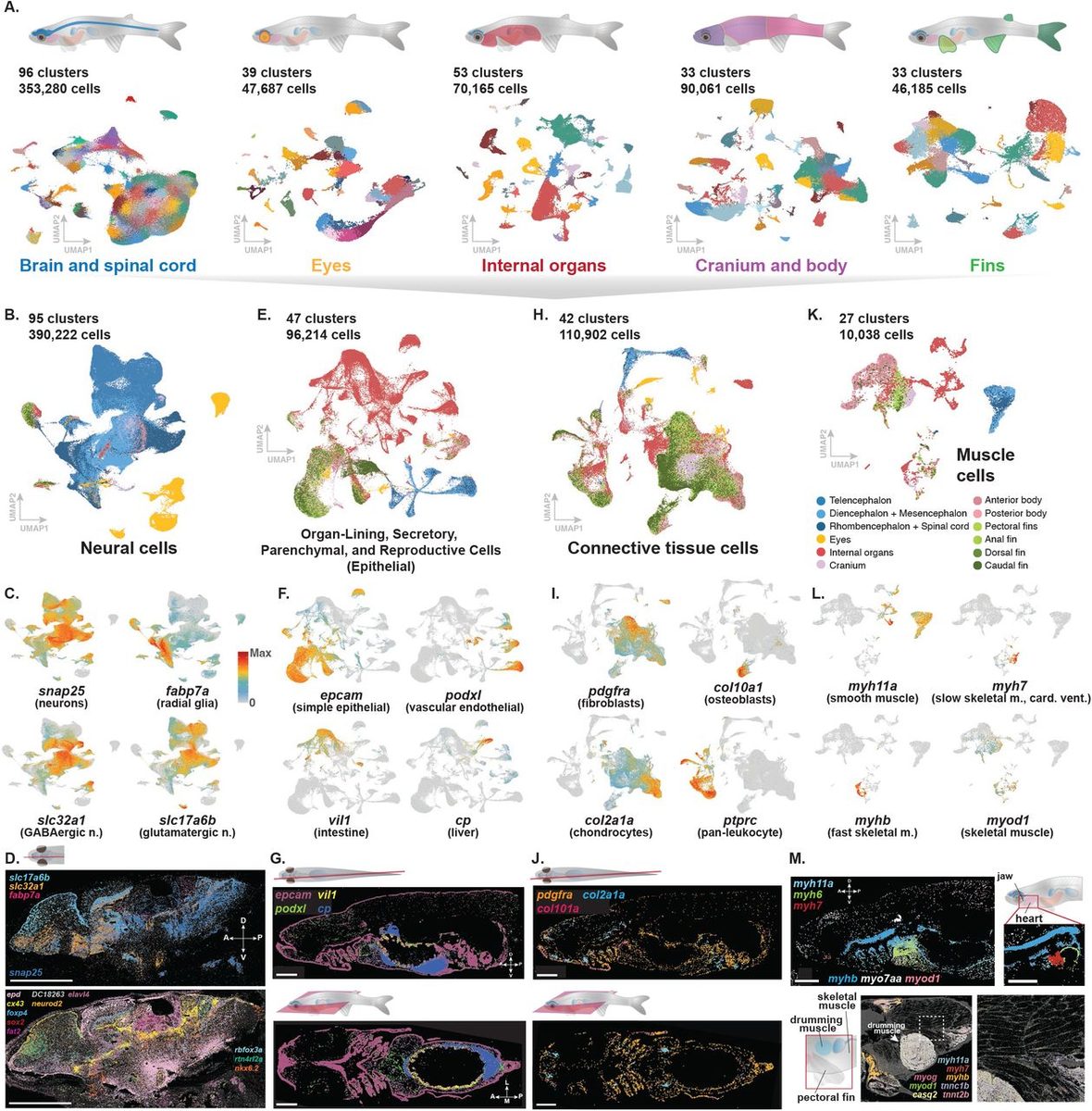
Researchers catalogued 607,370 cells across 12 body regions of the 12-millimeter fish Danionella cerebrum, creating a whole-animal reference for regeneration and cell biology.

Overview

Updated 2 hours ago

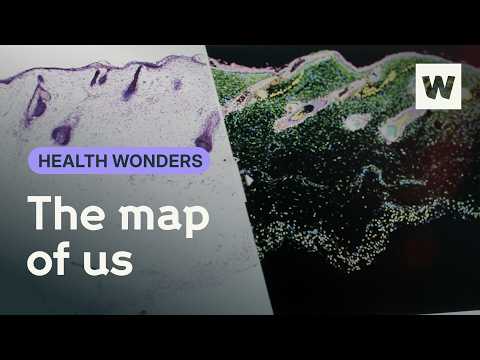
Mapping every cell in an adult vertebrate has been out of reach for a simple reason: most vertebrates are too big. A 12-millimeter transparent fish called Danionella cerebrum removed that obstacle. Researchers catalogued 607,370 cells from 12 body regions and mapped where the major cell types sit.

The result is a reference atlas for an entire animal, not one organ. It shows neurons group by where they develop more than by which neurotransmitter they use, that adult connective tissue keeps a molecular memory of body position, and that the forebrain regrows after injury in an ordered sequence. The data and a public browser, DigiFish, are open to other labs.

Why it matters

A complete cell-by-cell map of a whole adult vertebrate gives researchers a baseline to study regeneration, aging and disease across every tissue at once.

Questions about this story

Free account needed to ask — your question is kept and asked for you right after sign-up. Answers are public.

No questions yet — be the first to ask.

Key Indicators

607,370
Cells profiled
Single-cell RNA sequencing across 12 dissected anatomical regions.
12
Body regions sampled
Regions spanned brain, spinal cord, eyes, organs, fins, head and trunk.
500
Genes in spatial mapping panel
A MERFISH panel located cell types and gene activity in tissue.
12 mm
Adult body length
Small enough to profile whole, related closely enough to zebrafish to borrow its tools.
4
Tissue classes resolved
Neural, epithelial, connective and muscle cells.
30–150
Marker-positive cells for rarest neuron types
Finding these in the whole animal indicated saturation-level coverage of cell types.

Voices

Curated perspectives — historical figures and your fellow readers.

Sign up to generate historical perspectives on this story.

People Involved

Organizations Involved

Timeline

2018 October 2026

5 events Latest: 3 days ago
Tap a bar to jump to that date
  1. Whole-body atlas published in Science

    Latest Publication

    The paper reports 607,370 cells, adult positional memory and a telencephalon regeneration sequence. DigiFish is released.

  2. Atlas preprint posted to bioRxiv

    Preprint

    The team posts a preprint describing whole-body single-cell profiling and spatial mapping of Danionella.

  3. Species formally described

    Research

    Danionella cerebrum is formally described in the scientific literature.

  4. A postdoc looks for a regenerating model

    Research

    Kutay Deniz Atabay begins searching for a small, transparent animal to study nervous-system regeneration.

  5. Tiny fish enters neuroscience labs

    Research

    Danionella cerebrum is adopted for neuroscience research, drawn by its transparency and small size.

Scenarios

1

Positional memory shown to guide fin regeneration

Possible Resolves by Q2 2028

Discussed by: Whitehead Institute researchers and the study authors

The atlas found that adult fin cells keep developmental patterning genes active. Whether those signals actually direct repair is an open question. A follow-up experiment that blocks or alters the genes and measures whether fins regrow correctly would settle it.

2

Second atlas adds injury, aging and drug conditions

Likely Resolves by End of 2028

Discussed by: The study authors and Whitehead Institute

The published atlas is a baseline for healthy animals. The same platform can profile fish after injury, during aging or under drug exposure. The telencephalon regeneration data are a first slice of that larger program.

3

Danionella becomes a standard lab model

Uncertain Resolves by End of 2027

Discussed by: Neuroscience and regeneration researchers

Transparency, small size and genetic ties to zebrafish make Danionella attractive. Whether it spreads depends on shared tools, husbandry and funding. A dedicated grant or community program would be a concrete marker.

Historical Context

3 moments from history that rhyme with this story — and how they unfolded.

1983

Caenorhabditis elegans cell lineage map (1983)

John Sulston and colleagues published the complete embryonic cell lineage of Caenorhabditis elegans, a nematode about a millimeter long. They traced every one of the worm's 959 somatic cells from fertilized egg to adult.

Then

The lineage became a shared reference for developmental biologists.

Now

It helped establish C. elegans as a model organism and contributed to the 2002 Nobel Prize in Physiology or Medicine.

Why this matters now

A tiny body made completeness possible. Danionella applies the same logic to a vertebrate.

1990–2003

Human Genome Project (1990–2003)

An international consortium sequenced the human genome, finishing a working draft in 2000 and a near-complete sequence in 2003. The work took years of coordination across labs in several countries.

Then

The sequence gave biology a parts list for human genes.

Now

Genomics became a routine tool, and attention shifted to how genes are used in different cells.

Why this matters now

Reddien describes cell atlases as the next layer: which genes each cell type actually uses.

2018

Planarian whole-body cell atlas (2018)

Peter Reddien's lab and other groups published single-cell transcriptome atlases of the planarian Schmidtea mediterranea, a flatworm a few millimeters long. The atlases catalogued cell types across the whole animal, including the stem cells that drive regeneration.

Then

The data became a reference for planarian regeneration research.

Now

It showed that small animals can be profiled end to end, a template for other species.

Why this matters now

Reddien's lab brought that whole-animal approach to Danionella.

Sources

(5)