


Pull to refresh
Logo
Qatar's mega reservoirs project more than doubles emergency water supply

Qatar's mega reservoirs project more than doubles emergency water supply

Built World

Fifteen giant concrete reservoirs and 600 km of pipeline give a desert nation a five-day water buffer.

2 days ago: Named Water Award finalist

Overview

Updated 1 hour ago

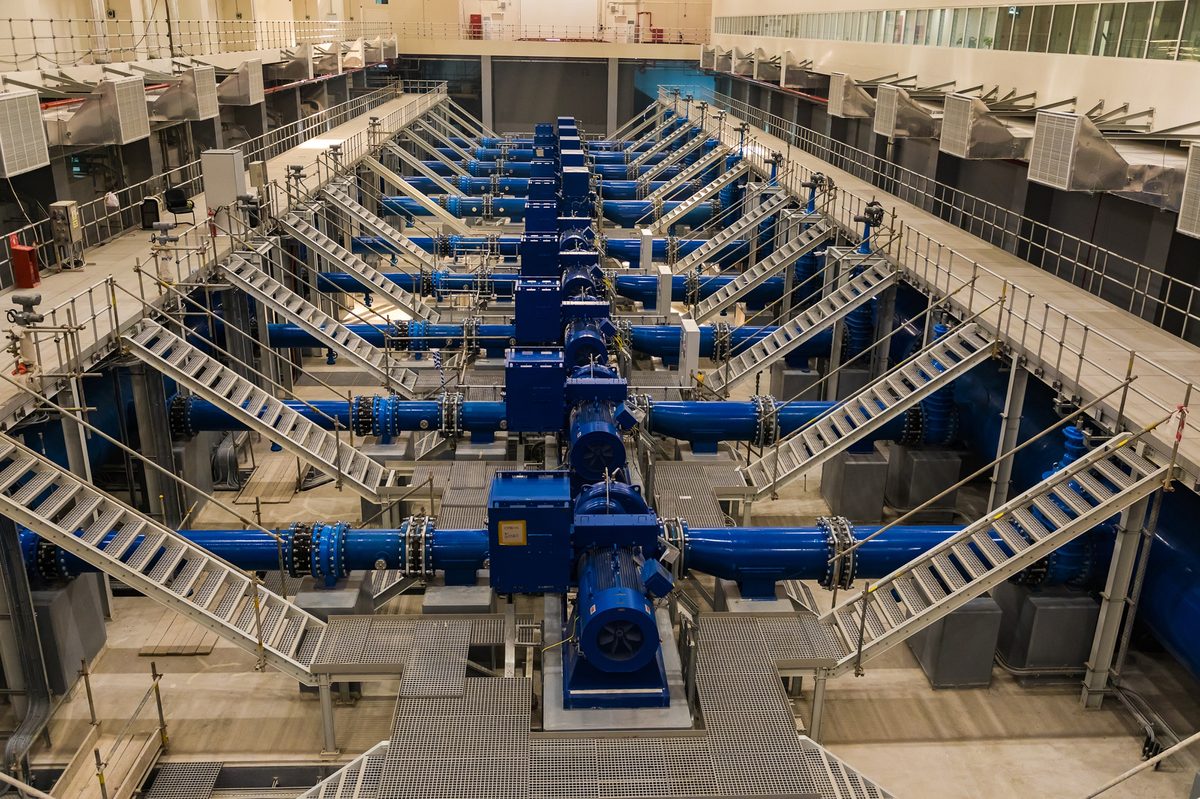
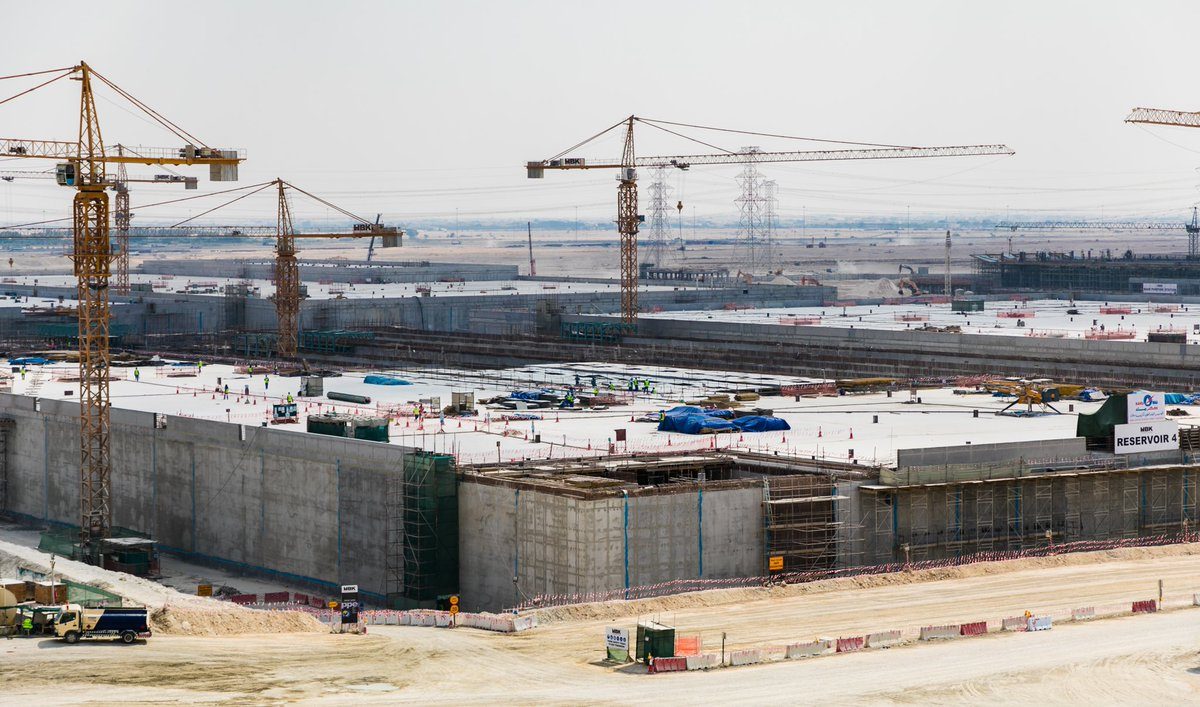
In 2010, Qatar held roughly two days of water in reserve. A decade of construction later, the state utility has built 15 of the largest concrete water reservoirs on Earth and linked them with 600 km of pipeline, pushing that buffer past five days.

The project turns a fundamental vulnerability into a manageable one. Qatar's tap water comes entirely from desalination plants, so a single plant failure used to threaten the whole water system. With a five-day reserve and a network that can reroute supply across the country, an outage becomes a repair job instead of a crisis.

Why it matters

Qatar's water comes entirely from desalination, so a plant failure once threatened the whole nation. A five-day reserve turns an outage into a repair job.

Questions about this story

Free account needed to ask — your question is kept and asked for you right after sign-up. Answers are public.

No questions yet — be the first to ask.

Key Indicators

5.5 days
Strategic water reserve
Up from roughly 2.5 days of supply before the mega reservoirs came online.
15
Concrete mega reservoirs
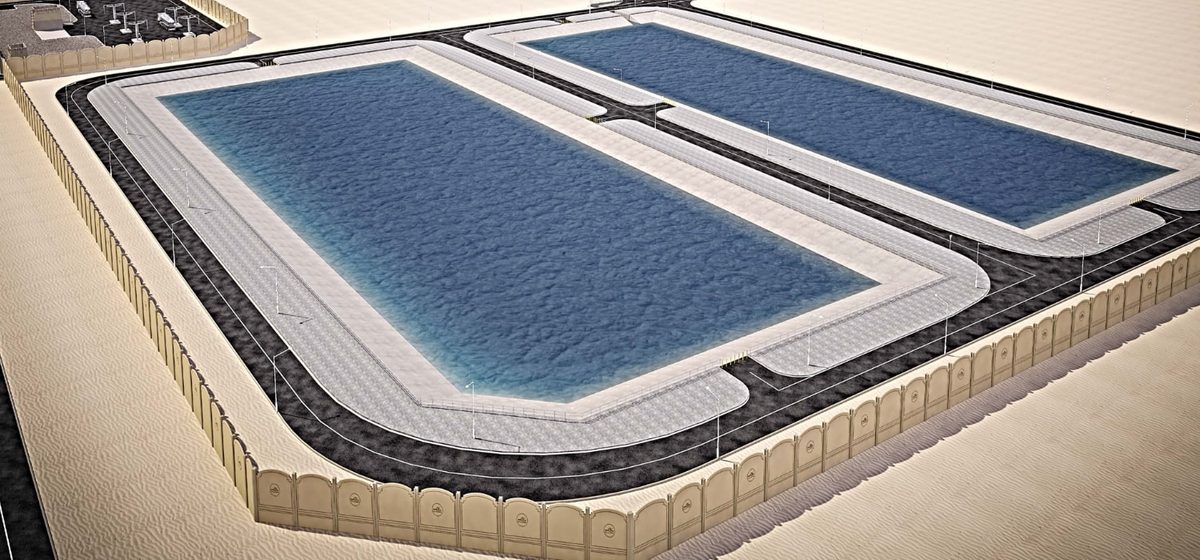
Each holds between 87 and 97 million imperial gallons; the largest are among the biggest concrete potable water reservoirs in the world.
600+ km
Interconnecting pipeline
Diameter 900-1,600 mm, arranged to flow both north-south and south-north across Qatar.
1,421 MIG
Combined storage volume
Million imperial gallons held across the five first-phase sites.
35%
Water reserve surplus
Production capacity of 540 million gallons a day runs 35% above average daily demand of 400 million.

Voices

Curated perspectives — historical figures and your fellow readers.

Ever wondered what historical figures would say about today's headlines?

Sign up to generate historical perspectives on this story.

People Involved

Organizations Involved

Timeline

2010 September 2026

7 events Latest: 2 days ago
Tap a bar to jump to that date
  1. Named Water Award finalist

    Latest Recognition

    POWER Magazine names the project a finalist for its 2026 Water Award, noting storage grew from 2.5 to 5.5 days.

  2. Reserve surplus hits 35%

    Milestone

    KAHRAMAA reports a 35% reserve surplus; strategic storage reaches 2,924 million gallons.

  3. Guinness record for largest tank

    Recognition

    Guinness World Records certifies a project reservoir as the largest drinking water storage tank on Earth, 436,633 m³.

  4. Amir inaugurates the project

    Inauguration

    Qatar's emir inaugurates the Water Security Mega Reservoirs Project; reserve rises to 1,500 million gallons.

  5. First phase opens at Umm Salal

    Construction

    Prime minister opens the first phase; total storage to rise to 2,300 million gallons.

  6. First phase launches

    Construction

    First phase of the Water Mega Reservoirs project begins, aiming for seven days of storage.

  7. Two-day reserve prompts buildout plans

    Context

    Qatar holds roughly 48 hours of emergency water storage, prompting plans for a strategic reserve.

Scenarios

1

Qatar reaches seven-day strategic water reserve

Possible Resolves by End of 2028

Discussed by: Institution of Civil Engineers, GKW Consult

The original first-phase target was seven days of storage, and the current five-and-a-half-day level sits below it. If KAHRAMAA keeps building reservoirs and pumping stations to meet rising demand, it could close the gap within a few years. Second-phase plans reference a 2036 delivery date, leaving room for further expansion.

2

Mega Reservoirs wins POWER's 2026 Water Award

Uncertain Resolves by Q1 2027

Discussed by: POWER Magazine

The project is one of several finalists for the trade publication's 2026 Water Award. The award recognizes notable water infrastructure, and the project's scale, network design, and pumping capacity make it a strong candidate. The winner is announced by the magazine.

3

Second phase expands network toward 2036

Likely Resolves by Q2 2028

Discussed by: Arcadis, GKW Consult

Project documents reference a buildout to 2036 with additional storage and pumping capacity, including a total storage target of 17.5 million cubic meters. If KAHRAMAA awards next-phase contracts, the network extends further and the five-day buffer grows. If funding or demand shifts, the timeline slips.

Historical Context

2 moments from history that rhyme with this story — and how they unfolded.

2003 onward

Singapore's NEWater program (2003)

Singapore opened its first NEWater plants in 2003, recycling treated wastewater into drinking water to cut reliance on water imported from Malaysia. The city-state built the program in response to periodic supply disputes with its northern neighbor.

Then

Within a decade, NEWater and other sources sharply reduced Singapore's dependence on imported water.

Now

The program became a global model for small, water-scarce states securing their own supply.

Why this matters now

Like Qatar's reservoirs, it shows a small, arid nation using large infrastructure investment to control its own water future.

2005-2014

Israel's desalination buildout (2005-2014)

Israel built a string of large seawater desalination plants over about a decade, moving from chronic drought and rationing toward a domestic water surplus. New plants along the coast supplied a growing share of household water.

Then

By the mid-2010s, desalination covered a large share of Israel's domestic water use.

Now

Israel shifted from water scarcity to a position where it could export surplus water and desalination expertise.

Why this matters now

It is the clearest recent precedent for a desert state buying water security through massive infrastructure, the same strategy Qatar is now pursuing.

Sources

(10)