Pull to refresh
Logo
Jordan launches National Water Carrier desalination project

Jordan launches National Water Carrier desalination project

Built World Interactive

A $6.6 billion build-operate-transfer project to desalinate Gulf of Aqaba water and pump it 417 kilometers to Amman, with first deliveries targeted for 2030.

Overview

Updated 8 hours ago

Most Jordanian households get water once a week. On November 18, 2026, Jordan launched a $6.6 billion project meant to change that by desalinating water from the Gulf of Aqaba and pumping it 417 kilometers to Amman.

The National Water Carrier is designed to deliver 300 million cubic meters a year, about 40% of the country's drinking water. First deliveries are targeted for the end of 2030.

Why it matters

Jordan is the world's second most water-scarce country; this project is its largest attempt to supply water without relying on neighbors.

3D explainer

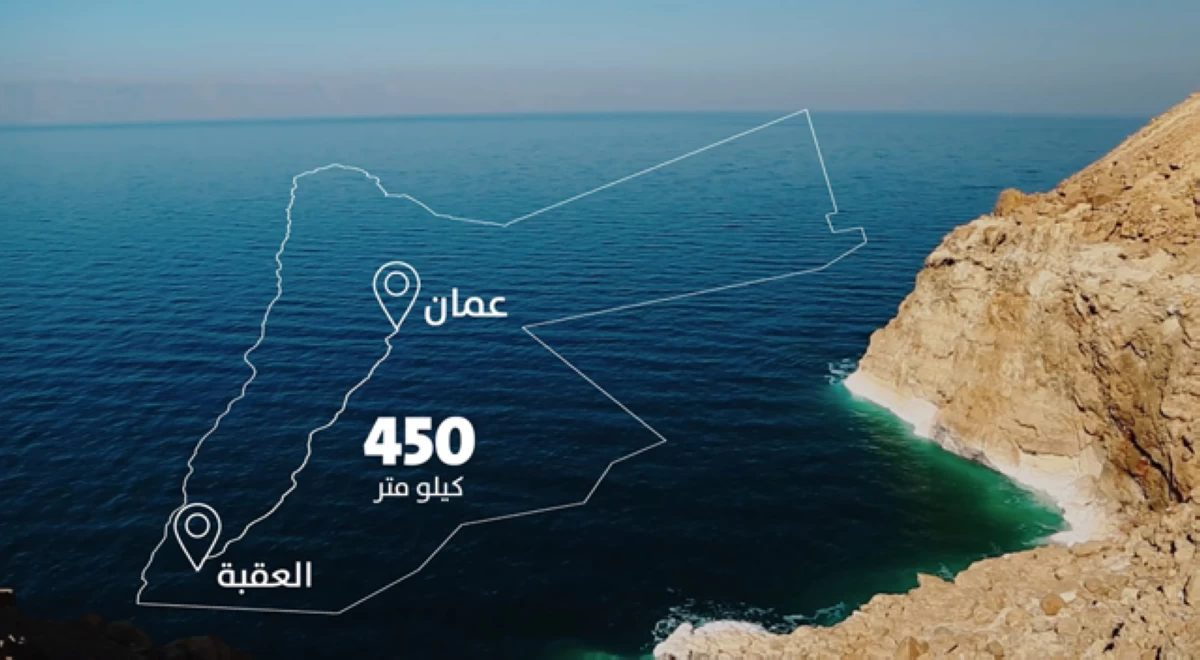
Jordan will pump sea water 417 km and 1,100 m uphill to its capital

Most homes in Jordan get water once a week. Press Play to watch the new supply travel from the Red Sea to Amman, or step through it. Drag the map to turn it.

Drag the model to turn it

  1. Step 1 of 8 · Launched Nov 18, 2026

    A thirsty country

    Most households in Jordan get water only once a week, The National reports. On Nov 18, Jordan launched a plan to take water from the Red Sea at Aqaba, remove the salt, and pump it north to Amman.

    Once a week
    water for most homes
    417 km
    of pipe to Amman
    1,100 m
    the highest it is lifted
    • Amman: water once a week · for most homes in Jordan today
    • Aqaba, on the Red Sea · where the water starts
Jordan will pump sea water 417 km and 1,100 m uphill to its capital
StepWhenWhat happenedSource
1. A thirsty countryLaunched Nov 18, 2026Most households in Jordan get water only once a week, The National reports. On Nov 18, Jordan launched a plan to take water from the Red Sea at Aqaba, remove the salt, and pump it north to Amman. Once a week water for most homes. 417 km of pipe to Amman. 1,100 m the highest it is lifted. Amman: water once a week: for most homes in Jordan today. Aqaba, on the Red Sea: where the water starts.Petra: Prince Faisal launches JD4.68B National Water Carrier
2. Water in from the seaIntake pipes at Aqaba will draw about 600 million cubic metres of seawater a year from the Gulf of Aqaba, an arm of the Red Sea, water expert Hazem Nasser told Jordan's state news agency. 600 million cubic metres of seawater a year. Sea water in: about 600 million cubic metres a year.Petra: Water Carrier to nearly double per-capita water
3. Inside: filtering out saltSUEZ, with Egypt's Orascom, will build a reverse osmosis plant. Pumps press seawater against very fine membranes: water squeezes through, most of the salt is held back. SUEZ calls it the world's second-largest. 851,000 cubic metres of fresh water a day. Reverse osmosis: membranes let water through, hold salt back. 851,000 cubic metres a day: world's second-largest, says SUEZ.SUEZ: Groundbreaking of the Aqaba Amman desalination plant
4. Half goes back to the seaOf the seawater taken in, half becomes drinking water. The other half, the salty leftover called brine, will go back into the Gulf under international environmental standards, Nasser says. 600 million cubic metres of seawater in. 300 million cubic metres of drinking water. Half returned to the sea. 600 million in: cubic metres of seawater a year. Half goes back: salty brine, returned to the Gulf.Petra: Water Carrier to nearly double per-capita water
5. A 417 km climbFrom sea level at Aqaba, pumps will push the water 417 km north and as high as 1,100 m above the sea. The ground's shape in this slice is our sketch, with heights stretched 60 times. 417 km of pipe. 1,100 m highest point it is pumped to. Aqaba: sea level: where the water starts. Amman end: up to 1,100 m: above sea level (dashed line), Jordan says.Petra: Prince Faisal launches JD4.68B National Water Carrier
6. Pumps and sun powerPumping stations push the water up the climb. A solar farm east of Quweira is meant to supply part of the power; Jordan says about 300 megawatts, covering about 30% of the electricity. 3 pumping stations (EBRD document). 300 MW of solar, Jordan says (SUEZ: 280). 30% of its power, Jordan says. 3 pumping stations: in a 2025 project plan published by EBRD. Solar farm, about 300 MW: about 30% of the power, Jordan says.EBRD: Aqaba Amman project biodiversity plan (Dec 2025)
7. What the plant deliversIt is designed to deliver 300 million cubic metres a year, about 40% of what Jordan needs for drinking. Amman gets 250 million. The ministry expects homes to get water three days a week, not one. 300 million cubic metres a year in all. 40% of Jordan's drinking-water needs. 100 litres a person a day, 5 million+ people (GCF). 250 million cubic metres: a year for Amman, of 300 million in all (EBRD).Petra: Water Carrier to nearly double per-capita water
8. The bill and the dateCost: JD 4.68 billion ($6.6 billion). A group led by Meridiam, with SUEZ, builds and runs it and hands it to Jordan 26 years after it starts running. First water is expected by the end of 2030. $6.6 billion JD 4.68 billion. End of 2030 first water expected. 26 years of running, then Jordan owns it.Petra: Prince Faisal launches JD4.68B National Water Carrier

As of 2026-11-18. Figures from Jordan's state news agency Petra, SUEZ, the Green Climate Fund and development banks' project papers (EBRD, IFC). Sources differ (pipe 417-450 km, solar 280-300 MW, cost $5.8-6.7 billion); we use Jordan's. Land, route and two pump sites are our sketch; hills 22x taller (60x side view). Sources: Petra: Prince Faisal launches JD4.68B National Water Carrier, Petra: Water Carrier to nearly double per-capita water, The National: Jordan embarks on water project, SUEZ: Groundbreaking of the Aqaba Amman desalination plant, EBRD: Aqaba Amman project biodiversity plan (Dec 2025), IFC: ESIA update, new desalination plant site (2025) and 4 more, each cited on its row.

Questions about this story

Free account needed to ask — your question is kept and asked for you right after sign-up. Answers are public.

No questions yet — be the first to ask.

Key Indicators

$6.6B
Total project cost
Financing package assembled from 23 donor agencies, lenders and sponsors.
40%
Share of national drinking water demand
Designed to supply about 300 million cubic meters a year.
417 km
Pipeline length
Runs from the Gulf of Aqaba to Amman, pumping uphill to 1,100 meters above sea level.
300M m³
Annual desalination capacity
The plant is designed for 851,000 cubic meters per day, which SUEZ calls the world's second-largest.
35,000
Jobs created
Direct and indirect positions cited by the Green Climate Fund.
$295M
Green Climate Fund contribution
Concessional loans and grants, its largest commitment to a single country.

Voices

Curated perspectives — historical figures and your fellow readers.

Sign up to generate historical perspectives on this story.

People Involved

Organizations Involved

Timeline

1994 November 2026

5 events Latest: Today
Tap a bar to jump to that date
  1. Jordan launches National Water Carrier

    Today Launch

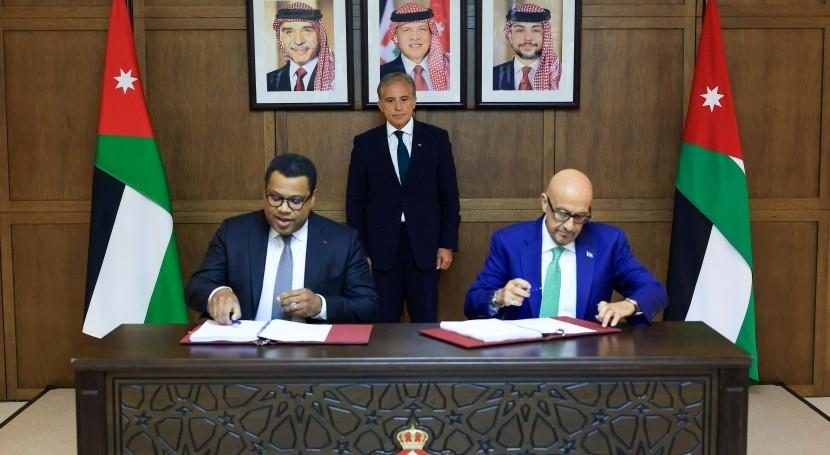
    Prince Faisal presides as Jordan breaks ground on the $6.6 billion project.

  2. Water-for-electricity agreement expires

    Diplomacy

    Jordan says the 2021 deal lapsed, halving Israeli water exports.

  3. Jordan awards 30-year concession to Meridiam consortium

    Contract

    Meridiam-led group wins deal to finance, build and operate the project.

  4. US-sponsored water-for-electricity deal signed

    Agreement

    Israel to supply more water in exchange for power from a proposed solar plant.

  5. Israel-Jordan peace treaty sets water allocation

    Treaty

    Treaty commits Israel to provide 50 million cubic meters of water a year.

Scenarios

1

First water reaches Amman by end of 2030

Possible Resolves by Q2 2031

Discussed by: Jordan's Ministry of Water and Irrigation, Meridiam, SUEZ

The consortium completes the four-year construction program and commissions the 851,000 cubic meter per day plant and the 417-kilometer pipeline. Jordan's water ministry begins deliveries, raising per capita availability from about 60 to 110 cubic meters a year.

2

Construction slips past 2031

Possible Resolves by End of 2031

Discussed by: Infrastructure analysts; The National

Large desalination and pipeline projects often run over schedule. Pumping water 1,100 meters uphill across 417 kilometers, alongside financing from 23 institutions, creates room for delay. The National notes officials have cautioned the project will lessen but not solve Jordan's water problems.

3

Cost overrun forces a new financing round

Unlikely Resolves by End of 2028

Discussed by: Project finance analysts

If construction costs exceed the $6.6 billion package, sponsors and the government return to lenders and donors. The Green Climate Fund's $295 million was structured to keep tariffs affordable, and a second concessional round would test that arrangement.

4

Jordan ends purchases of Israeli water

Uncertain Resolves by End of 2031

Discussed by: The National; Jordanian officials

The 2021 barter deal expired in February 2026 and Israeli exports halved. If the carrier delivers 300 million cubic meters a year, Jordan could make the suspension permanent rather than renew purchases under the 1994 treaty.

Historical Context

3 moments from history that rhyme with this story — and how they unfolded.

1950s

East Ghor Canal (1950s)

The United States funded the East Ghor Canal in the 1950s to move water into the Jordan Valley. The National describes it as the last Jordanian infrastructure project of comparable scale to the National Water Carrier.

Then

The canal gave Jordan its first large-scale water conveyance system.

Now

It remained the benchmark for Jordanian water infrastructure for nearly seven decades.

Why this matters now

Sets the scale: Jordan has not built anything this large since the 1950s.

1994

Israel-Jordan water annex (1994)

The 1994 peace treaty committed Israel to provide 50 million cubic meters of water a year to Jordan. A 2021 barter agreement later added more water in exchange for electricity from a proposed solar plant.

Then

The treaty locked in a steady cross-border water supply.

Now

The arrangement became politically fragile; the 2021 deal expired in February 2026 and exports halved.

Why this matters now

Explains why a domestic supply matters: imported water has been unreliable when relations cool.

2013

Disi Water Conveyance Project (2013)

Jordan built the $1.1 billion Disi project, financed mostly by the United States and European governments, to carry 100 million cubic meters a year from an aquifer near the Saudi border to Amman and other cities.

Then

Disi reduced water shortages in the capital.

Now

It meets only one seventh of national municipal demand, according to The National.

Why this matters now

Shows that even a major conveyance falls short; the new project is designed to deliver three times Disi's volume.

Sources

(8)