
Pull to refresh
Logo
China connects the world's largest liquid-air storage plant to its grid

China connects the world's largest liquid-air storage plant to its grid

Built World

The 60-megawatt facility in Qinghai can discharge for 10 hours, testing whether cryogenic storage can compete with lithium-ion batteries.

Overview

Updated 40 minutes ago

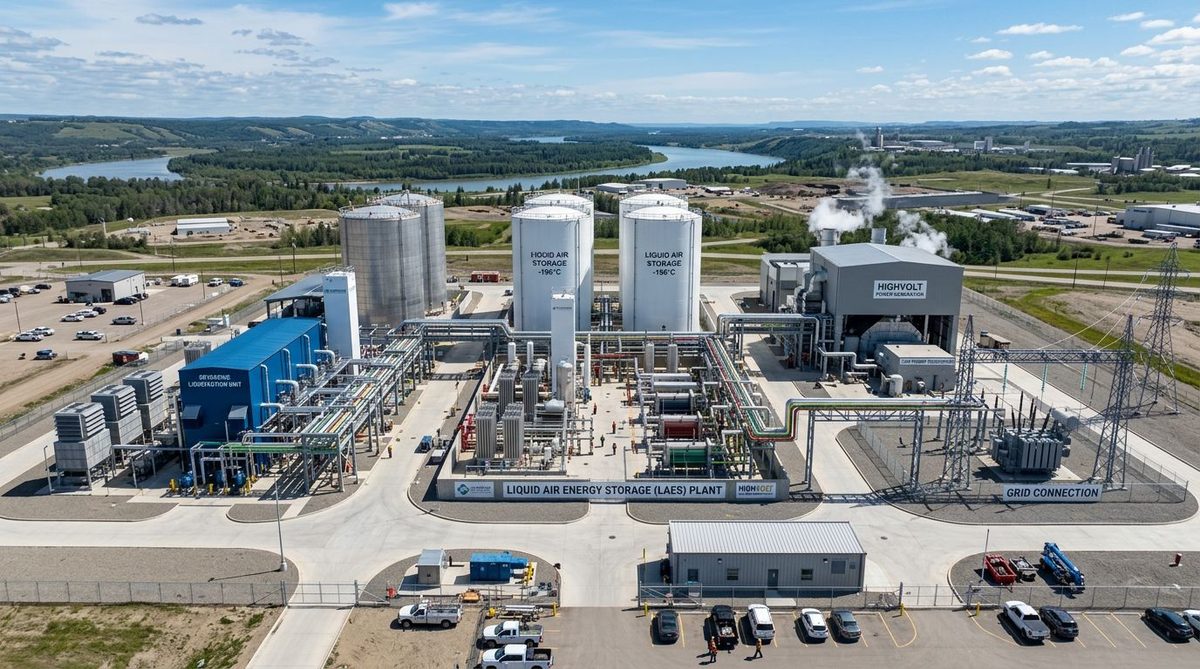
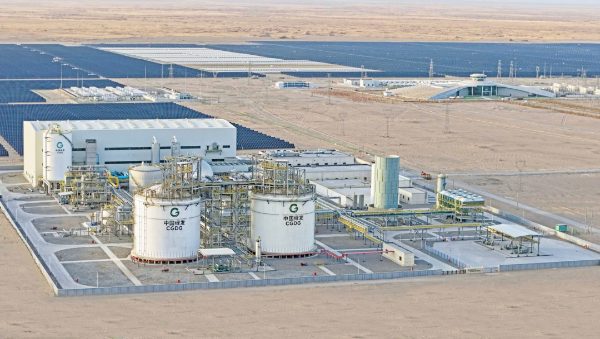
On October 30, a 60-megawatt plant in Golmud, in western China's Qinghai province, began sending electricity to the regional grid. It stores power by chilling air to about minus 194 degrees Celsius until it becomes a liquid, then letting it warm and expand back into gas to spin a turbine.

The 600-megawatt-hour facility can run at full output for 10 hours, long enough to move afternoon solar into the evening. It is the largest liquid-air plant ever connected to a grid, and its backers say it costs about a third as much as lithium-ion batteries of comparable scale.

Why it matters

If liquid air scales, grids can store wind and solar for hours without lithium or special geology.

Questions about this story

Free account needed to ask — your question is kept and asked for you right after sign-up. Answers are public.

No questions yet — be the first to ask.

Key Indicators

600
Storage capacity (megawatt-hours)
Rated energy capacity, the largest for any grid-connected liquid-air plant.
60
Rated power (megawatts)
Maximum discharge rate; the plant can hold this for 10 hours straight.
10
Hours of continuous discharge
Long enough to cover an evening demand peak after solar output falls.
100%
Domestic equipment share
All major machinery, including compressors and cryogenic heat exchangers, was made in China.
180 GWh
Annual grid supply (estimated)
Developer estimate, roughly the yearly electricity use of 30,000 households.
33¢
Cost per dollar of lithium-ion storage
Lazard comparison cited by the developer, before real-world operating data exists.

Voices

Curated perspectives — historical figures and your fellow readers.

Sign up to generate historical perspectives on this story.

People Involved

Organizations Involved

Timeline

July 2023 November 2026

4 events Latest: Yesterday
Tap a bar to jump to that date
  1. Plant reported running at full demonstration scale

    Latest Milestone

    The developer confirms the world's largest grid-connected liquid-air facility is operating.

  2. Plant connects to the grid

    Milestone

    The facility begins generating and feeding power into the Qinghai regional grid.

  3. Project named a top-10 scientific achievement

    Recognition

    The Zhongguancun Forum lists the 60 MW liquid-air project among China's major scientific results.

  4. Construction begins in Golmud

    Infrastructure

    China Green Development starts building the 60 MW/600 MWh plant in Qinghai's Qaidam Basin.

Scenarios

1

China approves a second grid-scale liquid-air plant

Possible Resolves by Q2 2028

Discussed by: China Green Development and Chinese energy trade press

If Golmud runs near its rated output through a full heating and cooling season, the developer or another state utility orders a follow-on plant. That would show the design is repeatable rather than a one-off demonstration.

2

Liquid-air storage stays a demonstration technology

Uncertain Resolves by Q2 2028

Discussed by: Energy analysts cited by pv magazine and Cleantech Media

Round-trip efficiency and maintenance costs at cryogenic temperatures could keep liquid air behind lithium-ion and compressed-air storage. Golmud would remain a showcase without commercial orders.

3

A non-Chinese utility signs a liquid-air contract

Unlikely Resolves by Q2 2028

Discussed by: Highview Power and European energy trade press

Highview Power's Vermont project and other pipeline proposals could convert into firm orders if Golmud's operating data reassures buyers. A signed contract outside China would mark the technology's first export market.

Historical Context

3 moments from history that rhyme with this story — and how they unfolded.

Before 2025

China's 100-kilowatt liquid-air demonstrator

Researchers at the Chinese Academy of Sciences built a 100-kilowatt liquid-air storage platform and reported 91% cold-storage efficiency. It followed a 500-kilowatt compressed-air test rig.

Then

The lab results justified a jump to a 60-megawatt national demonstration project.

Now

The design became the basis for the Golmud plant, with the same stepped liquefaction and near-atmospheric storage approach.

Why this matters now

Golmud is the first time this design has run at grid scale, roughly 600 times the power of the lab platform.

Announced, not yet built

Highview Power's Vermont project (United States)

Highview Power and Encore Renewable Energy proposed a 400-megawatt-hour liquid-air plant in northern Vermont, designed for eight hours of discharge. It has been described as the first commercial-scale liquid-air project in the US.

Then

The project has not been completed, leaving the US without a grid-scale liquid-air plant.

Now

Its fate will shape whether liquid air gains a foothold outside China.

Why this matters now

Golmud is 20% larger by capacity, making China the first country to operate liquid-air storage at this scale.

2010s–2020s

Lithium-ion becomes the default grid battery (2010s–2020s)

Lithium-ion batteries scaled rapidly in factories and electric vehicles, driving down costs and becoming the standard choice for short-duration grid storage. Most grid batteries discharge for two to four hours.

Then

Utilities built thousands of megawatt-hours of lithium-ion storage, mostly for frequency and peak-shaving services.

Now

Longer-duration technologies, including flow batteries and compressed air, struggled to compete on cost.

Why this matters now

Golmud is a test of whether a 10-hour technology can win share where lithium-ion's cost curve has dominated.

Sources

(7)