


Pull to refresh
Logo
White House pulls Heidi Overton's FDA nomination

White House pulls Heidi Overton's FDA nomination

Rule Changes

The agency has run on acting leadership since May, and a Democratic Senate will now weigh the next pick

Overview

Updated 1 hour ago

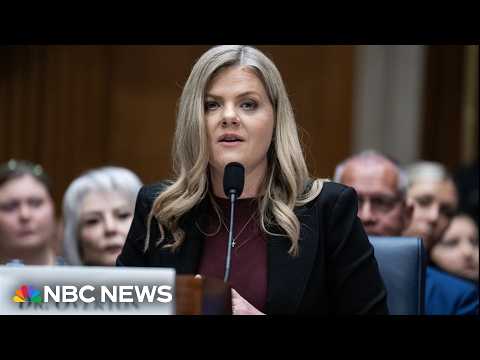
The Food and Drug Administration has had no Senate-confirmed commissioner since May. On Tuesday, the White House withdrew Heidi Overton's nomination one day before the Senate health committee was scheduled to vote on it.

The withdrawal leaves the administration little time to install a permanent FDA chief before Democrats take control of the Senate in January. Overton's replacement, if there is one, would face a chamber with a 56-seat Democratic majority.

Why it matters

The FDA decides which drugs, vaccines and tobacco products reach Americans. Its leadership vacuum now stretches into a Senate controlled by the other party.

Questions about this story

Free account needed to ask — your question is kept and asked for you right after sign-up. Answers are public.

No questions yet — be the first to ask.

Key Indicators

210
Limit on acting commissioner service
Federal law caps how long an acting FDA commissioner may serve; Overton's withdrawal restarted the clock.
0
Senate-confirmed FDA commissioners since May 2026
Kyle Diamantas has run the agency on an acting basis since Marty Makary resigned.
56
Democratic Senate seats in the next Congress
Democrats take control in January 2027 with a 56-seat majority.

Voices

Curated perspectives — historical figures and your fellow readers.

Sign up to generate historical perspectives on this story.

People Involved

Organizations Involved

Timeline

May 2026 November 2026

6 events Latest: Yesterday
Tap a bar to jump to that date
  1. Committee meets, no FDA vote held

    Latest Hearing

    Cassidy confirms the withdrawal; a scheduled vote on Jim O'Neill for the National Science Foundation is scrapped.

  2. White House pulls Overton's nomination

    Withdrawal

    White House pulls Overton's nomination a day before the Senate health committee vote.

  3. Republicans lose the Senate

    Election

    Republicans lose the House and Senate; Democrats will control both chambers in January.

  4. Overton faces the Senate

    Hearing

    Overton pledges to "follow the law" on vaccines and acknowledges mifepristone met FDA safety standards.

  5. Trump nominates Heidi Overton

    Nomination

    Trump picks the White House domestic policy official and preventive medicine physician to lead the agency.

  6. Makary resigns, FDA gets an acting chief

    Leadership

    After a tenure marked by leadership turnover, Makary steps down; Kyle Diamantas becomes acting commissioner.

Scenarios

1

Marshall nominated and confirmed before Democrats take the Senate

Unlikely Resolves by Jan 3, 2027

Discussed by: Semafor, via CNBC and The Guardian; RBC Capital Markets analyst Brian Abrahams

Trump names Roger Marshall, the Kansas senator and physician who lost his reelection bid, to the job. Senators traditionally confirm one of their own more easily, but the calendar is the obstacle: the current Senate has about six weeks before the new Congress is sworn in on January 3.

2

FDA enters 2027 with no permanent commissioner

Likely Resolves by Q1 2027

Discussed by: BioPharma Dive; RBC Capital Markets analyst Brian Abrahams

No replacement clears the Senate this year, and Kyle Diamantas keeps running the agency on an acting basis with a fresh 210-day clock. Abrahams wrote that FDA operations and drug approvals are "likely to continue running reasonably smoothly" in the meantime.

3

A replacement nominee faces a Democratic Senate

Possible Resolves by End of 2027

Discussed by: Vox; BioPharma Dive

The administration names a new nominee in 2027, and a Senate with a 56-seat Democratic majority votes on the pick. Confirmation would require a nominee acceptable to Democrats, a higher bar than the one Overton failed to clear with Republicans.

Historical Context

3 moments from history that rhyme with this story — and how they unfolded.

September 2005 - December 2006

Andrew von Eschenbach's confirmation gap (2005-2006)

Lester Crawford resigned as FDA commissioner in September 2005, about two months after the Senate confirmed him. President Bush nominated Andrew von Eschenbach to replace him, and the nomination stalled in the Senate for more than a year.

Then

Von Eschenbach ran the FDA as acting commissioner through 2006.

Now

He was confirmed in December 2006, after roughly 14 months of acting leadership.

Why this matters now

The FDA has run for long stretches without a confirmed chief before. Overton's withdrawal sets up another such stretch.

January 2021 - February 2022

Janet Woodcock's year as acting commissioner (2021-2022)

Stephen Hahn left the FDA in January 2021, and Janet Woodcock, a career scientist, became acting commissioner. Robert Califf's nomination to replace her moved slowly through an evenly divided Senate.

Then

Woodcock ran the agency for just over a year, including the COVID-19 vaccine rollout.

Now

Califf was confirmed in February 2022, and the agency kept approving products throughout the gap.

Why this matters now

Shows the FDA can operate for a year without a confirmed leader, which is the path it is on now.

1998

Federal Vacancies Reform Act (1998)

Congress passed a law limiting how long acting officials can fill Senate-confirmed positions. It generally caps acting service at 210 days, and the clock restarts when a nomination is withdrawn.

Then

Agencies got a fixed deadline to get their nominees confirmed.

Now

The limit now governs how long Kyle Diamantas can run the FDA as acting commissioner.

Why this matters now

Explains the 210-day figure at the center of the current timeline.

Sources

(8)