Anchor

Grand Rapids replaces Lime with Veo as sole micromobility vendor
Rule Changes Grand Rapids, MI localNew contract runs through 2029 and cuts low-income ride costs from $40 a week to $5 a month.
2 days ago: Veo takes over Grand Rapids micromobility serviceNew here? Follow stories to track developments over time. Create a free account to get updates when stories you care about change.
Overview
Updated 2 hours agoGrand Rapids' shared e-bikes and scooters switched operators Tuesday: Veo now runs the city's micromobility network, replacing Lime. Low-income riders see the biggest change—Veo's access plan costs $5 a month for 30 daily minutes, versus roughly $40 a week under Lime.
The switch followed a competitive procurement and a City Commission vote. Veo holds the exclusive contract through 2029; Lime's vehicles will be phased out gradually.
Why it matters
The new contract cuts the cost of daily e-bike rides for low-income Grand Rapids residents from about $40 a week to $5 a month.
Questions about this story
Free account needed to ask — your question is kept and asked for you right after sign-up. Answers are public.
No questions yet — be the first to ask.
Key Indicators
$5/month
Veo Access monthly rate
Low-income riders get 30 free minutes daily for $5 a month.
$40/week
Lime's former access rate
City officials said Lime charged roughly $40 a week for its access program.
2 million+
Trips since 2020
More than 400,000 users have taken over 2 million trips since the pilot launched.
12 square miles
Service area size
Covers about 27% of city land and 74% of Neighborhoods of Focus.
33%
Fleet share for low-income neighborhoods
At least one-third of Veo's active fleet is allocated to Neighborhoods of Focus.
Related Media
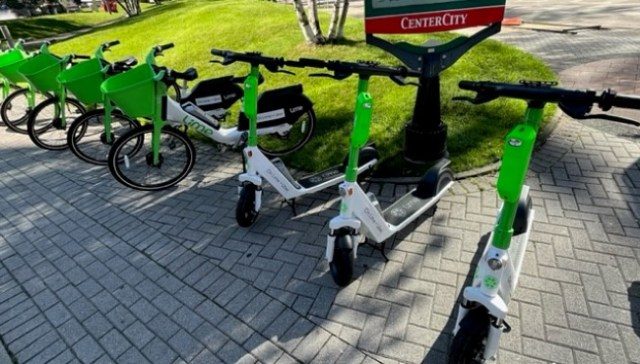
Lime leaving as Grand Rapids chooses new electric bicycle (e-bike) and electric scooter (e-scooter) vendor Veo
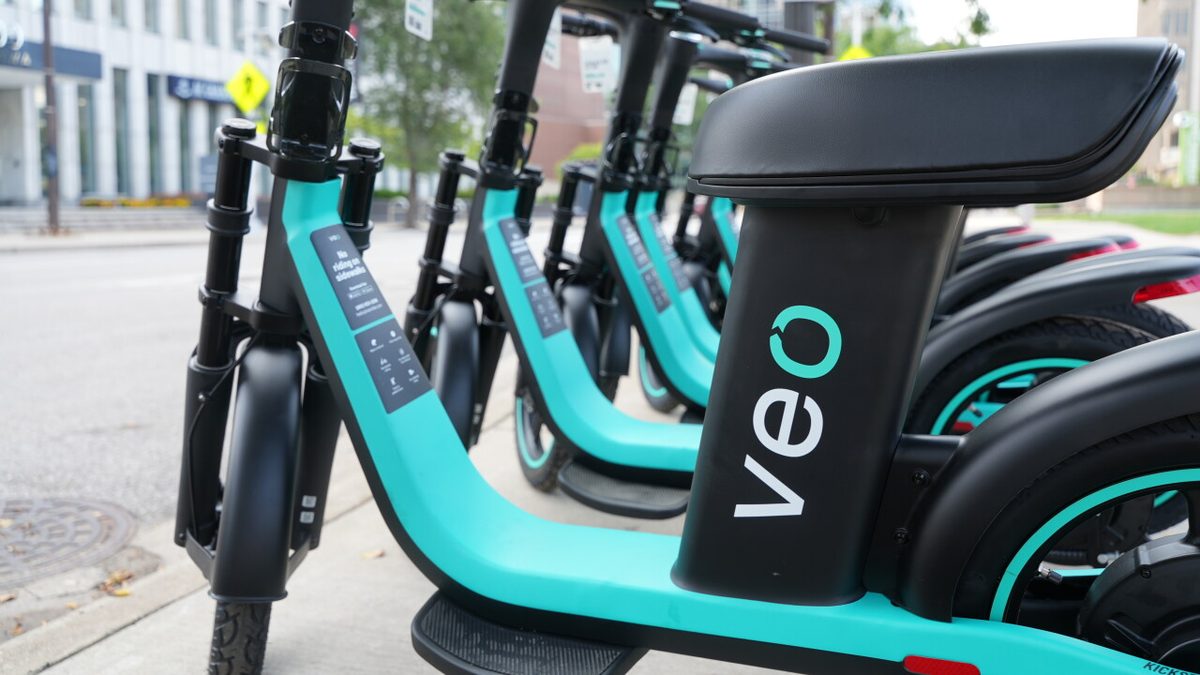
Veo on full charge as Lime's battery runs low in Grand Rapids
396 views
0:58
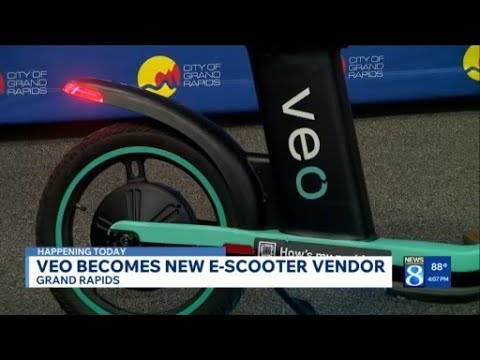
Grand Rapids swaps Lime for more affordable Veo e-bikes
WOOD TV8
371 views
1:16
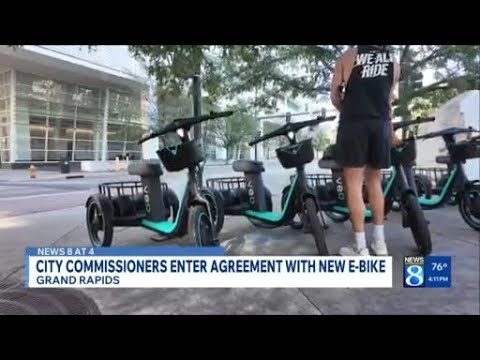
Lime leaving as GR chooses new e-scooter vendor
WOOD TV8
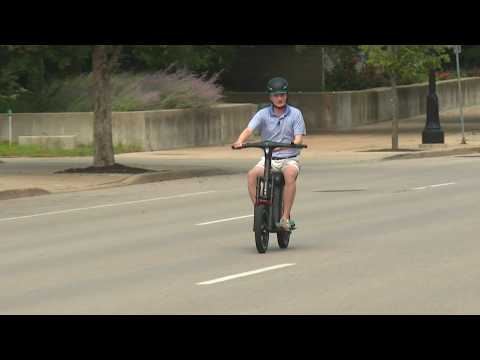
559 views
2:26
Grand Rapids unveils new scooter, E-bike vendor
13 ON YOUR SIDE
Images from Openverse under Creative Commons licenses. Videos from YouTube.
Voices
Curated perspectives — historical figures and your fellow readers.
Play
Exploring all sides of a story is often best achieved with Play.
Most of these play right now — no account needed. Sign up to save scores, keep a streak, and unlock Debate and Predict.
Log in
Sign Up
Higher or Lower
A number from this story, against one from elsewhere in the news — guess which is bigger, then keep the chain going. 5 rounds, 3 strikes; a miss costs a strike and resets your streak.
Example
Anchor
EU tariff revenue
$52B
Big for this kind of number
Mystery
Pentagon AI contract
?
Round 1
Streak: 0
Mystery
?
Keyboard: ↓/L lower · ↑/H higher
0 pts
Best streak: 0 · Rounds: 0
0 points — sign up to put that on the leaderboard.
Now try on this story
Connections
Sixteen names from the news. Find the four hidden groups of four. Four mistakes max.
Loading today's puzzle…
0/4 groups
Mistakes
Sign up to keep a daily streak — a new puzzle lands every day.
Now try on this story
Exit debate?
Your progress in this debate will be lost.
How it works
- 1 Two AI personas square off on this story.
- 2 You predict who'll win each round — correct picks earn XP.
- 3 One crossfire question is yours to fire. Pick it carefully.
Couldn't generate a topic
Select Your Champions
Choose one persona for each side of the debate
DEBATE TOPIC
Choose personas with different perspectives for a more dynamic debate.
SIDE A (PRO)
Select debater for this side:
No debate personas available right now.
SIDE B (CON)
Select debater for this side:
No debate personas available right now.
VS
Get ready to make your prediction...
Round of
Claim
Evidence
Stakes
Crossfire Answer
Closing Statement
Claim
Evidence
Stakes
Crossfire Answer
Closing Statement
Your Crossfire Question
Generating arguments...
Who's Got This Round?
Make your prediction before the referee scores
The referee scores both sides on
Correct predictions earn +20 XP
· Press 1 or 2 to pick
Evidence
40%
Logic
30%
Detail
20%
Style
10%
Round Results
Your Pick
Not this time
(%)
Overall Score
/10
Your Pick
Not this time
(%)
Overall Score
/10
Set the Crossfire
Pick the question both personas must answer in the final round
Crafting crossfire questions...
Choosing a question earns +10 XP crossfire bonus
🏆
Total XP Earned
Cred Change
Predictions
Debate Oracle! You called every round!
Sharp Instincts! You know your debaters!
The Coin Flip Strategist! Perfectly balanced!
The Contrarian! Bold predictions!
Inverse Genius! Try betting the opposite next time!
XP Breakdown
Base completion
+20 XP
Rounds played ( rounds x 5 XP)
+ XP
Correct predictions ( correct x 20 XP)
+ XP
Crossfire bonus
+10 XP
Accuracy
%
Prediction History
Round
You picked:
✓
✗
Now try on this story
Keep debating to level up your credibility and unlock achievements
People Involved
Organizations Involved
City of Grand Rapids – Mobile GR
Municipal mobility department
Contracting authority for Grand Rapids' micromobility program
The city department that manages Grand Rapids' shared micromobility program and selected Veo as exclusive vendor.
Veo
Shared micromobility operator
Grand Rapids' sole micromobility provider under 2026-2029 contract
Veo operates shared e-bikes, e-scooters, and e-trikes across North America.
Lime (Neutron Holdings Inc.)
Shared micromobility operator
Former Grand Rapids vendor; vehicles being phased out
Lime operated Grand Rapids' shared micromobility network from 2022 until August 2026.
Timeline
January 2020 September 2026
4 events
Latest: 2 days ago
Tap a bar to jump to that date
-
Veo takes over Grand Rapids micromobility service
Latest Service LaunchVeo replaces Lime as the city's sole vendor; Lime vehicles phase out gradually.
-
City commission selects Veo in competitive process
DecisionGrand Rapids chooses Veo over Lime to run e-bikes and scooters through 2029.
-
Grand Rapids makes micromobility permanent with Lime
ContractCity adopts single-operator model and signs a three-year contract with Lime.
-
Grand Rapids launches shared micromobility pilot
Program LaunchCity tests shared e-scooters and e-bikes, laying groundwork for a permanent program.
Historical Context
3 moments from history that rhyme with this story — and how they unfolded.
May 2013 – May 2014
Citi Bike's operator collapse (2013-2014)
Alta Bicycle Share launched Citi Bike in May 2013 with 6,000 bikes. Within a year, software failures and cost overruns pushed the operator near bankruptcy, and New York City intervened.
Then
The city restructured the contract and brought in Motivate to run the system.
Now
Motivate expanded Citi Bike into the largest bike-share system in the U.S.; Lyft later acquired Motivate.
Why this matters now
Both cases show a city using its contracting power to replace a micromobility vendor when the existing operator isn't delivering what the public needs.
July 2017 – November 2017
Portland's dockless bike-share pilot (2017)
Portland launched the nation's first dockless bike-share pilot in 2017, allowing Lime, Spin, and Ford GoBike to operate under temporary rules. The pilot set requirements for parking, data reporting, and access for low-income riders.
Then
The city used pilot data to write permanent rules for dockless vehicles.
Now
Portland's approach became a reference point for cities weighing open competition versus exclusive contracts.
Why this matters now
Grand Rapids uses the opposite model—a single vendor selected by competitive bid—but also sets prices and equity requirements through its contract.
March 2018 – October 2018
San Francisco's scooter permit system (2018)
Bird deployed scooters in San Francisco in 2018 without permission, prompting the city to issue cease-and-desist letters. The SFMTA then created a permit program capping fleets and requiring low-income access plans.
Then
Permitted operators had to share data and offer reduced pricing; some later lost permits for violations.
Now
The framework influenced how cities across the country regulate dockless scooters.
Why this matters now
Grand Rapids' $5 monthly Veo Access is the same kind of equity requirement, embedded in a contract rather than a permit.
Sources
(3)Related Stories
Uber-backed Lime lists on Nasdaq in rare micromobility IPO
Money Moves
Updated Jul 1
Grand Rapids debates Flock cameras as ACLU urges contract cancellation
Rule Changes
Updated Aug 25
Southbound US-131 Wealthy Street exit closes for four weeks
Built World
Updated 2 days ago
Rad ish Street Food licensed to open at Grand Rapids Downtown Market
New Capabilities
Updated 7 days ago
Grand Rapids residents challenge Acrisure Amphitheater's noise exemption
Rule Changes
Updated Aug 25
Kent County reports second mosquito-borne virus of 2026 season
Rule Changes
Updated 5 days ago