Anchor

Consumers Energy starts Cherry Street grid upgrade serving Grand Rapids hospital
Built World Grand Rapids, MI localWork near Trinity Health is part of a reliability push funded by a rate increase pending before Michigan regulators.
3 days ago: Cherry Street duct bank construction beginsNew here? Follow stories to track developments over time. Create a free account to get updates when stories you care about change.
Overview
Updated 1 hour agoConstruction crews started September 1 on Cherry Street in Grand Rapids, replacing underground duct banks that carry power to Trinity Health hospital and nearby businesses. The three-phase project closes busy intersections and reroutes traffic into early November.
The work sits inside a much larger push. Consumers Energy has asked Michigan regulators for a 9% electric rate increase, citing aging infrastructure and changing weather, which would add $13 to the average monthly residential bill starting May 2027.
Why it matters
Trinity Health's power is getting hardened, but Michigan ratepayers would fund it through a $13-a-month electric bill increase.
Questions about this story
Free account needed to ask — your question is kept and asked for you right after sign-up. Answers are public.
No questions yet — be the first to ask.
Key Indicators
$13
Requested average monthly residential bill increase
Consumers Energy asked the MPSC for a 9% electric rate increase on June 2, 2026.
9%
Requested electric rate increase
Would lift the average $155 monthly bill by $13 starting May 2027.
3
Construction phases on Cherry Street
Each phase closes a different intersection near Trinity Health through early November.
May 2027
Earliest new electric rates could take effect
If the MPSC approves the filing as requested.
Related Media
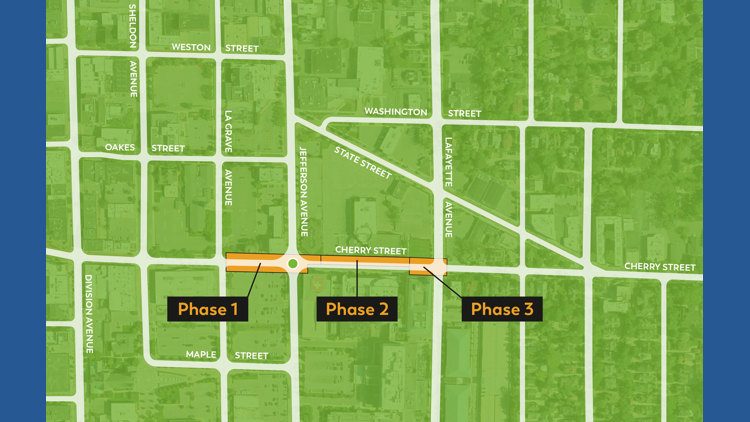
Consumers Energy: Construction to commence on Cherry Street for upgrades to electric infrastructure | wzzm13.com
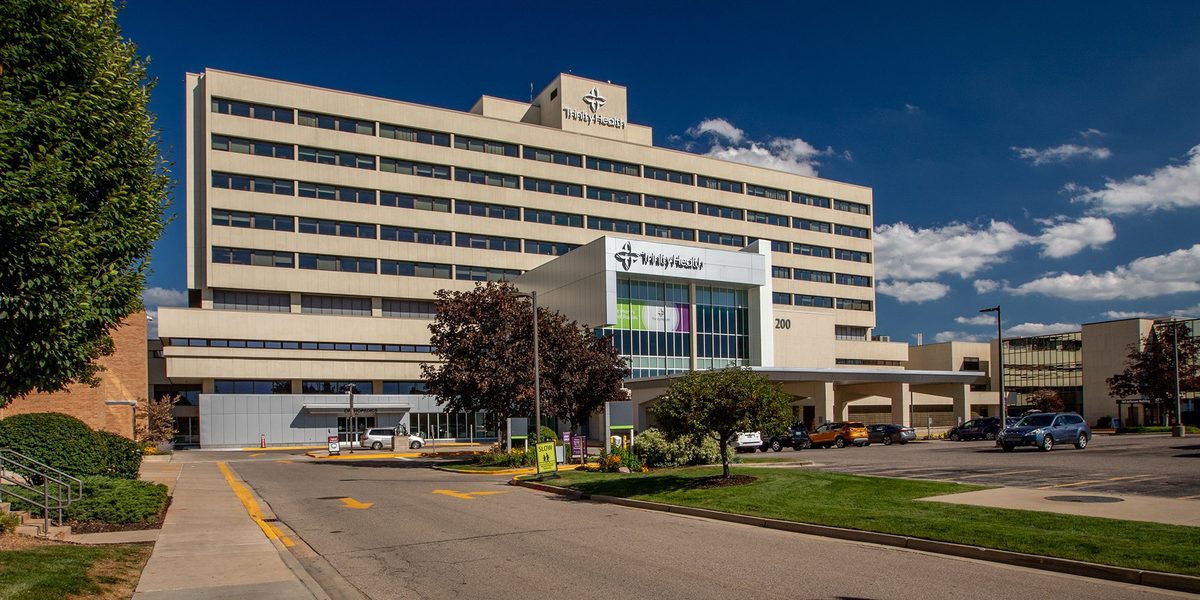
Trinity Health Grand Rapids Hospital | Trinity Health Michigan
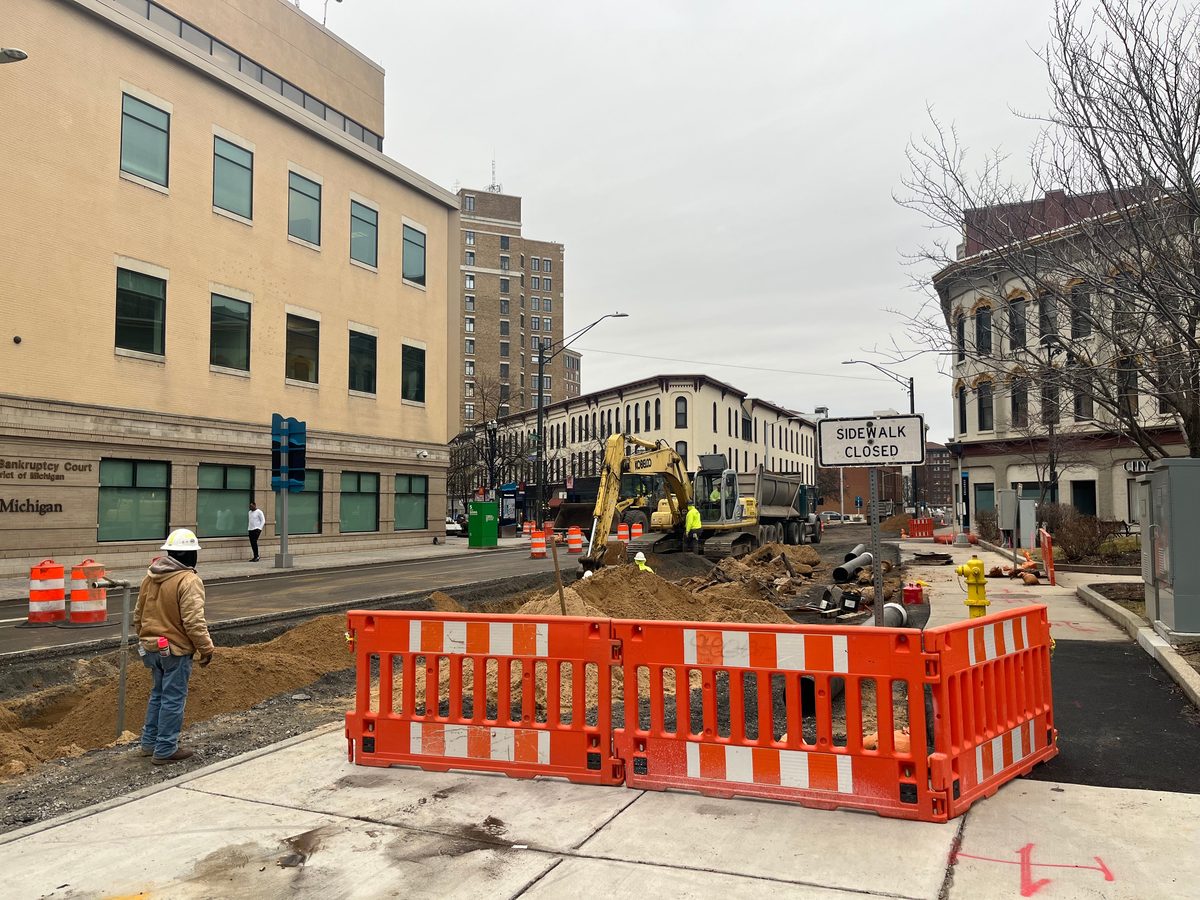
Busy downtown Grand Rapids street closed for months-long construction project - mlive.com
515 views
2:17
Consumers Energy proposes grid upgrades aimed at reduced ...
WNEM TV5
1.2K views
2:16
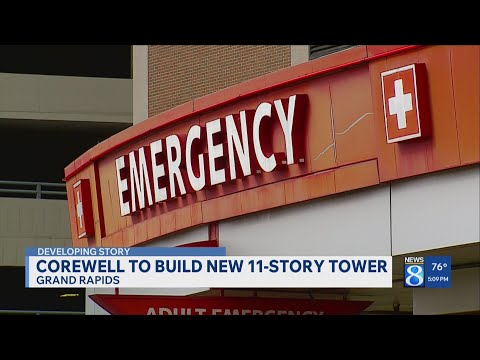
11 stories, $1.3 billion: Corewell to build new tower in Grand ...
WOOD TV8

685 views
1:35
Corewell announces major expansion plan for Butterworth ...
FOX 17 WXMI
Images from Openverse under Creative Commons licenses. Videos from YouTube.
Voices
Curated perspectives — historical figures and your fellow readers.
Play
Exploring all sides of a story is often best achieved with Play.
Most of these play right now — no account needed. Sign up to save scores, keep a streak, and unlock Debate and Predict.
Log in
Sign Up
Higher or Lower
A number from this story, against one from elsewhere in the news — guess which is bigger, then keep the chain going. 5 rounds, 3 strikes; a miss costs a strike and resets your streak.
Example
Anchor
EU tariff revenue
$52B
Big for this kind of number
Mystery
Pentagon AI contract
?
Round 1
Streak: 0
Mystery
?
Keyboard: ↓/L lower · ↑/H higher
0 pts
Best streak: 0 · Rounds: 0
0 points — sign up to put that on the leaderboard.
Now try on this story
Connections
Sixteen names from the news. Find the four hidden groups of four. Four mistakes max.
Loading today's puzzle…
0/4 groups
Mistakes
Sign up to keep a daily streak — a new puzzle lands every day.
Now try on this story
Exit debate?
Your progress in this debate will be lost.
How it works
- 1 Two AI personas square off on this story.
- 2 You predict who'll win each round — correct picks earn XP.
- 3 One crossfire question is yours to fire. Pick it carefully.
Couldn't generate a topic
Select Your Champions
Choose one persona for each side of the debate
DEBATE TOPIC
Choose personas with different perspectives for a more dynamic debate.
SIDE A (PRO)
Select debater for this side:
No debate personas available right now.
SIDE B (CON)
Select debater for this side:
No debate personas available right now.
VS
Get ready to make your prediction...
Round of
Claim
Evidence
Stakes
Crossfire Answer
Closing Statement
Claim
Evidence
Stakes
Crossfire Answer
Closing Statement
Your Crossfire Question
Generating arguments...
Who's Got This Round?
Make your prediction before the referee scores
The referee scores both sides on
Correct predictions earn +20 XP
· Press 1 or 2 to pick
Evidence
40%
Logic
30%
Detail
20%
Style
10%
Round Results
Your Pick
Not this time
(%)
Overall Score
/10
Your Pick
Not this time
(%)
Overall Score
/10
Set the Crossfire
Pick the question both personas must answer in the final round
Crafting crossfire questions...
Choosing a question earns +10 XP crossfire bonus
🏆
Total XP Earned
Cred Change
Predictions
Debate Oracle! You called every round!
Sharp Instincts! You know your debaters!
The Coin Flip Strategist! Perfectly balanced!
The Contrarian! Bold predictions!
Inverse Genius! Try betting the opposite next time!
XP Breakdown
Base completion
+20 XP
Rounds played ( rounds x 5 XP)
+ XP
Correct predictions ( correct x 20 XP)
+ XP
Crossfire bonus
+10 XP
Accuracy
%
Prediction History
Round
You picked:
✓
✗
Now try on this story
Keep debating to level up your credibility and unlock achievements
People Involved
Organizations Involved
Consumers Energy
Regulated utility
Filing rate increases to fund grid work
Michigan's largest regulated utility and a unit of CMS Energy.
Michigan Public Service Commission
State regulator
Reviewing Consumers Energy's rate request
The state board that sets rates Michigan's regulated utilities may charge.
Trinity Health Grand Rapids
Hospital system
Will receive upgraded power supply
The hospital complex on Cherry Street Southeast that anchors the construction project.
City of Grand Rapids
Municipal government
Coordinating road closures and detours
Municipal government overseeing streets and detours for the Cherry Street project.
Timeline
December 2025 September 2026
3 events
Latest: 3 days ago
-
Cherry Street duct bank construction begins
Latest ConstructionCrews start replacing underground electric duct banks near Trinity Health, closing intersections in three phases through early November.
-
Electric rate case filed
RegulatoryConsumers Energy asks the MPSC for a 9% electric rate increase, citing aging infrastructure and changing weather.
-
Consumers Energy files natural gas rate case
RegulatoryThe utility asks the MPSC for an 8.2% increase on natural gas bills, pending from November 2026.
Historical Context
3 moments from history that rhyme with this story — and how they unfolded.
August 2003
Northeast Blackout (August 2003)
A software bug and a tree hitting a transmission line triggered a cascade that cut power to 55 million people in the U.S. and Canada. It took days to restore service in parts of Ohio, Michigan, and the Northeast.
Then
Congress and regulators created mandatory reliability standards with penalties for violations.
Now
Utilities invested billions in grid monitoring and physical hardening.
Why this matters now
Hospital power supply and backup systems became a priority after the blackout, the same rationale behind the Cherry Street duct bank upgrade.
2017–2020
PG&E and California wildfire spending (2017–2020)
PG&E's equipment sparked deadly wildfires, driving the utility into bankruptcy in 2019. It exited with a plan to harden lines, bury cable, and trim trees across high-risk areas.
Then
California ratepayers absorbed the cost as bills climbed.
Now
The case set the pattern of utilities passing reliability spending to customers through regulated rate cases.
Why this matters now
That same rate-case cycle now funds Consumers Energy's reliability work, with the MPSC deciding how much customers pay.
February 2021
Winter Storm Uri (February 2021)
A deep freeze knocked out natural gas, water, and power across Texas and neighboring states. About 4.5 million people lost electricity, many for days, and roughly 250 died.
Then
Texas mandated weatherization for power plants and natural gas facilities.
Now
Utilities nationwide hardened equipment against extreme cold, a cost often recovered through higher rates.
Why this matters now
Consumers Energy points to changing weather as a reason for the spending that funds the Cherry Street project.
Sources
(4)Related Stories
Southbound US-131 Wealthy Street exit closes for four weeks
Built World
Updated 3 days ago
Greenville replaces lead-connected water main under Seventh Street
Built World
Updated Aug 27
Arts and crafts distributor lays off 181 after Grand Rapids warehouse fire
Built World
Updated 7 days ago
MDOT begins $2.8M bridge repairs on US-31 in Whitehall
Built World
Updated Yesterday
Hot Wheels Monster Trucks tour returns to Grand Rapids' Van Andel Arena
Built World
Updated 6 days ago
Texas utility commission approves 400-plus miles of 765-kV transmission lines
Built World
Updated 6 days ago