Elon Musk spent $44 billion to buy Twitter in October 2022, telling investors it was 'an accelerant to creating X, the everything app.' Three and a half years later, that app is still taking shape—haltingly.
XChat, a standalone end-to-end encrypted messaging app for iPhone and iPad, was announced for April 17, 2026, then quietly delayed to April 23 with no public explanation. The slip was spotted by users who noticed the App Store listing had changed overnight. It arrived alongside a flood of security criticism questioning whether X's encryption holds up to scrutiny.
XChat enters a market where two pillars of any super app—messaging and payments—are already controlled by well-entrenched rivals. X Money, a payments service that entered beta in March 2026 with a 6% annual yield on deposits and a Visa debit card, is facing its own headwinds. Senator Elizabeth Warren wrote to Musk on April 14, 2026, warning of consumer protection risks at a moment when the Consumer Financial Protection Bureau has been largely dismantled.
On the messaging side, Meta publicly defended WhatsApp's encryption in direct response to Musk's XChat promotional push. Independent researchers published a detailed 'backdoor problem' analysis arguing that X controls the encryption keys—meaning X, or anyone who compels X legally, can read your messages. Whether XChat can overcome those doubts when it finally ships is now the central question of Musk's post-acquisition strategy.
Why it matters
If X succeeds in launching its super app, it becomes the dominant platform for messaging and payments in America—fulfilling Musk's vision of an 'everything app.'
Questions about this story
Free account needed to ask — your question is kept and asked for you right after sign-up. Answers are public.
No questions yet — be the first to ask.
Key Indicators
~570M
X monthly active users
The potential user base XChat can tap without requiring new signups or phone numbers.
$33B
X valuation in xAI merger
What xAI paid for X in the March 2025 all-stock acquisition, down from the $44 billion Musk paid in 2022.
6%
X Money deposit yield
Annual percentage yield offered in the X Money beta, well above typical savings accounts, funded through Cross River Bank.
0
Independent security audits of XChat
No third-party audit has verified XChat's encryption claims. X has promised to open-source the code but has not done so.
iOS only
Platform availability at launch
XChat launched exclusively on Apple's App Store with no confirmed Android release date, limiting reach in markets where Android dominates.
18 events
Latest: April 17th, 2026 · 6 months ago
Showing 8 of 18
JK to step
Tap a bar to jump to that date
Jump to
April 2026
XChat standalone app launches on iOS
LatestProduct
X releases XChat on Apple's App Store, offering encrypted messaging, voice and video calls, group chats up to 481 members, and Grok AI integration—all linked to existing X accounts without requiring a phone number.
Meta publicly defends WhatsApp encryption against Musk's XChat promotion
Corporate
Meta issued a public statement defending WhatsApp's end-to-end encryption architecture in direct response to Musk's campaign promoting XChat as a more private alternative, escalating the rivalry between the two platforms.
Security researchers publish 'backdoor problem' analysis of XChat
Security
On what was supposed to be XChat's launch day, researchers published a detailed analysis arguing that XChat's Juicebox encryption protocol allows X to control the encryption keys—meaning X, or anyone legally compelling X, could decrypt user messages. The analysis also flagged App Store privacy labels showing XChat collects location, contact info, and search history, contradicting the 'no ads, no tracking' marketing.
XChat launch delayed from April 17 to April 23
Product
X quietly updated the App Store listing for XChat, pushing the release date from April 17 to April 23, 2026. No public explanation was given. The change was spotted by X user @Iorel_X via a screenshot of the updated listing.
Senator Warren presses Musk on X Money consumer risks
Regulatory
U.S. Senator Elizabeth Warren sent a letter to Elon Musk warning of consumer protection, national security, and financial stability risks posed by X Money's launch, noting it coincides with the Trump administration's dismantling of the Consumer Financial Protection Bureau.
March 2026
X Money enters beta with 6% yield and Visa debit card
Financial
X launches its payments platform in limited beta, offering FDIC-insured deposits through Cross River Bank, a personalized metal Visa debit card with 3% cashback, and peer-to-peer transfers.
January 2026
WhatsApp class action lawsuit filed over encryption claims
Legal
A class action lawsuit accuses Meta of allowing employees to access WhatsApp messages despite promises of end-to-end encryption, creating a strategic opening for competitors claiming stronger privacy.
December 2025
Standalone desktop chat app goes live
Product
X launches a web-based standalone chat application for desktop, separating messaging from the main social feed for the first time.
November 2025
X replaces DMs with encrypted Chat
Product
X retires its traditional direct message system and replaces it with Chat, featuring end-to-end encryption, disappearing messages, screenshot blocking, and file sharing.
July 2025
CEO Linda Yaccarino steps down
Corporate
Yaccarino departs after two years as CEO, following the xAI merger that left her role unclear. X has not named a replacement.
June 2025
Cryptographer publishes damaging analysis of X's encryption
Security
Johns Hopkins professor Matthew Green identifies critical flaws in X's encryption: no forward secrecy, server-stored private keys behind a four-digit PIN, and the potential for X itself to decrypt any conversation.
May 2025
X pauses encrypted DMs for back-end rebuild
Product
X temporarily removes the ability to send new encrypted messages while implementing infrastructure improvements, though existing encrypted conversations remain accessible.
March 2025
xAI acquires X in $113 billion combined deal
Corporate
Musk's AI company xAI acquires X in an all-stock transaction valuing xAI at $80 billion and X at $33 billion. The merger formalizes data-sharing between the two companies.
January 2025
X announces Visa partnership for X Money
Financial
X partners with Visa to provide payment rails for its planned financial services product, with Visa Direct powering real-time transfers and merchant acceptance.
June 2024
X relaunches encrypted DMs for Premium users
Product
After retracting its initial encrypted messaging model, X re-releases the feature exclusively to X Premium subscribers.
July 2023
Twitter rebrands to X
Corporate
The platform officially becomes X, signaling Musk's intent to move beyond social media toward a multi-service super app.
May 2023
Twitter launches encrypted DMs V1.0
Product
Musk tweets "Try it, but don't trust it yet" as Twitter rolls out a limited first version of encrypted direct messages, restricted to one-on-one chats between Twitter Blue subscribers.
October 2022
Musk completes $44 billion Twitter acquisition
Corporate
Elon Musk finalizes his purchase of Twitter, telling investors it is "an accelerant to creating X, the everything app." Mass layoffs and an advertiser exodus follow.
Scenarios
1
X cracks the super app code in Western markets
Unlikely
Discussed by: FinTech Weekly, IBTimes Australia, and bullish xAI investors who see the messaging-plus-payments combination as the missing piece
XChat gains meaningful traction among X's existing user base, particularly as a default messaging layer for the platform's 570 million monthly users. X Money exits beta and integrates peer-to-peer payments directly into XChat conversations. An Android launch closes the platform gap. The WhatsApp lawsuit erodes trust in Meta's encryption, pushing privacy-conscious users toward alternatives. Within 18 months, XChat reaches 100 million active users and X becomes the first Western platform to successfully combine social media, messaging, and payments. This scenario requires X to address its encryption shortcomings, ship Android, and maintain user trust—a tall order given its track record.
2
XChat becomes a niche tool for X power users, not a WhatsApp killer
Likely
Discussed by: TechCrunch, Harvard Business Review analysts who have studied super app failures in Western markets, and SOCRadar security researchers
XChat attracts existing X Premium subscribers and politically engaged users who already spend significant time on the platform, but fails to pull mainstream users away from WhatsApp, iMessage, or Signal. The iOS-only launch limits adoption in global markets where Android dominates. Network effects—the reason people use the messenger their contacts already use—prove insurmountable. XChat becomes useful for X-native communities but never threatens the incumbents' core user bases. X Money follows a similar trajectory: functional but niche.
3
Encryption flaws trigger regulatory action or a major breach
Possible
Discussed by: Matthew Green, eSecurity Planet, New York State Senator Brad Hoylman-Sigal (who wrote to regulators about X Money), and the Electronic Frontier Foundation
The security vulnerabilities Green and others identified—server-stored private keys, no forward secrecy, retained metadata and EXIF data—lead to either a data breach or regulatory intervention. European data protection authorities, already scrutinizing X's declining EU user base, could challenge XChat's privacy claims under the General Data Protection Regulation. A breach that exposes messages would be particularly damaging given Musk's aggressive marketing of XChat as more private than WhatsApp. This scenario would not just damage XChat but undermine the entire super app strategy by destroying user trust.
4
Apple and Google gatekeeping slows the super app build-out
Possible
Discussed by: CNBC, HBR super app analysis, and antitrust researchers studying app store dynamics
Apple's App Store guidelines specifically prohibit apps that replicate the home screen experience or bypass Apple's payment system—exactly what a super app requires. As X tries to add payments, commerce, and mini-programs into XChat or the main X app, Apple and Google enforce restrictions that fragment the experience across separate apps. The WeChat model worked in China partly because Chinese regulators supported domestic super apps; Western regulators and platform gatekeepers have the opposite incentive. X ends up with a constellation of loosely connected apps rather than a unified super app.
Historical Context
3 moments from history that rhyme with this story — and how they unfolded.
1 of 3
January 2011 – 2015
WeChat's rise to super app dominance in China (2011–2015)
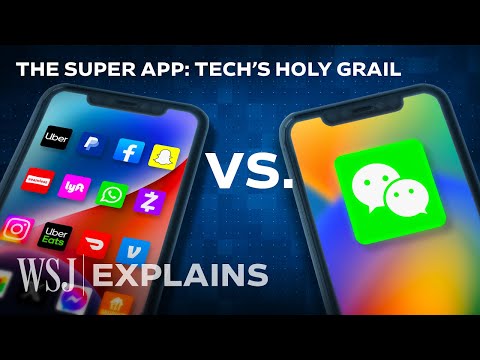
Tencent launched WeChat in January 2011 as a simple messaging app. By 2013 it had added payments, and by 2015 it had become the operating system of daily life in China—used by over a billion people to message, pay bills, hail taxis, book doctors, and access government services. The key unlock was WeChat Pay: once users stored money in the app, they had reason to stay for everything else.
Then
WeChat reached 1.2 billion monthly active users and became the template every tech CEO—including Musk—cites when pitching a super app vision.
Now
No platform outside China has successfully replicated this model. WeChat's own international expansion failed in Europe, India, and Southeast Asia, suggesting the super app model may depend on specific regulatory and competitive conditions.
Why this matters now
XChat and X Money together replicate the two pillars of WeChat's expansion—messaging and payments. But WeChat succeeded in a market with weak incumbent messaging apps and limited credit card penetration. X faces the opposite: entrenched messaging incumbents and mature payment infrastructure.
2 of 3
April 2014
Facebook forces Messenger into a standalone app (2014)
Facebook required its 1.3 billion users to download a separate Messenger app to continue sending messages, stripping the feature from the main Facebook app. The move was deeply unpopular—Messenger's App Store rating cratered—but it worked. Messenger hit 900 million monthly users within a year, and Facebook used it to experiment with payments, bots, and business tools.
Then
Messenger became one of the world's largest messaging platforms. Facebook added peer-to-peer payments in 2015 and a bot platform in 2016.
Now
Facebook never turned Messenger into a super app. By 2026, Meta was shutting down Messenger's standalone desktop app and consolidating it back into the main Facebook experience—effectively admitting the super app experiment had stalled.
Why this matters now
X is making the same bet Facebook made in 2014: that unbundling messaging into a standalone app creates a platform for payments and services. Facebook had 1.3 billion users and still couldn't make it work as a super app. X has 570 million and more skeptical users.
3 of 3
August 2013 – present
Telegram's growth as an encrypted messaging alternative (2013–present)
Pavel Durov launched Telegram in 2013 as a privacy-focused alternative to WhatsApp, eventually growing to over 1 billion users by 2025. Telegram added channels, bots, payments, and mini-apps—edging toward super app territory. But security experts have long noted that Telegram's standard chats are not end-to-end encrypted; only its "Secret Chats" feature offers that protection.
Then
Telegram became the default communication tool for crypto communities, activists, and users in countries with heavy censorship.
Now
Telegram's growth showed there is demand for messaging alternatives, but also that privacy claims face constant scrutiny. Durov's arrest in France in August 2024 on charges related to content moderation raised new questions about the platform's relationship with law enforcement.
Why this matters now
XChat enters a market where Telegram proved alternatives can gain traction—but also where privacy claims that don't withstand expert scrutiny become liabilities. Like Telegram's standard chats, XChat's encryption has been criticized for falling short of the Signal protocol standard.