

Pull to refresh
Logo
XPeng unveils Turing AI architecture and sets 2027 humanoid robot timeline

XPeng unveils Turing AI architecture and sets 2027 humanoid robot timeline

New Capabilities

IRON will train as a store assistant in XPeng's own retail shops in Q1 2027, with public release targeted for Q2

Overview

Updated 38 minutes ago

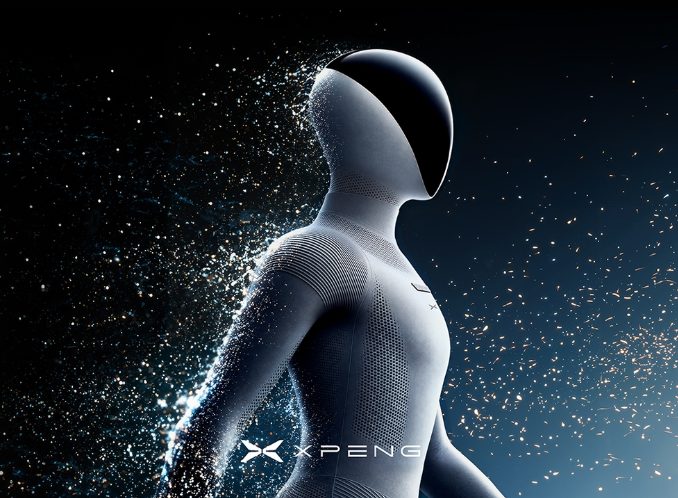
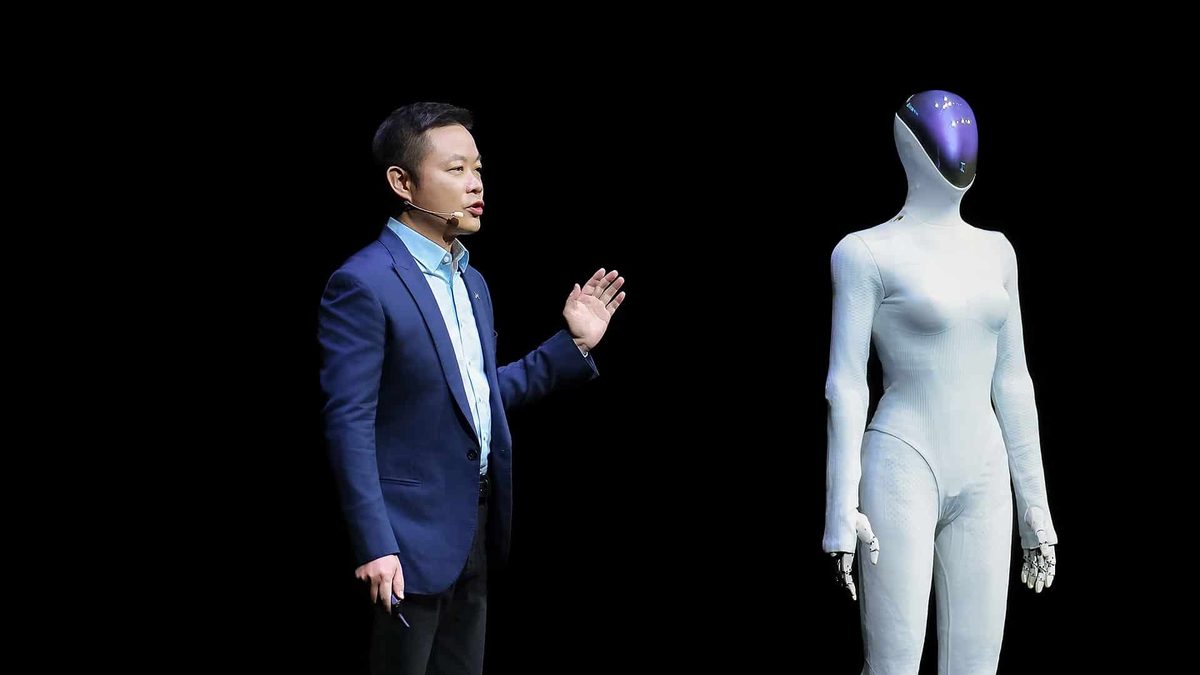
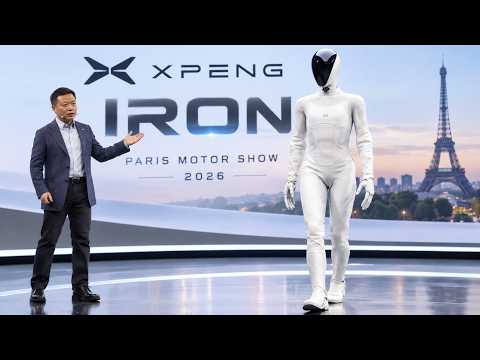
XPeng will put its humanoid robot to work in its own stores. IRON starts training as a retail assistant in the first quarter of 2027, with a public release targeted for the second. Alongside it, the company unveiled Turing, one AI architecture meant to run both that robot and its cars.

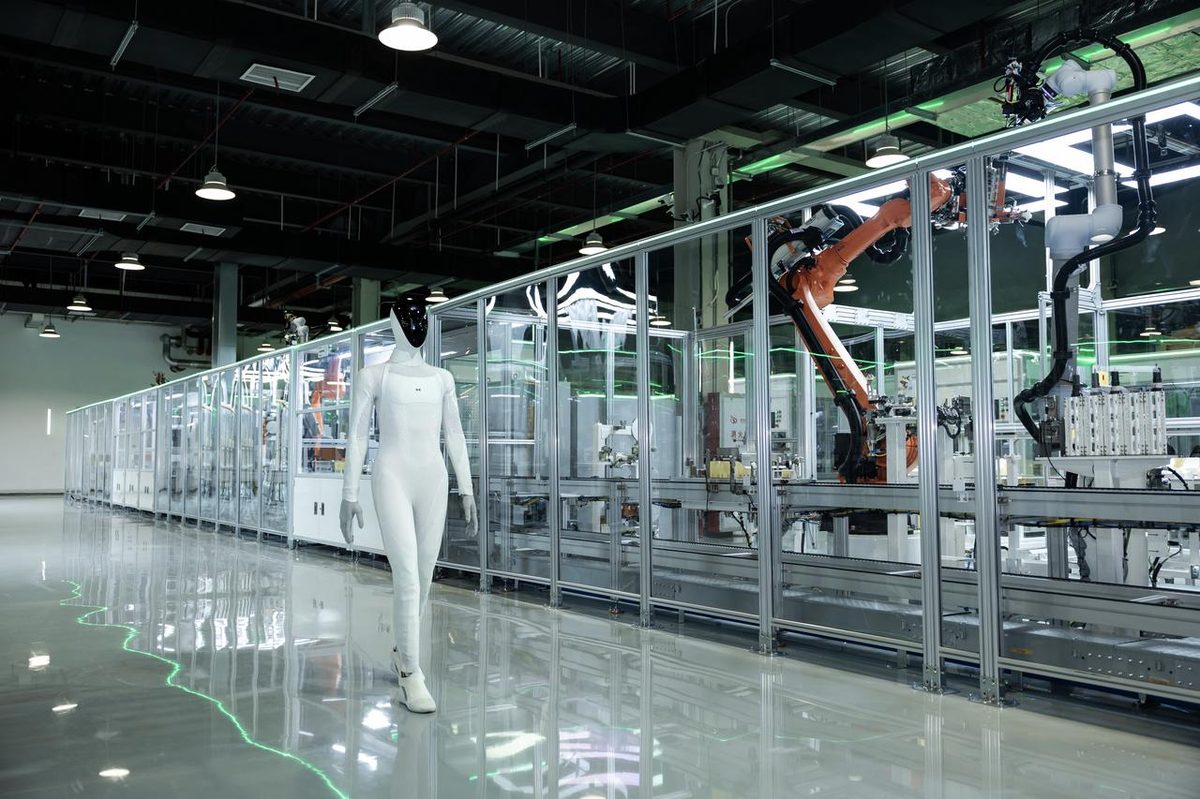
The schedule is later than promised. XPeng had aimed for mass production by the end of 2026 when its IRON line opened in September; hardware production now starts in January 2027. Chief executive He Xiaopeng says general robots reach homes and workplaces widely only in 2029 or later, and that the hard problem is building machines that need little human help and earn a return.

Why it matters

If one AI stack can drive both cars and robots, XPeng pays for one research program and sells two products. That bet now has dates.

Questions about this story

Free account needed to ask — your question is kept and asked for you right after sign-up. Answers are public.

No questions yet — be the first to ask.

Key Indicators

76
IRON degrees of freedom
The number of independently moving joints in XPeng's humanoid robot.
1,500+
Tactile sensing points on IRON
Touch sensors covering more than 80% of key body areas.
10–12×
Training speed increase
XPeng says VLA model version 6.4.0 trains 10 to 12 times faster using agent-driven closed-loop training.
13.93%
Drop in Chinese vehicle accident claims
Reported by XPeng since its VLA 2.0 driving model rolled out.
12.4%
Usable driving range gain in congestion
Measured for XPeng's adaptive deceleration feature against energy recovery switched off.
250+
Robot training scenarios
Scenarios in XPeng's Robot Data Factory, spanning 15 job categories.

Voices

Curated perspectives — historical figures and your fellow readers.

Sign up to generate historical perspectives on this story.

People Involved

Organizations Involved

Timeline

September 2026 November 2026

4 events Latest: Today
Tap a bar to jump to that date
  1. Turing architecture unveiled, IRON debuts

    Today Product launch

    XPeng presents a three-layer AI architecture shared by cars and robots, and sets IRON store training for Q1 2027 with public release in Q2.

  2. Production date slides to January 2027

    Statement

    On the earnings call, He Xiaopeng moves the IRON production start from end-2026 to January 1, 2027.

  3. Paris retail store offers urban NGP rides

    Product trial

    XPeng opens public test rides of its urban assisted-driving system at its Paris store, after testing in Germany, the Netherlands and France.

  4. IRON leaves the production line

    Manufacturing

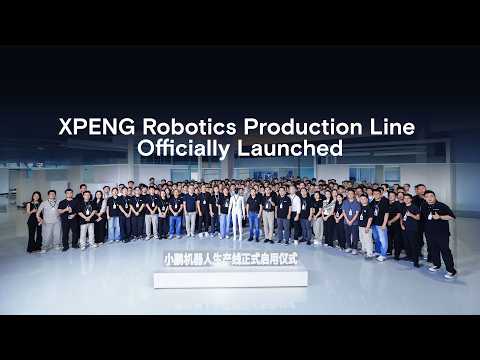
    The latest IRON robot rolls off XPeng's newly commissioned line after eight years of development.

Scenarios

1

IRON starts store shifts on schedule

Likely Resolves by Q1 2027

Discussed by: XPeng's AI Day announcement; cnevpost.com

XPeng says IRON will begin training as a store assistant in its own retail shops in the first quarter of 2027. Because the company controls the stores and the robot, it can run this pilot without an external customer, which is the shortest path from factory to real work. Hardware mass production is set to start in January 2027.

2

IRON reaches public release in Q2 2027

Possible Resolves by Q2 2027

Discussed by: XPeng; modernrobotics.co.uk

The company targets a public release in the second quarter of 2027 but has given no price and no production volume. XPeng also cautioned that performance, functions and appearance may differ from the version shown at AI Day. A public release requires a price, a sales channel and a version customers can actually take delivery of.

3

IRON slips past 2027 with no public release

Possible Resolves by End of 2027

Discussed by: modernrobotics.co.uk, which notes the target has already moved once

The end-2026 production target became January 2027 after the September production line opening and the November earnings call. He Xiaopeng has said general robots reach homes and workplaces widely only in 2029 or later. Another revision would follow the pattern of the humanoid industry, where demonstrations routinely run ahead of sellable products.

4

Global assisted driving ships before the robot does

Uncertain Resolves by Q2 2027

Discussed by: XPeng; cnevpost.com

XPeng aims to begin its first global rollout of the NGP assisted-driving system in the first half of 2027, following public test rides in Paris. That software runs on the same model family as the robot. If it ships on time, it gives XPeng real-world data and revenue from the vehicle side while the robot program matures.

Historical Context

3 moments from history that rhyme with this story — and how they unfolded.

August 2021–present

Tesla Optimus (2021–present)

Tesla announced a humanoid robot at its 2021 AI Day, with a dancer in a suit on stage rather than a working machine. A prototype walked out at the 2022 event, and a second-generation version was shown in December 2023. Production targets have moved repeatedly since.

Then

Tesla used its own factories as the first test site, a path XPeng is copying with its stores.

Now

The gap between a stage demo and a sellable unit became the industry's defining problem, not the demo itself.

Why this matters now

XPeng's IRON follows the same arc: a public debut, then a date, then a revision of that date. XPeng has already moved its own production target once.

July 2013–April 2024

Boston Dynamics Atlas (2013–2024)

Boston Dynamics showed Atlas, a hydraulic humanoid, doing parkour and backflips in videos that circulated widely. The robot spent about a decade as a research platform. In April 2024 the company retired the hydraulic version and introduced an all-electric Atlas aimed at commercial work.

Then

The videos built enormous public recognition but no mass market.

Now

The redesign around electric actuators and real tasks showed that manufacturability, not agility, sets the commercial timeline.

Why this matters now

XPeng is spending its AI Day on production numbers and inspection steps rather than tricks, which is the part Atlas took a decade to reach.

March 2012

Amazon buys Kiva Systems (2012)

Amazon paid $775 million for Kiva Systems, a warehouse robot maker, then stopped selling the machines to other retailers and used them in its own fulfilment centres.

Then

Amazon absorbed the technology and kept the cost savings in-house.

Now

Warehouse automation spread through the industry, but through task-specific machines rather than general-purpose ones.

Why this matters now

He Xiaopeng's argument that robots need a viable return on investment points at the Kiva lesson: deploy where you already control the work, then scale.

Sources

(5)