



Pull to refresh
Logo
Zayo adds a third U.S.–Brazil subsea route on the Monet cable

Zayo adds a third U.S.–Brazil subsea route on the Monet cable

Built World

The new path gives Zayo customers a backup between Miami and São Paulo, where cloud and AI traffic is growing faster than anywhere else in Latin America.

Overview

Updated 55 minutes ago

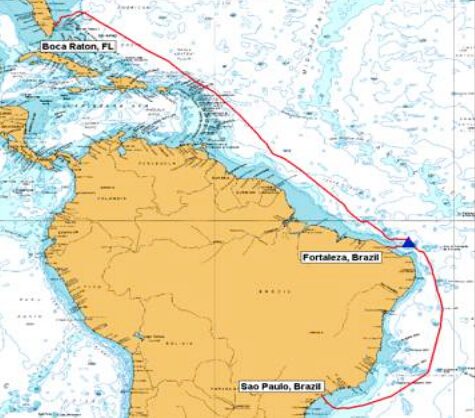
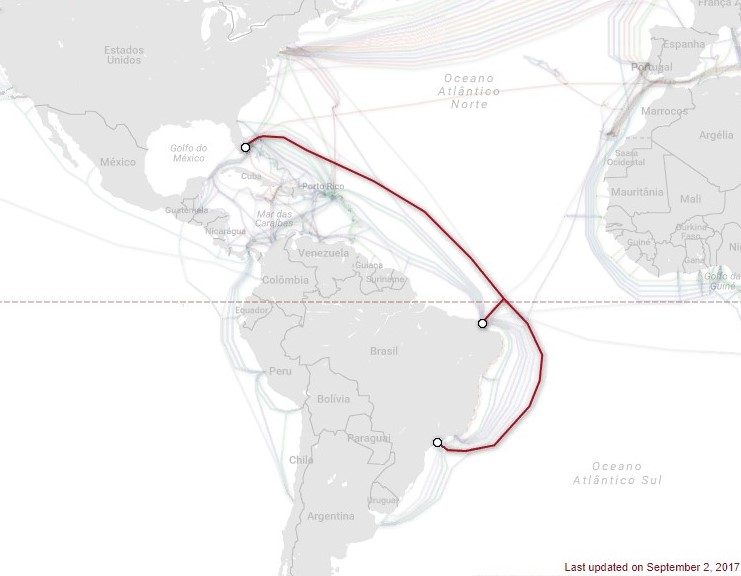
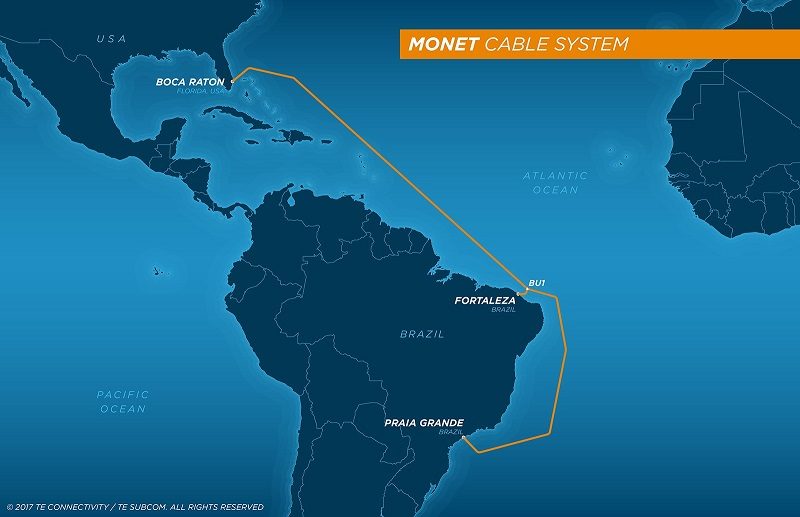
Zayo switched on capacity on the Monet subsea cable on November 10, giving it a third separate path between the United States and Brazil. The route runs from Boca Raton, Florida, to Fortaleza and Praia Grande, then into Zayo's fiber ring in São Paulo, where it reaches Equinix data centers and the B3 stock exchange.

Brazil holds 48% of Latin America's installed data center capacity, and international bandwidth demand across the region grew 34% a year from 2020 to 2024, according to TeleGeography. A third route lets Zayo reroute customer traffic if Seabras-1 or GlobeNet fails.

Why it matters

As AI and cloud traffic grows, the number of separate cables into São Paulo decides where companies can put workloads.

Questions about this story

Free account needed to ask — your question is kept and asked for you right after sign-up. Answers are public.

No questions yet — be the first to ask.

Key Indicators

3
Diverse U.S.–Brazil routes Zayo operates
Monet joins Seabras-1 and GlobeNet on Zayo's network.
10,556 km
Length of the Monet cable
Runs from Boca Raton, Florida, to Fortaleza and Praia Grande, Brazil.
64 Tbps
Monet's design capacity
The cable entered service in 2017 with an open-cable design.
34%
Latin America international bandwidth growth, 2020–2024
Compound annual rate reported by TeleGeography.
48%
Brazil's share of Latin America data center capacity
Brazil also holds 71% of capacity under construction, according to IDC.

Voices

Curated perspectives — historical figures and your fellow readers.

Sign up to generate historical perspectives on this story.

People Involved

Organizations Involved

Timeline

December 2017 November 2026

7 events Latest: Today
Tap a bar to jump to that date
  1. Zayo activates third U.S.–Brazil route on Monet

    Today Infrastructure

    The route connects Miami to São Paulo alongside Zayo's existing Seabras-1 and GlobeNet paths.

  2. Angola Cables picks Ciena for Monet and SACS upgrade

    Upgrade

    New optical equipment will support 800-gigabit-per-second client connections on Monet without laying new fiber.

  3. Zayo completes Crown Castle fiber purchase

    Acquisition

    The deal adds about 90,000 route miles and 40,000 on-net enterprise locations to Zayo's network.

  4. AmLight activates terabit capacity on Monet

    Upgrade

    The research network turns on 1 Tbps Boca Raton–Fortaleza and 1.2 Tbps Fortaleza–São Paulo.

  5. Angola Cables adds 2.2 Tbps to Monet

    Upgrade

    Ciena's WaveLogic Ai technology raises capacity on the Miami–Fortaleza–São Paulo segments.

  6. SACS cable opens

    Infrastructure

    Angola Cables' 6,165-kilometer system becomes the first transatlantic cable across the southern hemisphere.

  7. Monet cable enters service

    Infrastructure

    The 10,556-kilometer system links Florida to Fortaleza and Praia Grande with about 64 Tbps of design capacity.

Scenarios

1

Zayo adds a fourth U.S.–Brazil route

Likely Resolves by Nov 10, 2027

Discussed by: Zayo's own expansion language and telecom analysts tracking Latin America capacity

Zayo has framed its strategy around route diversity, and the company now sells three separate paths to Brazil. If AI and cloud demand keeps growing, a fourth route or a new capacity deal on an existing cable would follow the same logic. The trigger would be a Zayo announcement of capacity on another subsea system or a new route on Monet.

2

Angola Cables completes Monet's 800G upgrade

Likely Resolves by Q2 2027

Discussed by: Angola Cables and Ciena, which announced the project in September 2026

Angola Cables said it will install Ciena's WaveLogic 6 Extreme equipment at both ends of Monet and SACS. The companies did not disclose a completion date or contract value. Completion would raise the capacity available to every Monet owner, including Zayo, without new undersea construction.

3

A new U.S.–Brazil subsea cable enters construction

Possible Resolves by End of 2028

Discussed by: Submarine cable trackers and Latin American telecom analysts

Brazil's data center buildout has outpaced the cables feeding it, and the country holds 71% of Latin America's data center capacity under construction. A new system would add a fourth or fifth diverse path between the U.S. and Brazil. The trigger would be a consortium announcing a supplier contract or construction start.

Historical Context

3 moments from history that rhyme with this story — and how they unfolded.

December 2017

Monet cable ready for service (2017)

Algar Telecom, Angola Cables, Antel and Google completed a 10,556-kilometer cable linking Florida to Fortaleza and Praia Grande. It was built with an open-cable design and about 64 terabits per second of capacity.

Then

Commercial traffic began on one of the first direct high-capacity routes between the U.S. and Brazil.

Now

Monet became a shared backbone that multiple operators, including Zayo and AmLight, could buy capacity on.

Why this matters now

Zayo's new route runs on this cable, so its flexibility depends on how the consortium and Angola Cables upgrade the shared system.

September 2018

SACS cable launch (2018)

Angola Cables' 6,165-kilometer South Atlantic Cable System connected Sangano, Angola, to Fortaleza, Brazil. It was the first transatlantic cable to cross the southern hemisphere.

Then

Fortaleza became a landing point for both African and Brazilian traffic.

Now

The cable gave Angola a direct path to the Americas and reinforced Fortaleza's role as a South Atlantic hub.

Why this matters now

It shows how a new cable can turn a single city into a gateway, which is the dynamic now playing out in São Paulo's data center market.

2021

Angola Cables' 2021 Monet upgrade

Angola Cables added 2.2 terabits per second of capacity to Monet's Miami, Fortaleza and São Paulo segments using Ciena's WaveLogic Ai technology.

Then

The cable carried more traffic without new undersea construction.

Now

Upgrading existing glass became the default way to add South Atlantic capacity.

Why this matters now

The 2026 Ciena upgrade follows the same pattern, and Zayo's activation is another layer of capacity sold on the same physical cable.

Sources

(6)