

Pull to refresh
Logo
SLB OneSubsea completes Brazil all-electric subsea technology project

SLB OneSubsea completes Brazil all-electric subsea technology project

New Capabilities

Industry collaboration qualifies fully electric subsea systems for water depths up to 3,000 meters

Today: Project completion publicized

Overview

Updated 1 hour ago

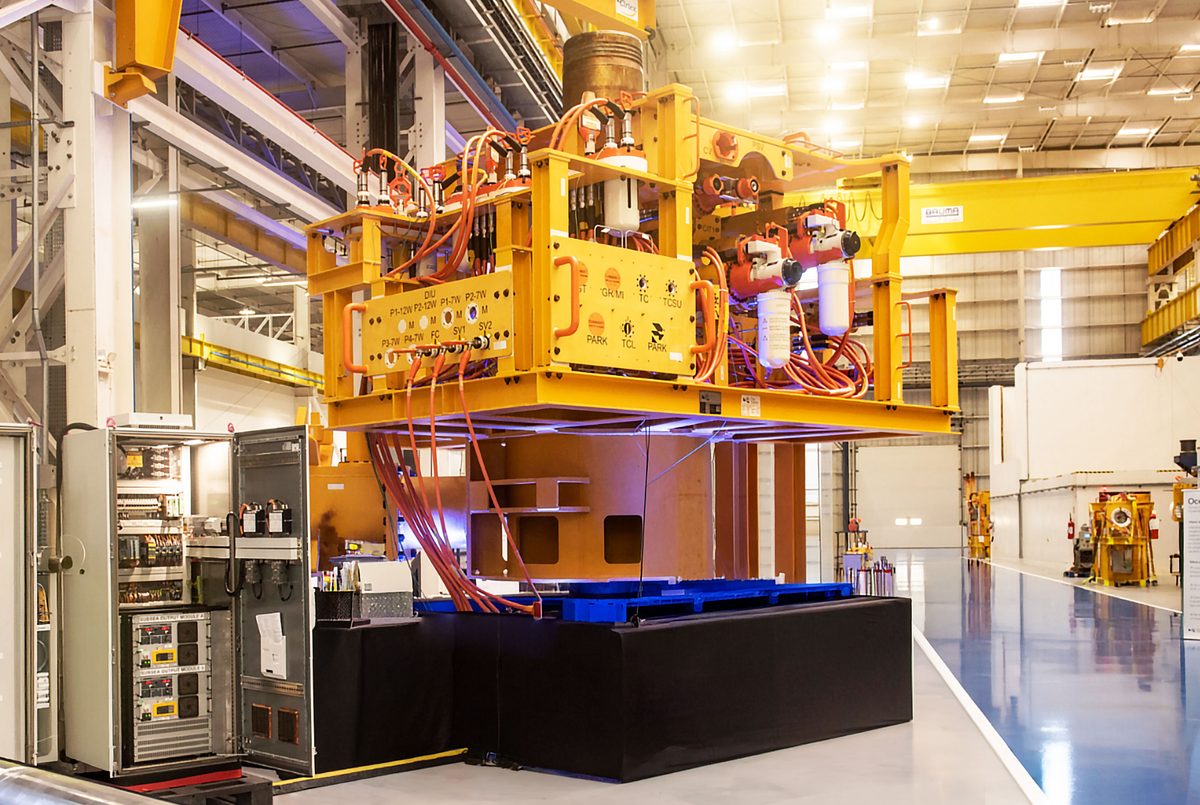
SLB OneSubsea finished a joint industry project in Brazil that qualifies fully electric subsea production technology for water depths up to 3,000 meters. The work, done with TotalEnergies, Equinor, bp, and Chevron under Brazil's National Petroleum Agency (ANP) research and development regulation, replaces the hydraulic systems that have actuated subsea valves and chokes for decades with electric motors.

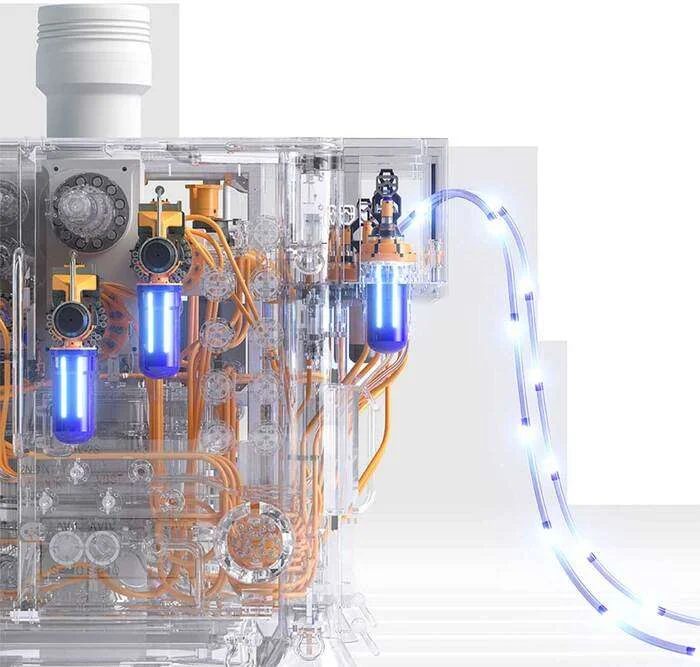
The completion moves all-electric subsea technology past the proof-of-concept stage and toward commercial deployment. It also extends electrification beyond individual components to an integrated architecture connecting subsea equipment, electric well completions, topside controls, and digital monitoring systems.

Why it matters

If all-electric subsea systems prove out commercially, deepwater field developers can drop hydraulic infrastructure, enable longer tiebacks, and simplify the entire subsea production architecture.

Questions about this story

Free account needed to ask — your question is kept and asked for you right after sign-up. Answers are public.

No questions yet — be the first to ask.

Key Indicators

3,000
Qualified water depth (meters)
Components and control systems qualified for applications at water depths up to 3,000 meters.
5
Participating companies
OneSubsea plus TotalEnergies, Equinor, bp, and Chevron.
15+
Years of subsea electrification experience
OneSubsea's accumulated experience in subsea electrification.
5M+
Operating hours with electrified subsea systems
Cumulative operating hours logged by OneSubsea's electrified subsea systems.

Voices

Curated perspectives — historical figures and your fellow readers.

Ever wondered what historical figures would say about today's headlines?

Sign up to generate historical perspectives on this story.

People Involved

Organizations Involved

Timeline

January 2022 October 2026

4 events Latest: Today
Tap a bar to jump to that date
  1. Project completion publicized

    Today Announcement

    SLB OneSubsea publicly announces completion of the Brazil All-Electric JIP.

  2. Brazil All-Electric JIP completed

    Milestone

    OneSubsea and partners celebrate completion at São José dos Pinhais facility; technology qualified for 3,000-meter depths.

  3. OneSubsea joint venture formed

    Corporate

    SLB and Subsea7 complete formation of OneSubsea joint venture for subsea production systems.

  4. Brazil All-Electric JIP launched

    Initiative

    OneSubsea, TotalEnergies, Equinor, bp, and Chevron launch joint project under ANP research and development regulation.

Scenarios

1

First commercial deepwater all-electric project sanctioned

Likely Resolves by End of 2028

Discussed by: OneSubsea leadership; industry analysts at offshore industry publications

Building on the Brazil JIP qualification and the Norway Fram Sør project moving toward deployment, a deepwater operator sanctions a commercial field development using all-electric subsea trees and completions. The Buzios Wave II contracts with Petrobras (35 wells, electric completions) and Equinor's Fram Sør (12 all-electric trees) are the most likely first commercial applications.

2

All-electric technology stays niche, hydraulic systems dominate new projects

Possible Resolves by End of 2030

Discussed by: Offshore industry analysts at offshoreindustry.co.uk

The commercial case for all-electric is strongest for long step-out tiebacks and challenging hydraulic control distances. For short-offset standard tiebacks with no flow assurance concerns, the capital expenditure premium for all-electric equipment may not justify deployment. Hydraulic trees have a massive installed base that will continue operating for decades, and brownfield tiebacks into existing hydraulic infrastructure will use compatible equipment.

3

All-electric technology expands beyond trees to full field architecture

Likely Resolves by End of 2031

Discussed by: OneSubsea; SLB technical papers

The Brazil JIP demonstrated an integrated architecture connecting subsea production equipment, electric well completions, topside controls, and digital systems. As more operators adopt electric completions and subsea electrification expands, the technology moves from individual components to complete electric field architectures with simplified infrastructure and longer tiebacks. Petrobras's Buzios field deployment of electric completions is a leading indicator.

Historical Context

2 moments from history that rhyme with this story — and how they unfolded.

2015-2019

Subsea electrification milestones in the North Sea (2015-2019)

Several North Sea operators deployed all-electric subsea systems on a pilot basis. Equinor (then Statoil) tested all-electric subsea trees and chokes on the Åsgard field, and TotalEnergies (then Total) deployed all-electric subsea actuation on the K5F project in the Dutch North Sea.

Then

The pilots proved the core electric actuation technology worked in real subsea environments, logging thousands of hours of operation.

Now

They built the operating-hours base that OneSubsea now cites (5 million+ hours) and set the stage for the larger JIP qualification programs in Brazil and Norway.

Why this matters now

The Brazil JIP extends the same electrification principle proven in the North Sea pilots to deeper water (3,000 meters) and a more integrated architecture.

2024-2026

Equinor Fram Sør all-electric project (announced 2024)

Equinor sanctioned the Fram Sør project in the Norwegian North Sea with 12 all-electric subsea trees, the largest all-electric subsea deployment to date. OneSubsea supplies the trees.

Then

Fram Sør moves all-electric subsea technology toward commercial deployment in a real field development.

Now

It shares common electronic control modules with the Brazil JIP technology, supporting a broader and more flexible approach to subsea electrification.

Why this matters now

Fram Sør and the Brazil JIP are complementary paths: one commercial, one qualification-focused. Together they push all-electric subsea from pilot to production.

Sources

(7)