


Pull to refresh
Logo
Chilled platelets match room-temperature platelets for surgical bleeding, trial finds

Chilled platelets match room-temperature platelets for surgical bleeding, trial finds

New Capabilities

FDA weighs 21-day cold-storage approval that could quadruple usable platelet supply and cut waste

August 17th, 2026: Results published in JAMA

Overview

Updated 1 hour ago

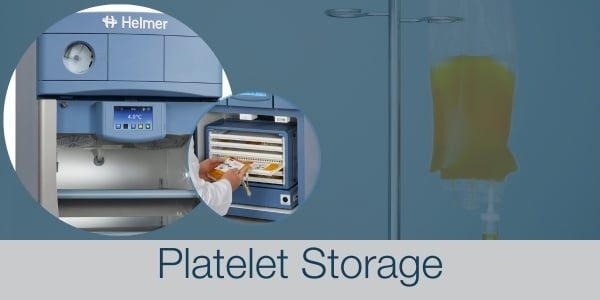
A 1,000-patient trial published in JAMA found that platelets chilled for up to 21 days control surgical bleeding as well as standard room-temperature platelets. Standard units expire after 5 to 7 days, and since testing eats the first two, the usable window is just 3 to 5 days.

The U.S. discards 10 to 20 percent of its 2.5 million annual platelet units because they expire before use, a loss costing hospitals $300 million a year. The Food and Drug Administration is reviewing the results, which could put platelets on shelves in rural hospitals and military units that can't keep such a short-lived supply.

Why it matters

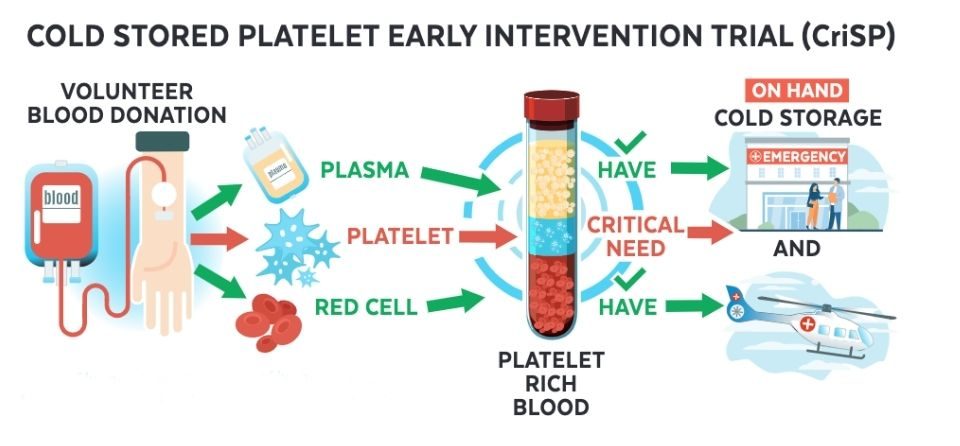
A 21-day platelet shelf life could nearly quadruple usable supply, cutting waste and putting platelets on shelves in rural hospitals and combat zones.

Questions about this story

Free account needed to ask — your question is kept and asked for you right after sign-up. Answers are public.

No questions yet — be the first to ask.

Key Indicators

21 days
Max cold-storage duration tested
Cold-stored platelets were compared against room-temperature platelets stored 5 to 7 days.
1,000
Patients enrolled
989 of 1,000 transfused patients entered the primary analysis across 27 U.S. and Australian sites.
>99.9%
Posterior probability of noninferiority
Every tested cold-storage duration cleared the 97.5% success threshold for noninferiority.
$300M
Annual cost of expired platelets in the U.S.
About 10 to 20 percent of 2.5 million units collected yearly are discarded due to short shelf life.

Voices

Curated perspectives — historical figures and your fellow readers.

Ever wondered what historical figures would say about today's headlines?

Sign up to generate historical perspectives on this story.

People Involved

Organizations Involved

Timeline

December 2021 August 2026

3 events Latest: August 17th, 2026 · 2 months ago
  1. Results published in JAMA

    Latest Publication

    JAMA publishes results; 21-day cold-stored platelets match room-temperature for bleeding; FDA reviews.

  2. Enrollment completes

    Research

    Enrollment reaches 1,000 patients; 989 enter the primary analysis.

  3. CHIPS trial opens

    Research

    CHIPS trial opens at 27 U.S. and Australian hospitals, targeting 1,000 surgical patients.

Scenarios

1

FDA authorizes 21-day cold-stored platelets for active bleeding

Likely Resolves by End of 2027

Discussed by: Trial investigators, AABB coverage

The FDA formalizes the 14-day emergency guidance issued mid-trial into a 21-day authorization, either as a label extension or formal guidance. That would apply to actively bleeding patients broadly, not just cardiac surgery, and let hospitals and the military stock platelets for weeks instead of days. Trial leaders say the submission is under active review.

2

Higher reexploration rate triggers confirmatory trials before broad adoption

Possible Resolves by Q2 2028

Discussed by: AABB analysis; study authors themselves

Patients who got cold-stored platelets had a higher 24-hour reexploration rate (4.2% vs 1.8%) and smaller platelet count increments. The authors said faster clearance or greater incorporation into clots could explain this, but could not rule out somewhat lower hemostatic effectiveness. If regulators and hospital transfusion committees demand proof, adoption stays limited to emergencies where room-temperature platelets are unavailable.

3

Cold-stored platelets become routine beyond cardiac surgery

Uncertain Resolves by Q2 2028

Discussed by: Trauma and military medicine researchers, including Spinella

Trauma centers and the military adopt cold-stored platelets for all active bleeding once regulatory approval lands. The longer shelf life makes it feasible to preposition platelets in rural hospitals, ambulances, and field settings. Spinella has specifically cited benefits for military personnel in conflict areas, where platelet availability is currently limited.

Historical Context

One moment from history that rhymes with this story — and how it unfolded.

Late 1960s to early 1970s

Cold platelet storage abandoned (1960s-1970s)

Through the 1950s, platelets were routinely refrigerated at 4 degrees Celsius and used mainly for active bleeding. In the late 1960s and early 1970s, researchers Scott Murphy and Frank Gardner showed platelets stored at room temperature had superior post-transfusion recovery and circulation time.

Then

Hospitals worldwide switched to room-temperature storage, cutting the shelf life to 5-7 days and complicating logistics.

Now

Room-temperature storage became the global standard for half a century; refrigeration came to be seen as harmful to platelet function.

Why this matters now

The CHIPS trial revives cold storage by showing that for active bleeding, circulation time matters less than immediate clotting ability.

Sources

(6)