
Pull to refresh
Logo
A clock-gene deletion helps a malaria mosquito adapt to city heat

A clock-gene deletion helps a malaria mosquito adapt to city heat

New Capabilities

A 5-kilobase deletion in timeless gives male Anopheles stephensi a mating edge in hot conditions and makes females more susceptible to malaria parasites

Overview

Updated 48 minutes ago

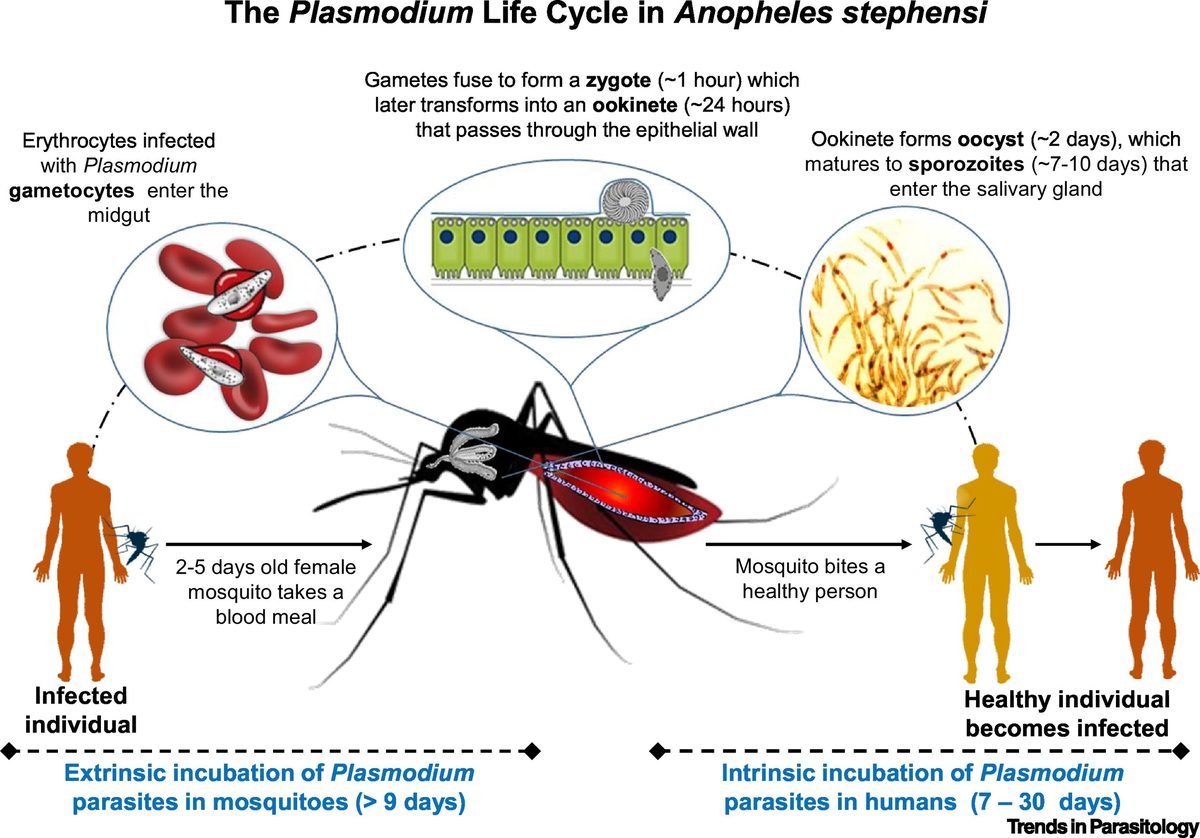
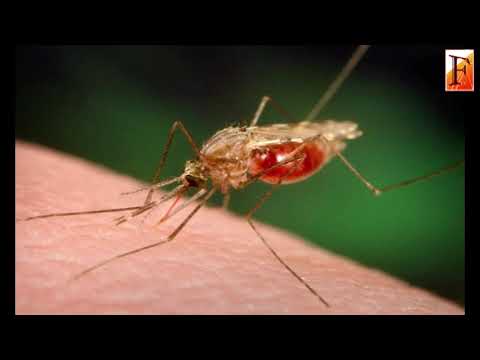
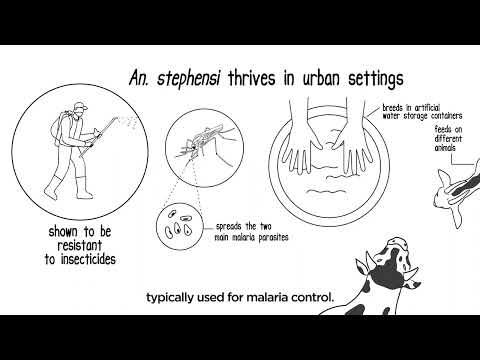
A mosquito that breeds in city water tanks has been spreading across Africa since 2012. Now researchers have found a single deletion in one of its clock genes that helps it cope with heat, while making the females that carry it more likely to become infected with malaria parasites.

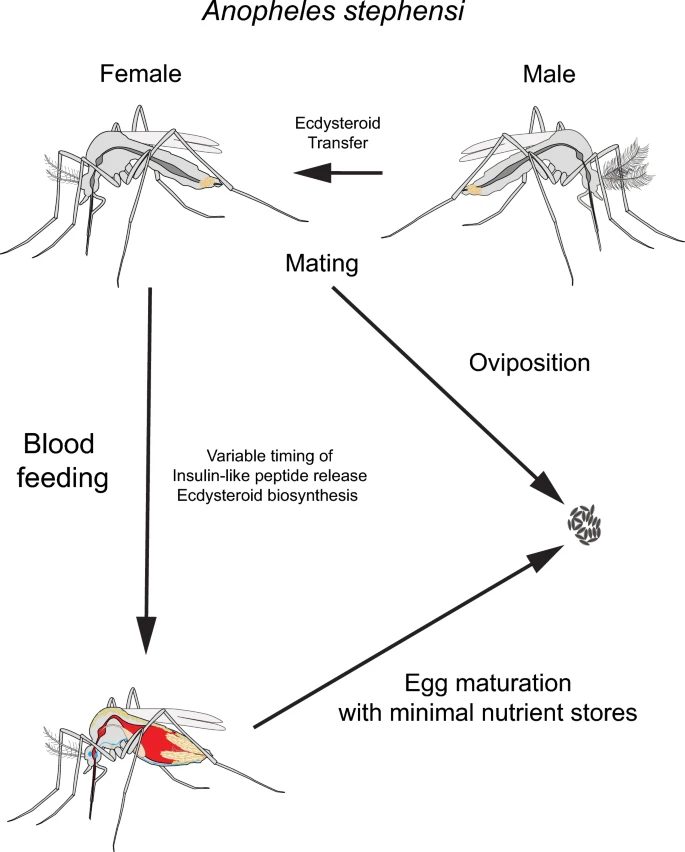
The team at the Chinese Academy of Sciences reared Anopheles stephensi at 32°C days and 30°C nights for about 80 generations. In that time, a 5-kilobase deletion in the circadian gene timeless rose from 2.08% of the population to 28.65%. Males carrying one copy mated 3.6 to 4.7 times as often as normal males in the heat; females carrying it were infected at 97.5%, against 74% for normal females.

Why it matters

A heat-tolerant city mosquito is spreading across Africa, and this variant speeds both its adaptation and its ability to carry malaria.

Questions about this story

Free account needed to ask — your question is kept and asked for you right after sign-up. Answers are public.

No questions yet — be the first to ask.

Key Indicators

28.65%
Frequency of the tim deletion after heat selection
Rose from 2.08% in a population held at 27°C to 28.65% after three years at high temperature.
3.6–4.7×
Mating advantage for males with one copy of the deletion
Measured against wild-type males under high-temperature conditions; the edge was much smaller at standard temperatures.
97.5%
Infection rate in females carrying the deletion
Compared with 74% in wild-type females exposed to Plasmodium falciparum.
74%
Infection rate in wild-type females
Baseline for the same infection experiments.
610,000
Estimated malaria deaths in 2024
Worldwide toll cited by the researchers, alongside an estimated 282 million cases.

Voices

Curated perspectives — historical figures and your fellow readers.

Sign up to generate historical perspectives on this story.

People Involved

Organizations Involved

Timeline

2012 November 2026

4 events Latest: 2 days ago
Tap a bar to jump to that date
  1. Chinese Academy of Sciences and Xinhua report the findings

    Latest Announcement

    The institute publishes an English summary; Xinhua carries an interview with Wang Sibao giving the 2.08% to 28.65% frequency shift.

  2. Cell publishes the timeless study

    Publication

    The paper reports the 5-kilobase deletion, its rise under heat selection, the male mating advantage and the higher parasite loads in heterozygous females.

  3. Heat-selection experiment begins

    Research

    The team starts rearing mosquitoes at 32°C days and 30°C nights, running roughly 80 generations over three years.

  4. Anopheles stephensi reaches Africa

    Spread

    The mosquito is first detected in Djibouti, far outside its native South Asia and Arabian Peninsula range. It has since been found in several other African countries.

Scenarios

1

Field surveys find the timeless deletion in wild African mosquitoes

Possible Resolves by Q2 2028

Discussed by: The study authors, who propose the variant as a molecular marker for monitoring adaptive change in mosquito populations

The paper establishes the variant's effects in a laboratory colony and in summer semi-field cages. The next test is whether it turns up in mosquitoes caught in African cities. If it does, it gives surveillance teams something to count beyond simple presence or absence of the species.

2

An independent laboratory reproduces the male mating advantage

Likely Resolves by End of 2028

Discussed by: Vector biologists who would need to see the effect outside the Shanghai colony before treating it as general

The result rests on one colony selected in one laboratory, plus one summer of semi-field cages. Mating competition experiments with fluorescently labelled sperm are replicable, so a second group can test the same comparison at 30°C or above. A failure to reproduce would narrow the claim to this particular genetic background.

3

Malaria programs add clock-gene genotyping to mosquito surveillance

Unlikely Resolves by End of 2029

Discussed by: The authors, who frame the variant as a potential marker for assessing transmission risk

National programs currently track where An. stephensi has arrived and whether it carries insecticide resistance. Adding a heat-adaptation marker would mean new assays and new budgets. Whether that happens depends on field detection and on whether the variant proves common enough to measure.

Historical Context

3 moments from history that rhyme with this story — and how they unfolded.

2012

Anopheles stephensi arrives in Djibouti (2012)

The mosquito had long been a malaria vector in South Asia and parts of the Arabian Peninsula. Its detection in Djibouti marked its first record in Africa. Unlike many African malaria vectors, it breeds readily in human-made water storage containers and tolerates very high temperatures.

Then

It spread to several other African countries, prompting concern among malaria control programs.

Now

An urban-breeding, heat-tolerant vector now sits alongside established rural vectors, in a continent that had not previously contended with it.

Why this matters now

The new study explains one genetic route by which the invader copes with hot cities, and shows that the same route may raise its capacity to carry parasites.

2006

A timeless variant sweeps European fruit flies (2006)

Researchers reported in Science that a mutation in the Drosophila melanogaster clock gene timeless had spread across Europe over roughly the previous 10,000 years. The likely reason was that it enhanced diapause, the dormant state insects enter to survive hard seasons.

Then

The finding tied a single clock-gene change to a large-scale range expansion.

Now

It became the standard example of natural selection acting on a circadian gene, and set the expectation that clock variants can carry seasonal and thermal adaptations.

Why this matters now

The mosquito result follows the same logic: a variant in a core clock gene spreads because it helps the insect cope with a temperature regime, even at a cost elsewhere.

2015

ls-tim and the white nights (2015)

Follow-up work on the same fruit-fly variant showed that only flies carrying the derived allele could synchronise their daily behaviour to the near-continuous daylight of northern summers. The clock change was a trade-off, not a straightforward upgrade.

Then

It explained how the variant persisted at high latitudes rather than being selected away.

Now

It established that clock-gene variants often carry costs visible in one context and benefits in another.

Why this matters now

The mosquito variant shows the same split: an advantage for males in the heat, and weakened antiparasite immunity in females.

Sources

(8)