



Pull to refresh
Logo
A heart drug cuts a major risk factor but not heart attacks

A heart drug cuts a major risk factor but not heart attacks

New Capabilities

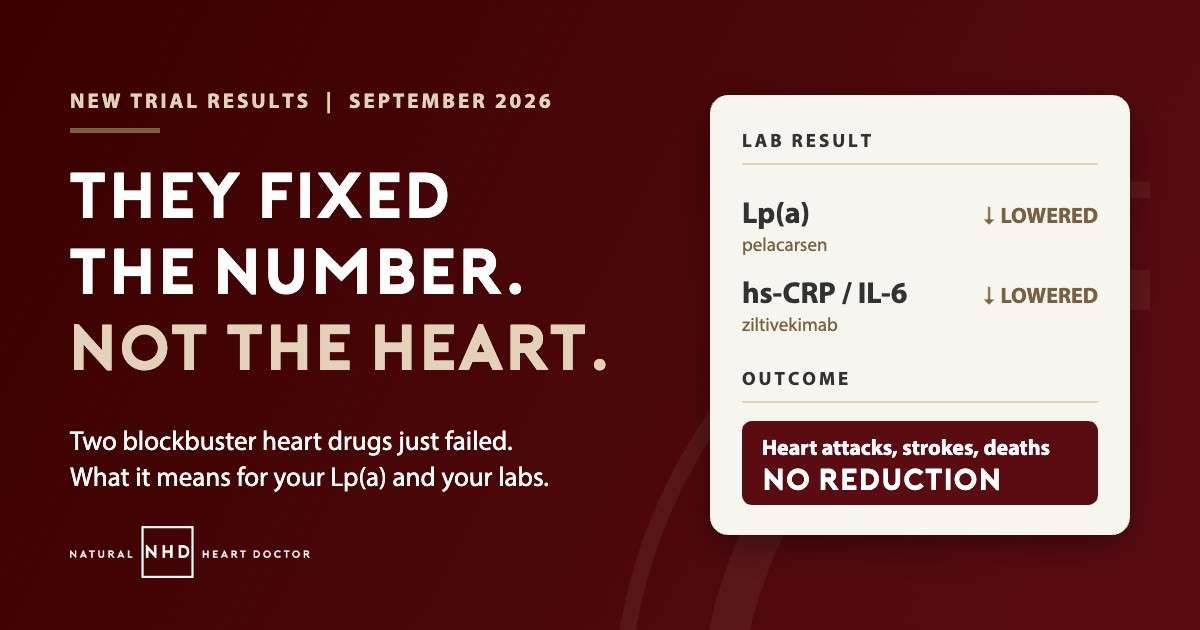
Pelacarsen lowered lipoprotein(a) by 78% for nearly five years. Cardiovascular events barely moved.

Overview

Updated 1 hour ago

For five years, 8,322 people who had already survived a heart attack or stroke injected either pelacarsen or a placebo every month. The drug did what it was designed to do: it cut lipoprotein(a), a cholesterol-carrying particle, by 78%. Major cardiovascular events occurred in 12.3% of the pelacarsen group and 12.1% of the placebo group.

The result, presented November 7 at the American Heart Association meeting in Chicago and published in the New England Journal of Medicine, undercuts the assumption that lowering Lp(a) by itself protects the heart. Novartis said it will stop developing pelacarsen for atherosclerotic cardiovascular disease and keep only one mid-stage study in aortic valve stenosis.

Why it matters

About 64 million Americans have elevated Lp(a), and until now no approved drug could lower it. This trial says lowering it with pelacarsen did not prevent heart attacks or strokes.

Questions about this story

Free account needed to ask — your question is kept and asked for you right after sign-up. Answers are public.

No questions yet — be the first to ask.

Key Indicators

78.4%
Lp(a) reduction at one year
Pelacarsen group, against 3.2% in the placebo group.
12.3%
Patients with a major cardiovascular event on pelacarsen
Placebo was 12.1%, a difference of 0.2 percentage points over a median 4.7 years.
8,322
Patients randomized
Enrolled at 797 sites in 42 countries between December 2019 and July 2022.
4.7 years
Median follow-up
57 months, the longest test yet of whether Lp(a) lowering changes outcomes.
1.4 billion
People worldwide with elevated Lp(a)
Cleveland Clinic's estimate; about 64 million of them are in the United States.

Voices

Curated perspectives — historical figures and your fellow readers.

Sign up to generate historical perspectives on this story.

People Involved

Organizations Involved

Timeline

December 2019 November 2026

5 events Latest: Today
Tap a bar to jump to that date
  1. Results presented: 78% Lp(a) cut, no event benefit

    Today Trial result

    Primary endpoint hit 12.3% on pelacarsen and 12.1% on placebo over a median 4.7 years.

  2. Novartis shelves pelacarsen for heart disease

    Today Corporate decision

    The company keeps one mid-stage study in calcific aortic valve stenosis and drops the rest.

  3. Novartis says the trial missed its goals

    Statement

    The company disclosed the failure without releasing specifics, ahead of the conference presentation.

  4. Enrollment closes at 8,322 patients

    Trial

    Participants had prior heart attack, stroke or symptomatic peripheral artery disease and Lp(a) of at least 70 mg/dL.

  5. Lp(a)HORIZON begins enrolling

    Trial

    The trial opens at 797 sites in 42 countries, testing monthly pelacarsen injections against placebo.

Scenarios

1

A rival Lp(a) drug succeeds where pelacarsen failed

Uncertain Resolves by End of 2029

Discussed by: Steven Nissen, Karol Watson and other cardiologists quoted in coverage

Amgen and Eli Lilly are running their own Phase 3 trials of Lp(a)-lowering drugs, which use different mechanisms and may drive levels lower. If one of those trials meets its cardiovascular endpoint, the class survives and pelacarsen becomes a single-drug failure rather than a verdict on Lp(a).

2

Lp(a) lowering works only in earlier or higher-risk patients

Possible Resolves by End of 2030

Discussed by: Roger Blumenthal, David Maron and Nissen

The trial enrolled people with established disease, well-controlled LDL cholesterol and a relatively modest Lp(a) threshold of 70 mg/dL. A trial in primary prevention, or restricted to much higher Lp(a) levels, could still show benefit. Nissen has suggested levels may need to fall 90% to 95%, not 78%.

3

Lp(a) gets demoted from cause to marker

Possible Resolves by End of 2030

Discussed by: Researchers cited in coverage, including Nissen's own list of possible explanations

If multiple Lp(a)-lowering drugs fail the same way, the field may conclude that high Lp(a) signals risk without causing it, the way HDL cholesterol turned out to work. Drugmakers would then redirect investment toward other targets.

Historical Context

3 moments from history that rhyme with this story — and how they unfolded.

December 2006

Torcetrapib and the HDL hypothesis (2006)

Pfizer halted its ILLUMINATE trial of torcetrapib after the drug raised HDL cholesterol but increased deaths and cardiovascular events. The failure cost the company roughly $800 million in development and ended the most advanced test of raising HDL to prevent heart disease.

Then

Pfizer abandoned torcetrapib, and other companies paused their own cholesteryl ester transfer protein programs.

Now

Subsequent CETP inhibitors also failed, and raising HDL was largely abandoned as a strategy. Lowering LDL remained the proven approach.

Why this matters now

Like Lp(a) today, HDL was a biomarker strongly associated with heart health that turned out not to respond to drug manipulation the way researchers expected.

2011-2014

Niacin trials for HDL (2011-2014)

The AIM-HIGH trial stopped early in 2011 after niacin raised HDL without reducing cardiovascular events. The larger HPS2-THRIVE trial reported in 2014 that niacin added to statins increased serious adverse events without cutting heart attacks or strokes.

Then

Guidelines dropped niacin as an add-on therapy for most patients.

Now

The results reinforced that a risk marker is not automatically a treatment target, a lesson now being applied to Lp(a).

Why this matters now

Niacin lowered a marker doctors trusted and still failed. Pelacarsen's 78% Lp(a) reduction with no event benefit follows the same pattern.

2006

B vitamins for homocysteine (2006)

Observational studies linked high homocysteine to heart disease, and B vitamins reliably lowered it. The HOPE-2 trial reported in 2006 that B-vitamin therapy lowered homocysteine but did not reduce cardiovascular death, heart attack or stroke.

Then

Homocysteine screening and vitamin therapy fell out of cardiology practice.

Now

The episode became a standard example of confounding in observational epidemiology: the marker tracked risk without causing it.

Why this matters now

It is the closest precedent for the possibility that Lp(a) marks risk rather than causing it, one of the explanations researchers are now weighing.

Sources

(5)