




Pull to refresh
Logo
World timekeepers vote to end leap seconds, adopt leap hour

World timekeepers vote to end leap seconds, adopt leap hour

Rule Changes

Atomic and solar time may now diverge by up to one hour starting May 2027

Yesterday: CGPM votes to abolish leap seconds

Overview

Updated 37 minutes ago

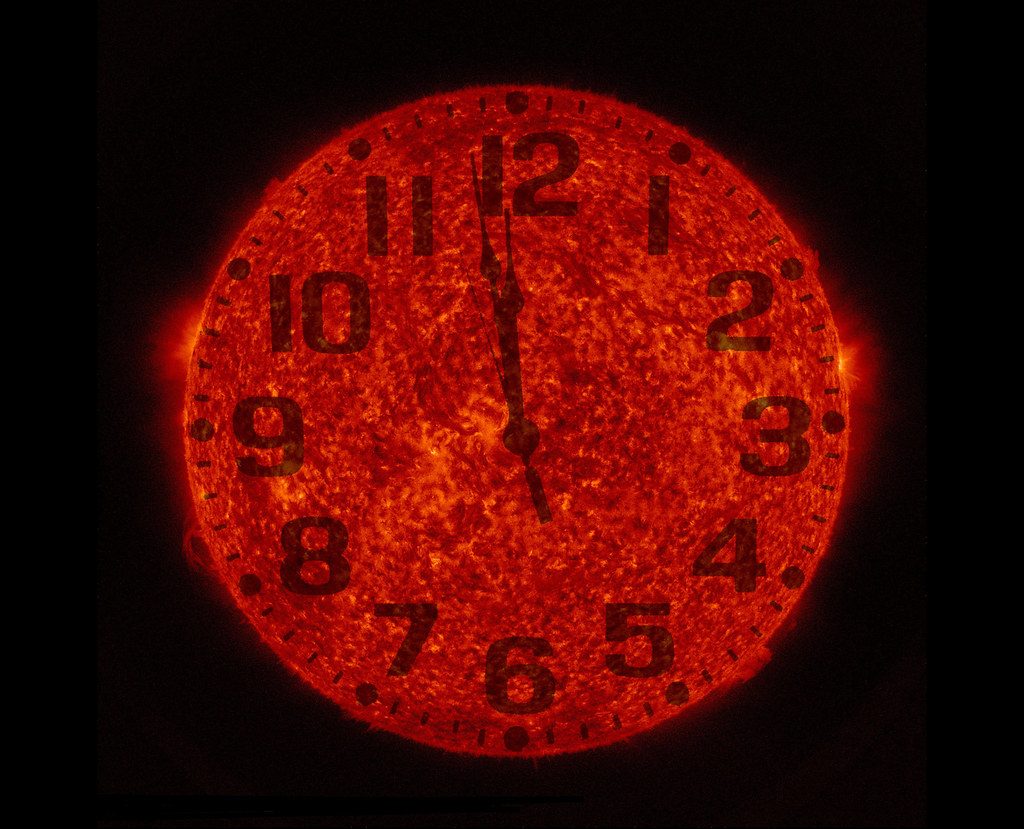
Delegates from 69 countries voted on October 15 to abolish the leap second, ending a 54-year system that kept atomic clocks pinned to Earth's uneven rotation. Starting May 20, 2027, the gap between the two can grow as large as one hour before clocks are adjusted.

The move eliminates a recurring glitch for computer networks, financial markets, and telecom systems, which have wrestled with 59- and 61-second minutes since 1972. The trade-off: civil time will drift from solar time, with clocks running about 54 seconds ahead of the sun by 2100.

Why it matters

Removing the leap second eliminates a recurring failure point in global infrastructure—servers, financial markets, and telecom networks—while slowly letting clocks drift from the sun.

Questions about this story

Free account needed to ask — your question is kept and asked for you right after sign-up. Answers are public.

No questions yet — be the first to ask.

Key Indicators

69
Member states voting at CGPM
Delegates from 69 countries voted on the leap-second resolution.
1 hour (3,600 s)
New maximum UTC–solar time gap
The allowed difference between atomic and solar time rises from under a second to one hour.
30%
Chance of first negative leap second by 2035
Estimated in a 2025 IERS report; the abolition makes such a step unnecessary.
54 seconds
Projected clock lead over Earth rotation by 2100
Civil time will run about 54 seconds ahead of solar time as the tolerance grows.

Voices

Curated perspectives — historical figures and your fellow readers.

Ever wondered what historical figures would say about today's headlines?

Sign up to generate historical perspectives on this story.

People Involved

Organizations Involved

Timeline

1972 May 2027

6 events Latest: Yesterday
Tap a bar to jump to that date
  1. Continuous UTC takes effect

    Upcoming Implementation

    New standard begins on World Metrology Day; UTC may drift up to one hour from solar time.

  2. CGPM votes to abolish leap seconds

    Latest Decision

    69 member states approve Resolution 5, adopting a one-hour tolerance effective May 2027.

  3. Negative leap second risk quantified

    Assessment

    IERS estimates 30% chance of a first-ever second subtraction by 2035.

  4. CGPM sets 2035 phase-out target

    Policy Decision

    Delegates agree UTC should be free of leap seconds by 2035.

  5. Google smears a leap second

    Technical Adaptation

    Google spreads the extra second across 20 hours to avoid server disruption.

  6. Leap seconds introduced

    Standard Change

    UTC kept within 0.9 seconds of Earth's rotation through occasional one-second corrections.

Scenarios

1

World adopts continuous UTC without major disruption

Likely Resolves by End of 2027

Discussed by: National metrology institutes including the UK's NPL, which backed the change

The May 20, 2027 switch proceeds. Networks, grids, and trading systems that no longer handle leap-second adjustments run normally. National institutes publish technical guidance, and the year ends without leap-second-related outages.

2

Leap-second removal triggers isolated system failures

Possible Resolves by End of 2027

Discussed by: The Guardian and CNN, which flagged “largely unprepared” critical infrastructure

Some software assumes leap-second handshakes or expects periodic corrections. A telecom, financial, or grid operator reports an outage tied to the new continuous time scale.

3

Astronomers push for better access to Earth-rotation time

Possible Resolves by End of 2028

Discussed by: The Independent and NPL, which noted astronomers lose UTC as a proxy for Earth's rotation

Applications in astronomy and celestial navigation relied on UTC as an approximation for solar time. With divergence now allowed to reach one hour, astronomical bodies seek a formal, well-distributed UT1 reference.

Historical Context

2 moments from history that rhyme with this story — and how they unfolded.

1999-2000

Y2K remediation (1999–2000)

Computer systems stored years as two digits, so midnight 2000 threatened errors across banking, power, and transport networks. Firms worldwide spent heavily on fixes.

Then

Minimal disruptions after intense preparation; the feared failures never materialized.

Now

Became the template for preemptively fixing time-related technical risk before it hits.

Why this matters now

The Independent called the negative leap second threat “a new Y2K event.” This vote removes that risk through a standard change rather than a remediation campaign.

October 1884

International Meridian Conference (1884)

Delegates from 25 nations chose Greenwich as the prime meridian and created standard time zones, ending reliance on local solar time for civil clocks.

Then

Railways, telegraphs, and global trade gained a single time reference.

Now

Civil time decoupled permanently from the sun's position—the precedent today's decision extends.

Why this matters now

Both are global standard-setting decisions that loosen the link between clocks and Earth's rotation, taken by small groups of national delegates.

Sources

(11)