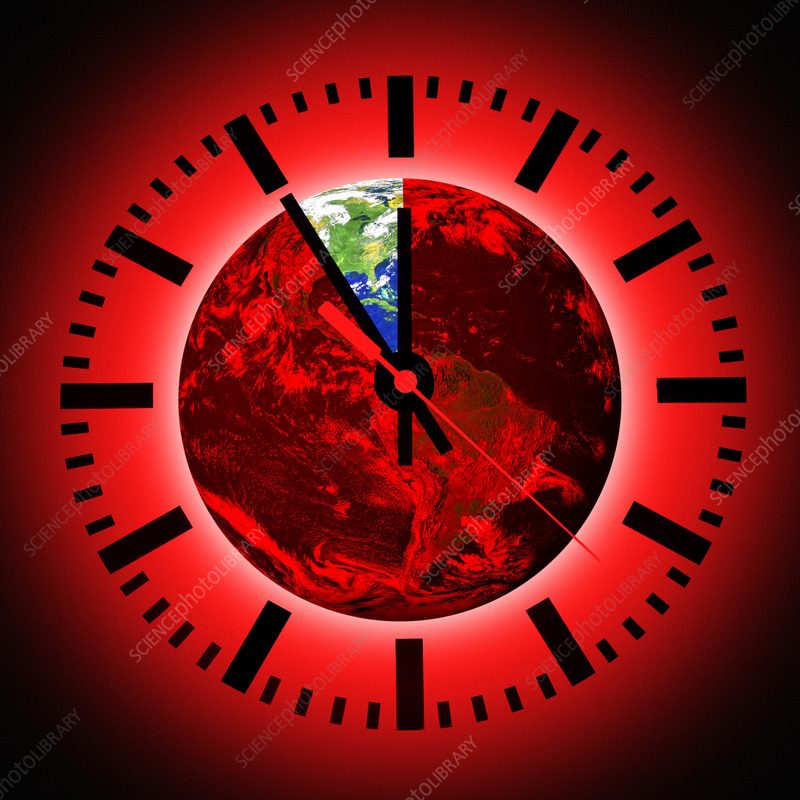
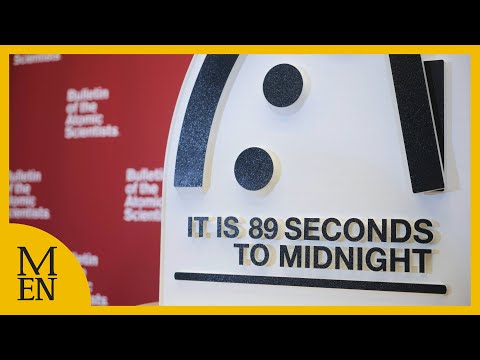
On January 27, 2026, the Bulletin of the Atomic Scientists moved the Doomsday Clock to 85 seconds to midnight—the closest it has ever been to symbolic annihilation in its 78-year history. The four-second advance from 2025's 89-second setting reflects what the Board called a year of escalating dangers: the expiration of the New START treaty on February 5, 2026 (ending 54 years of legally binding nuclear limits), aggressive nuclear modernization by the United States, Russia, and China, artificial intelligence supercharging disinformation that Nobel laureate Maria Ressa described as "informational armageddon," and the global rise of autocratic governments less accountable to their citizens.
International stability is deteriorating, with Trump administration hints at denuclearization overshadowed by a four-day India-Pakistan military crisis in May 2025, US-Israel strikes on Iranian nuclear facilities in June 2025, and continued Russian nuclear threats during the Ukraine war. Chair Daniel Holz warned that "major countries became even more aggressive, adversarial and nationalistic" rather than heeding the previous year's warning. The Trump administration remained silent on Putin's September 2025 proposal to mutually observe New START limits beyond expiration while Trump stated in January that "if it expires, it expires," leaving the world three days from ending the arms control architecture that has constrained the world's two largest nuclear arsenals since 1972.
Images from Openverse under Creative Commons licenses.
Videos from YouTube.
Voices
Curated perspectives — historical figures and your fellow readers.
George Orwell
(1903-1950) ·Modernist · satire
Fictional AI pastiche — not real quote.
"The peculiar thing about a Doomsday Clock is that everyone watches it tick forward while congratulating themselves on their realism, yet no one ever seems to wind it back—rather like how the pigs in my fable kept revising the commandments while insisting nothing had changed. Perhaps we maintain this theatrical timepiece not to prevent catastrophe, but to feel pleasantly horrified at regular intervals without the inconvenience of actually doing anything about it."
100% found this insightful
Ever wondered what historical figures would say about today's headlines?
Sign up to generate historical perspectives on this story.
23 events
Latest: February 11th, 2026 · 6 months ago
Showing 8 of 23
JK to step
Tap a bar to jump to that date
Jump to
February 2026
Public Discussion on Nuclear Risk Scheduled
LatestPublic Engagement
Alexandra Bell and Daniel Holz scheduled to discuss nuclear risk and arms control agreements with Professor Tom Ginsburg at University of Chicago Law School, days after New START expiration.
New START Treaty Expires
Arms Control
The last legally binding nuclear arms limitation treaty between the U.S. and Russia expires. For the first time since 1972, no treaty constrains the world's two largest nuclear arsenals.
January 2026
Arms Control Experts Warn of Imminent 'Watershed Moment'
Expert Analysis
With New START expiring in six days, arms control experts published warnings that February 5 marks a 'watershed moment' ending 54 years of bilateral nuclear limits. Tufts nuclear policy experts warned the near-term risk is a qualitative arms race emphasizing hypersonic systems, missile defenses, and AI command-and-control rather than massive warhead buildups.
Kremlin Confirms No U.S. Response to Putin Proposal
Diplomacy
Kremlin spokesman Dmitry Peskov stated the United States had not responded to Russia's September 2025 proposal to mutually observe NEW START limits after February 5 expiration, with only days remaining before treaty lapses.
2026 Doomsday Clock Announcement
Clock Adjustment
The Bulletin released its annual assessment, with experts evaluating the expiring New START treaty, AI in warfare, and climate indicators. Nobel laureate Maria Ressa joined the announcement panel.
Clock Moves to 85 Seconds—Closest Ever to Midnight
Clock Adjustment
The Bulletin moved the clock forward 4 seconds from 89 to 85 seconds, citing aggressive nuclear modernization, New START expiration, AI-driven disinformation, and conflicts including India-Pakistan crisis and Iran nuclear facility strikes. "Major countries became even more aggressive, adversarial and nationalistic," said chair Daniel Holz.
Experts Cite Rising Authoritarianism in Clock Decision
Expert Analysis
At Georgetown University event, Daniel Holz explained rising authoritarianism globally was a political factor behind moving the clock forward, noting concerns about "the rise of autocratic governments that are less and less accountable to their citizens."
Trump Dismisses Urgency of New START Extension
Diplomacy
In New York Times interview, President Trump stated "If it expires, it expires. We'll just do a better agreement," suggesting China should be included in any successor treaty despite Beijing's consistent refusal to join negotiations while its arsenal remains far smaller.
October 2025
Trump Calls Putin Proposal 'Good Idea' but Takes No Action
Diplomacy
When asked about Putin's September proposal to mutually observe New START limits, Trump told reporters it "sounds like a good idea," but administration provided no formal response to Moscow.
September 2025
Putin Proposes Mutual New START Observation After Expiration
Diplomacy
Putin publicly proposed that the U.S. and Russia mutually observe New START limits for one year after the treaty's February 2026 lapse. The U.S. has not formally responded.
June 2025
US-Israel Strikes on Iranian Nuclear Facilities
Military Action
United States and Israel conducted strikes on Iran's nuclear facilities. Iran subsequently suspended some IAEA inspections, rendering the status of its nuclear program unclear and raising proliferation concerns.
May 2025
India-Pakistan Military Crisis
Military Conflict
A four-day crisis saw two nuclear-armed states in open military conflict, alarming observers for its potential to escalate. The confrontation between nuclear powers added to global instability.
January 2025
Clock Moves to 89 Seconds—Closest Ever
Clock Adjustment
The Bulletin cited nuclear modernization, climate inaction, the Ukraine war, and AI integration in warfare. The single-second move signaled "extreme danger."
February 2023
Russia Suspends New START Participation
Arms Control
Putin announced Russia would no longer allow U.S. inspections of nuclear facilities, though Russia said it would continue observing numerical limits.
January 2023
Russia's Ukraine Invasion Moves Clock to 90 Seconds
Clock Adjustment
Putin's nuclear threats during the Ukraine war prompted the closest setting to that point. The clock moved 10 seconds forward.
January 2020
Clock Breaks Two-Minute Barrier: 100 Seconds
Clock Adjustment
For the first time, the setting moved to seconds rather than minutes, reflecting "more dangerous than it has ever been, even at the height of the Cold War."
January 2007
Climate Change Added to Assessment
Methodology Change
The Bulletin expanded its threat assessment beyond nuclear weapons to include climate change for the first time.
December 1991
Clock Reaches 17 Minutes—Furthest Ever from Midnight
Clock Adjustment
The Soviet collapse and START treaty signing prompted unprecedented optimism. The Board moved the hands outside the original clock design.
January 1963
Partial Test Ban Treaty Moves Clock to 12 Minutes
Clock Adjustment
The U.S. and Soviet Union ended atmospheric nuclear testing. Post-Cuban Missile Crisis diplomacy produced the first concrete arms control progress.
October 1962
Cuban Missile Crisis—Clock Unchanged at 7 Minutes
Major Event
The Bulletin did not move the clock during the 13-day crisis because too little was known about the outcome. Subsequent revelations showed "we were all saved by sheer luck."
January 1953
Hydrogen Bomb Era: Clock Reaches 2 Minutes
Clock Adjustment
Both superpowers tested thermonuclear weapons. This was the closest setting until 2018.
January 1949
Soviet Atomic Test Moves Clock to 3 Minutes
Clock Adjustment
The Soviet Union's first atomic bomb test triggered the nuclear arms race. The clock jumped forward four minutes.
June 1947
Doomsday Clock Debuts at 7 Minutes to Midnight
Origin
Artist Martyl Langsdorf designed the clock for the Bulletin's cover. She chose the time because "it looked good to my eye."
Historical Context
3 moments from history that rhyme with this story — and how they unfolded.
1 of 3
October 1962
Cuban Missile Crisis (1962)
Soviet nuclear missiles discovered in Cuba brought the U.S. and Soviet Union to the brink of nuclear war for 13 days. President Kennedy ordered a naval quarantine while demanding missile removal. Soviet Premier Khrushchev ultimately agreed to withdraw the weapons in exchange for a U.S. pledge not to invade Cuba.
Then
The Bulletin chose not to move the Doomsday Clock during the crisis, as too little was known about the outcome. The following year, it moved the clock back to 12 minutes after the Partial Test Ban Treaty.
Now
The near-miss produced the U.S.-Soviet hotline and the first nuclear test ban. Declassified documents revealed the world came closer to nuclear war than anyone knew at the time—Soviet submarines carried nuclear torpedoes and field commanders had authority to use them.
Why this matters now
The Bulletin's decision to hold the clock steady during an acute crisis while moving it after diplomatic breakthroughs illustrates its methodology: the clock tracks systemic risk trends, not individual incidents. The current moment—with arms control eroding rather than strengthening—represents the opposite trajectory.
2 of 3
December 1991
Soviet Collapse and START Signing (1991)
President George H.W. Bush and Soviet leader Mikhail Gorbachev signed the Strategic Arms Reduction Treaty, requiring deep cuts to both nations' nuclear arsenals. Months later, the Soviet Union dissolved. The Bulletin moved the clock to 17 minutes to midnight—the furthest it has ever been.
Then
The U.S. and Russia began dismantling thousands of nuclear warheads. The existential dread that had defined the Cold War lifted.
Now
The START framework established inspection and verification mechanisms that built mutual trust for three decades. The 1991 optimism proved premature—by 2023, arms control was unraveling, and by 2026, the last treaty constraining U.S.-Russia arsenals will expire.
Why this matters now
The 1991 setting demonstrates how far the clock can move when genuine diplomatic breakthroughs occur. The current trajectory—from 17 minutes in 1991 to 89 seconds in 2025—represents the loss of an entire arms control architecture that took decades to build.
3 of 3
July 1945 - August 1949
First Atomic Bomb Tests (1945-1949)
The U.S. tested the first atomic bomb in New Mexico in July 1945, then dropped two on Japan. The Bulletin was founded that September by Manhattan Project scientists who wanted the public to understand the threat they had helped create. Four years later, the Soviet Union tested its own bomb.
Then
The Bulletin created the Doomsday Clock at seven minutes to midnight in 1947. After the Soviet test, it jumped to three minutes.
Now
The arms race produced arsenals of over 60,000 nuclear weapons at their Cold War peak. The scientists who built the bomb became the most persistent advocates for controlling it.
Why this matters now
The Bulletin's founding purpose—scientists warning the public about existential threats of their own creation—remains its mission. Today's concerns about AI and autonomous weapons echo the original anxiety about nuclear technology: powerful capabilities that could escape human control.