





Pull to refresh
Logo
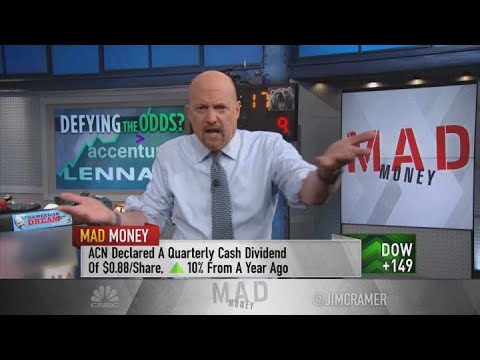
Accenture shares surge 22% on Q4 earnings beat and record bookings

Accenture shares surge 22% on Q4 earnings beat and record bookings

Money Moves

Biggest single-day gain on record as generative AI disruption fears ease

Yesterday: Accenture beats Q4 estimates

Overview

Updated 1 hour ago

Accenture's stock surged 22% on October 1, its biggest single-day gain on record, after the consulting giant blew past fourth-quarter estimates. Revenue reached $18.68 billion and new bookings hit $22.2 billion — a book-to-bill ratio of 1.2, meaning it signed more work than it billed.

The rally answered the year's biggest worry: that generative AI would gut labor-intensive consulting and IT services. Record bookings suggest clients are paying Accenture to adopt AI rather than replacing it with the technology, and the company handed investors strong fiscal 2027 guidance to back that read.

Why it matters

Accenture's bookings are a bellwether for corporate tech spending — record demand signals companies are paying for AI-led reinvention, not pausing it.

Questions about this story

Free account needed to ask — your question is kept and asked for you right after sign-up. Answers are public.

No questions yet — be the first to ask.

Key Indicators

$22.2B
Q4 new bookings
Up 4% in U.S. dollars year over year, a book-to-bill ratio of 1.2.
1.2
Q4 book-to-bill ratio
Signed $1.20 in new work for every $1.00 of revenue recognized.
+22.5%
Single-day stock gain
Biggest one-session gain on record; shares closed at $224.69.
$18.68B
Q4 revenue
Up 7% in local currency, above the top of the company's own guidance.
$3.29
Q4 adjusted EPS
Beat the $3.18 consensus and the prior year's adjusted $3.02.
$11.5B
Cash returned to shareholders
A record for fiscal 2026, up 38%, via buybacks and dividends.

Voices

Curated perspectives — historical figures and your fellow readers.

Ever wondered what historical figures would say about today's headlines?

Sign up to generate historical perspectives on this story.

People Involved

Organizations Involved

Timeline

3 events Latest: Yesterday
  1. Accenture beats Q4 estimates

    Latest Earnings

    Revenue of $18.68B and adjusted EPS of $3.29 both topped consensus; bookings reached $22.2B.

  2. Shares surge 22.5%, a record single-day gain

    Market

    Stock closed at $224.69, the biggest one-session rise in company history, on AI disruption relief.

  3. Fiscal 2027 outlook issued

    Guidance

    Sees 3-6% revenue growth in local currency and at least $9.5B returned to shareholders.

Scenarios

1

Accenture meets FY2027 targets as AI work holds

Likely Resolves by Oct 1, 2027

Discussed by: Company guidance and analyst consensus, with CNBC framing the beat as easing AI fears

If bookings momentum carries, full-year revenue growth lands within the 3-6% local-currency guidance and GAAP EPS reaches $14.39-$14.81. That would confirm generative AI is expanding Accenture's work — helping clients adopt the technology — rather than replacing it.

2

Bookings cool in Q1 as AI disruption fear returns

Possible Resolves by End of 2026

Discussed by: The pre-quarter bear case that Q4 was a relief rally, not proof of a new trend

Q4's book-to-bill of 1.2 is strong, but fiscal Q1 is Accenture's seasonal bookings peak, so the bar resets high. If Q1 FY2027 delivers weak bookings or the company trims guidance, the AI-obsolescence worry reasserts and the stock gives back its gains.

3

Stock rally fades into a modest re-rating

Possible Resolves by Q1 2027

Discussed by: Analysts noting shares closed 23% below their 52-week high of $291

The 22% jump may reflect relief buying after a weak year rather than a durable re-rating. If the stock drifts back below $200 in the coming months, it signals the market wants more than one quarter of proof before pricing in an AI dividend.

Historical Context

2 moments from history that rhyme with this story — and how they unfolded.

1993-2002

IBM's services pivot under Lou Gerstner (1993-2002)

By 1993 IBM was bleeding money as mainframe hardware and PCs commoditized, and analysts called for splitting the company up. Lou Gerstner, brought in that year, kept IBM whole and bet the future on services and consulting.

Then

IBM's services business boomed; in 2002 it bought PwC Consulting for about $3.5 billion to build advisory muscle.

Now

Services became IBM's growth engine and the template for reinvention when core products are disrupted.

Why this matters now

Same pattern, reversed: in the 1990s commoditized hardware pushed a tech giant into services. Today, AI is feared to make services themselves obsolete — and Accenture's record bookings suggest clients still want human help to adopt it.

2010s

The cloud 'services death' prediction (2010s)

As Amazon Web Services and Microsoft Azure grew, analysts warned cloud would gut traditional outsourcing and system-integration work from firms like Accenture, since clients could buy compute without consultants.

Then

Instead of disappearing, services demand expanded — clients needed help migrating, modernizing, and running cloud estates.

Now

Cloud became a multi-billion-dollar growth line inside Accenture, and the fear of obsolescence proved wrong.

Why this matters now

The identical bet, rerun: a new technology was supposed to kill services work and instead became its biggest new source. Q4 bookings are early evidence this cycle may repeat with generative AI.

Sources

(6)