
Pull to refresh
Logo
Daily Brief
Following
Why Sign Up
African measles vaccination campaign saves nearly 20 million lives since 2000

African measles vaccination campaign saves nearly 20 million lives since 2000

New Capabilities
By Newzino Staff |

WHO and Gavi analysis reveals unprecedented public health achievement — but warns progress is slowing

5 days ago: WHO and Gavi report 19.5 million lives saved in Africa

Overview

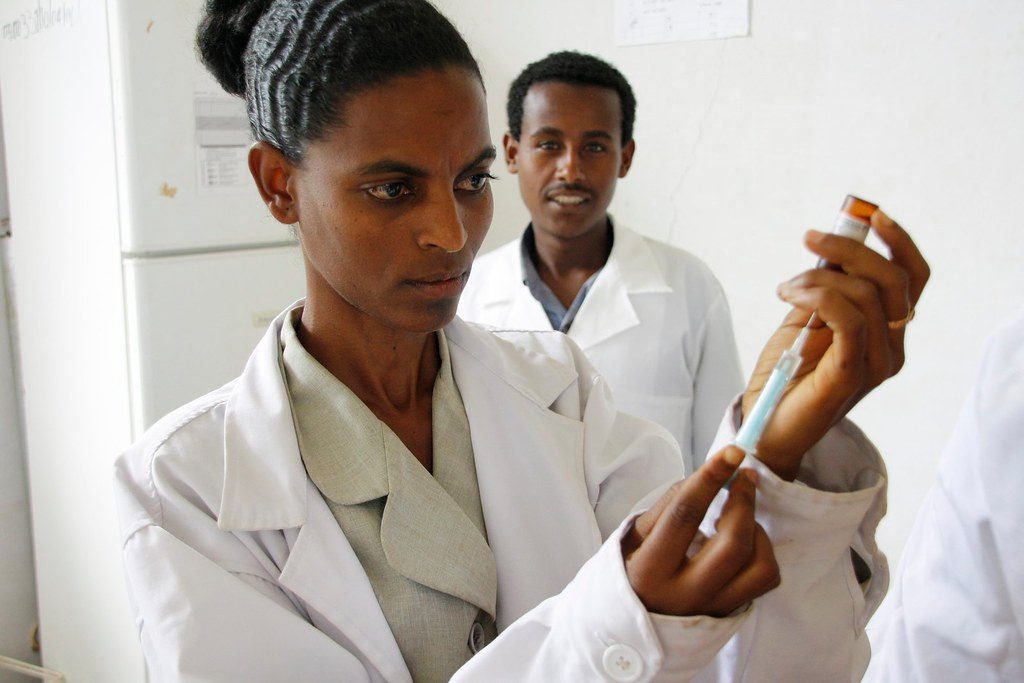
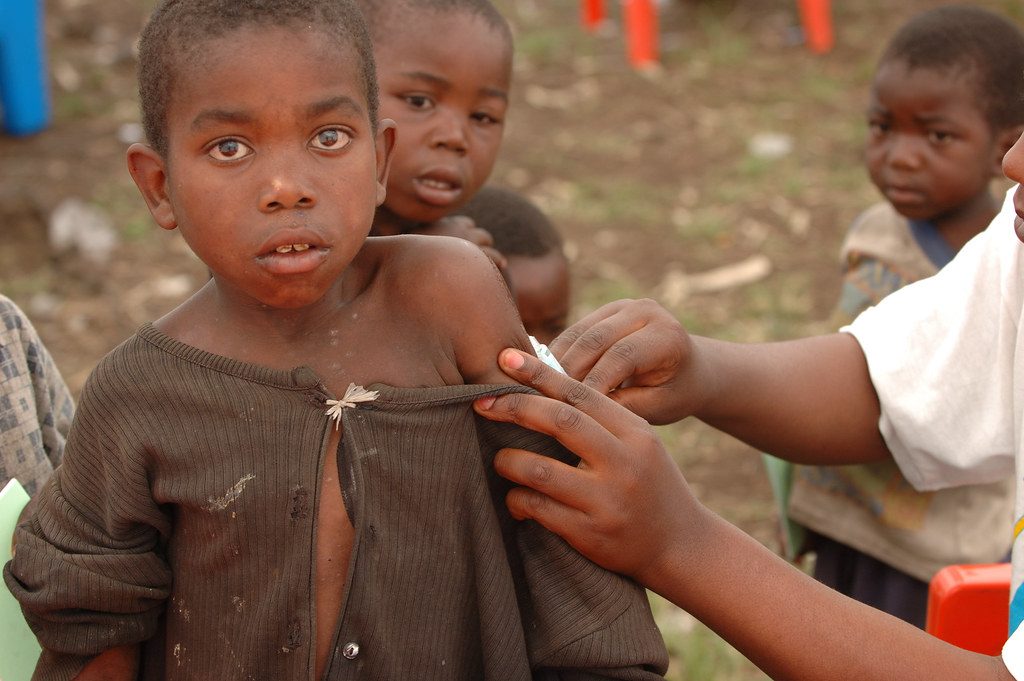
In 2000, measles killed roughly 480,000 people a year in Africa, mostly children under five. A quarter-century of sustained vaccination — more than half a billion routine doses and 622 million supplemental campaign doses across 44 countries — has cut that toll in half, saving an estimated 19.5 million lives. Three sub-Saharan nations have now eliminated the disease entirely, a milestone once considered decades away.

Why it matters

Measles is the canary in the coal mine for immunization systems — when coverage slips, it's the first disease to come roaring back.

Key Indicators

19.5M
Lives saved in Africa since 2000
Estimated measles deaths averted through routine and campaign vaccination across the continent
55%
Second-dose coverage in Africa (2024)
Up from 5% in 2000, but far below the 95% threshold needed for herd immunity
500M+
Children vaccinated through routine immunization
Routine measles vaccinations delivered across Africa between 2000 and 2024
95,000
Global measles deaths in 2024
Down 88% from 780,000 in 2000, but still overwhelmingly children under five
3
Sub-Saharan countries with elimination status
Cabo Verde, Mauritius, and Seychelles achieved measles and rubella elimination in 2025

Interactive

Exploring all sides of a story is often best achieved with Play.

Ever wondered what historical figures would say about today's headlines?

Sign up to generate historical perspectives on this story.

Sign Up

Debate Arena

Two rounds, two personas, one winner. You set the crossfire.

People Involved

Organizations Involved

Timeline

  1. WHO and Gavi report 19.5 million lives saved in Africa

    Analysis

    A joint analysis from the World Health Organization's African Regional Office and Gavi reveals that measles vaccination in Africa has averted an estimated 19.5 million deaths since 2000, while warning that progress is uneven and slowing.

  2. Nigeria launches Phase 2 targeting 106 million children

    Campaign

    The second phase of Nigeria's measles-rubella campaign begins across 16 southern states, bringing the total target to over 106 million children.

  3. Nigeria completes Phase 1 of mega-campaign

    Campaign

    Nigeria vaccinates 58.9 million children against measles and rubella in the first phase of what will become one of the largest vaccination campaigns in African history.

  4. Cabo Verde, Mauritius, and Seychelles achieve elimination

    Milestone

    Three sub-Saharan African countries become the first in the region to achieve measles and rubella elimination status — the gold standard for disease control.

  5. Fifty-nine countries report major measles outbreaks

    Setback

    The World Health Organization reports 59 countries experienced large or disruptive measles outbreaks in 2024, nearly triple the 2021 figure. Thirty-nine percent occurred in Africa.

  6. Gavi backs largest-ever measles catch-up push

    Campaign

    Gavi supports catch-up and follow-up campaigns across 24 countries, reaching over 62 million children — one of the alliance's largest single-year measles efforts.

  7. COVID-19 pandemic disrupts vaccination campaigns

    Setback

    The pandemic forces suspension or postponement of measles vaccination campaigns across dozens of African countries, creating immunity gaps that would fuel later outbreaks.

  8. Global Measles and Rubella Strategic Plan adopted

    Policy

    The World Health Organization and partners launch a strategic plan setting targets for measles elimination in at least five WHO regions by 2020.

  9. Africa achieves 85% drop in measles deaths over one decade

    Milestone

    Sub-Saharan Africa records an 85% reduction in measles deaths between 2000 and 2010, the steepest decline of any region globally, driven by mass vaccination campaigns reaching hundreds of millions of children.

  10. Measles Initiative launches with Africa focus

    Milestone

    The American Red Cross, the Centers for Disease Control and Prevention, UNICEF, the United Nations Foundation, and the World Health Organization sign a joint declaration to fight measles in Africa, forming what would become the Measles & Rubella Partnership.

Scenarios

1

Africa reaches 90% first-dose coverage by 2030

Discussed by: WHO and Gavi in their strategic frameworks; the Immunization Agenda 2030 partnership

If countries sustain current momentum and close the gap on missed children — particularly in conflict-affected states and remote areas — Africa could reach the 90% first-dose target within the decade. Nigeria's mega-campaign and Gavi's "Leap" reform agenda are designed to build the routine systems that would make this possible. Success would put measles elimination within reach for a critical mass of African nations.

2

Progress stalls as funding gaps and outbreaks persist

Discussed by: WHO's November 2025 global measles report; analysts at the Center for Infectious Disease Research and Policy (CIDRAP)

The World Health Organization's Global Measles and Rubella Laboratory Network has secured only 15% of its 2026 funding. If financial support erodes — whether from donor fatigue, geopolitical shifts, or competing health priorities — surveillance weakens first, then campaign frequency drops. Coverage plateaus in the mid-50s for second dose, and periodic outbreaks continue killing tens of thousands of children annually. The 19.5 million figure grows, but slowly.

3

COVID-era immunity gaps trigger a major regional surge

Discussed by: The Lancet Microbe editorial board; WHO epidemiologists tracking post-pandemic immunity debt

Millions of children missed routine vaccinations during the COVID-19 pandemic, creating cohorts with no measles immunity. If catch-up campaigns fail to reach these children — especially in the Democratic Republic of the Congo, Ethiopia, and other high-burden countries — a large-scale regional outbreak could reverse years of progress. The 2024 outbreak data, with 59 countries affected globally, suggests this scenario is already partially underway.

4

Sub-Saharan elimination expands beyond island nations

Discussed by: WHO AFRO; public health researchers tracking the nine low-incidence countries

Nine African countries reported consistently low measles incidence in 2023 and 2024. If these nations formalize elimination verification — following the path of Cabo Verde, Mauritius, and Seychelles — it would demonstrate that elimination is achievable on the African mainland, not just in small island states. This would fundamentally shift the narrative from 'managing measles' to 'ending measles' in Africa.

Historical Context

Smallpox eradication in Africa (1966-1980)

1966-1980

What Happened

The World Health Organization launched the Intensified Smallpox Eradication Programme in 1966, deploying ring vaccination and surveillance strategies across Africa. The last natural case in Africa occurred in Somalia in 1977. In 1980, WHO declared smallpox eradicated globally — the first and still only human disease eliminated through vaccination.

Outcome

Short Term

Smallpox vaccination ceased worldwide, saving billions in annual vaccine costs and eliminating a disease that had killed an estimated 300 million people in the 20th century alone.

Long Term

The campaign proved that systematic vaccination could eradicate a disease across an entire continent, creating the institutional template that the Measles Initiative would later follow.

Why It's Relevant Today

The smallpox campaign demonstrated that Africa-wide disease elimination through vaccination was possible, and many of the same institutional partnerships and surveillance methods now underpin the measles effort.

Polio eradication campaign in Africa (1996-2020)

1996-2020

What Happened

Africa launched aggressive polio vaccination campaigns in the late 1990s, eventually reaching hundreds of millions of children through national immunization days. Nigeria — the last African country with endemic wild poliovirus — recorded its final case in 2016. In August 2020, the WHO African Region was certified free of wild poliovirus.

Outcome

Short Term

Wild poliovirus was eliminated from the entire African continent, a milestone that took 24 years of sustained effort and billions of dollars.

Long Term

The campaign built vaccination infrastructure — cold chains, community health worker networks, surveillance systems — that measles and other immunization programs now rely on. But it also revealed that elimination and eradication are different: vaccine-derived poliovirus variants continue to circulate.

Why It's Relevant Today

The polio campaign's infrastructure became the backbone of measles vaccination delivery in Africa. Its 24-year timeline mirrors the measles effort's duration, and its lesson — that the last mile is the hardest — applies directly to measles coverage gaps today.

Global measles resurgence after MMR-autism scare (1998-2004)

1998-2004

What Happened

In 1998, British physician Andrew Wakefield published a fraudulent study in The Lancet linking the measles-mumps-rubella (MMR) vaccine to autism. Despite being retracted in 2010 and Wakefield losing his medical license, the paper triggered a collapse in vaccination rates across the United Kingdom and parts of Europe. MMR uptake in the UK fell from 92% to below 80%.

Outcome

Short Term

Measles outbreaks surged in the UK and Europe. In 2006, a 13-year-old unvaccinated boy became the first measles death in the UK in 14 years.

Long Term

The episode demonstrated how quickly decades of vaccination progress can unravel when public trust erodes, and created a template for vaccine hesitancy movements that persist today.

Why It's Relevant Today

The contrast is stark: while Africa invested in expanding measles vaccination and saved 19.5 million lives, several wealthy nations that had already eliminated measles are now losing that status due to vaccine hesitancy — the United States, the United Kingdom, and Canada have all faced elimination-status reviews since 2024.

Sources

(10)