



Pull to refresh
Logo
Agricultural liming found to be a century-long carbon sink in the Mississippi River Basin

Agricultural liming found to be a century-long carbon sink in the Mississippi River Basin

New Capabilities

New Nature study challenges IPCC accounting that treats a century-old farming practice as a CO2 source

2 days ago: Study published in Nature

Overview

Updated 2 hours ago

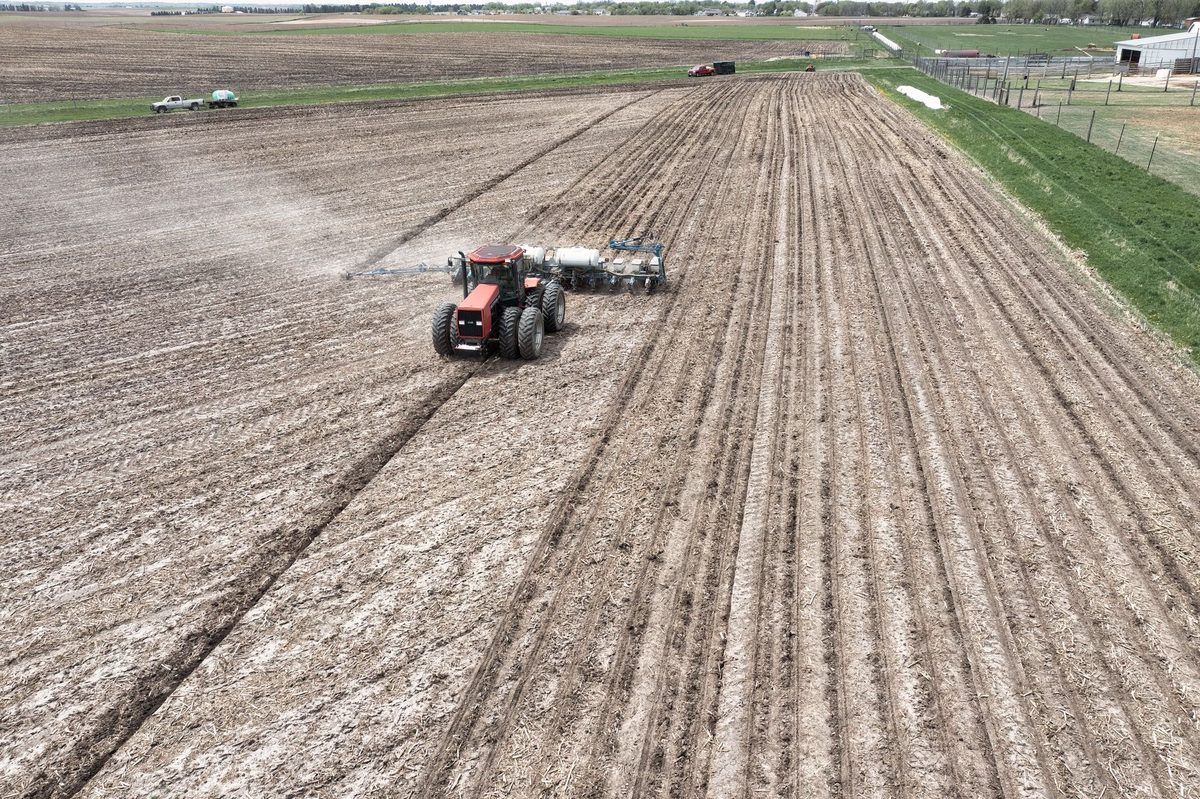
Farmers have spread limestone on acidic soil for a century, and climate accounting has treated the practice as a CO2 source. A new study in Nature argues that accounting is wrong: across the Mississippi River Basin, liming has been a net carbon sink since 1900.

The argument turns on what you compare against. The study's authors say the acids that drive CO2 release come from fossil fuels and nitrogen fertilizers, not from lime. Absent lime, those acids would release carbon anyway, so the practice offsets emissions it had been blamed for.

Why it matters

If the finding holds, a standard farming practice draws down CO2, potentially adding a new tool to carbon markets and climate policy.

Questions about this story

Free account needed to ask — your question is kept and asked for you right after sign-up. Answers are public.

No questions yet — be the first to ask.

Key Indicators

~0.44 GtCO₂
Ideal CO2 removal potential of lime applied since 1900
The theoretical maximum carbon removal if all added lime reacted with CO2.
~90%
Share of ideal removal potential realized by 2015
River alkalinity fluxes show roughly 90% of theoretical lime-driven CO2 removal occurred at the catchment scale.
~0.40 GtCO₂
Independent river-based estimate of lime-associated carbon removal
The empirical estimate (0.401 ± 0.091 GtCO2) matches the model-based range of 0.22-0.37 GtCO2.
~20 Tmol
Cumulative anthropogenic acidity excess by 2015
Acid inputs from fossil fuels and nitrogen fertilizers exceed lime alkalinity basin-wide, driving the counterfactual argument.

Voices

Curated perspectives — historical figures and your fellow readers.

Ever wondered what historical figures would say about today's headlines?

Sign up to generate historical perspectives on this story.

People Involved

Organizations Involved

Timeline

June 1938 September 2026

4 events Latest: 2 days ago
Tap a bar to jump to that date
  1. Study published in Nature

    Latest Publication

    Nature publishes the paper showing agricultural liming has acted as a net carbon sink in the Mississippi River Basin over the past century.

  2. Preprint posted

    Publication

    The study appears as a preprint on Research Square ahead of peer review.

  3. Anthropogenic acidity inputs peak

    Background

    Sulfuric and nitric acid deposition from fossil fuels and nitrogen fertilizer peaks around 1,350-1,600 mol per hectare per year basin-wide.

  4. Liming expansion begins across the Corn Belt

    Background

    Broad agricultural liming takes off in the Midwest, briefly releasing a pulse of CO2 before becoming a net sink, per the study's reconstruction.

Scenarios

1

IPCC revises liming accounting to credit carbon removal

Possible Resolves by End of 2029

Discussed by: Study authors, who argue current international accounting applies an incomplete counterfactual

The IPCC's inventory guidelines assign emission factors to agricultural lime, treating it as a CO2 source. If the study's framing gains traction, future methodology reports would measure lime against the acid pollution that drives CO2 release, turning liming into credited carbon removal.

2

EU carbon removal framework certifies agricultural liming

Possible Resolves by Q2 2028

Discussed by: Study authors referencing the European Union's Carbon Removals and Carbon Farming (EU-CRCF) framework

The EU-CRCF is writing certification methods for carbon removal. If liming qualifies, farmers could earn credits for spreading lime. The authors caution that the decades-long lag between application and net export must be priced in, making near-term credit issuance conservative.

3

Independent studies confirm or contest the sink

Possible Resolves by End of 2028

Discussed by: Researchers working on soil carbon and enhanced weathering

The study's estimates carry significant uncertainty, especially reconstructed lime inputs. Catchment-scale studies in other farming regions, or direct field measurements of lime-driven carbon flux, will test whether the counterfactual framing holds outside the Mississippi basin.

Historical Context

3 moments from history that rhyme with this story — and how they unfolded.

2006

IPCC 2006 Guidelines set lime emission factors (2006)

The 2006 IPCC Guidelines introduced default emission factors for agricultural lime, formally treating it as a CO2 source in national inventories worldwide.

Then

Countries adopted the factors in their greenhouse gas inventories.

Now

The framework has persisted for two decades, becoming the default way liming is counted.

Why this matters now

This is precisely the accounting framework the new Nature study argues is incomplete.

2000s-2010s

No-till farming carbon accounting debate (2000s-2010s)

No-till farming was marketed as a major soil carbon sink. Research showed results depended heavily on how deep soil was sampled, and accounting frameworks struggled to credit the practice consistently.

Then

Carbon credit protocols paid for no-till practices, then revised their assumptions as deeper sampling showed smaller gains.

Now

IPCC guidance grew more cautious about crediting soil management without direct measurement.

Why this matters now

Shows how agricultural practices get classified as carbon sinks or sources, and how accounting lags the underlying science.

2010s-2020s

Enhanced rock weathering trials (2010s-2020s)

Companies and researchers spread crushed silicate rock on farmland to capture CO2 through weathering, measuring dissolved products in soil water and drainage.

Then

Startups raised significant funding and academic trials began quantifying removal rates.

Now

Enhanced weathering became a recognized carbon removal category in early certification frameworks.

Why this matters now

Agricultural liming is chemically a form of alkalinity addition, effectively enhanced weathering already operating on millions of hectares.

Sources

(6)