Pull to refresh
Logo
Chamath Palihapitiya takes CEO role at AI coding startup 8090 after $135M raise

Chamath Palihapitiya takes CEO role at AI coding startup 8090 after $135M raise

Money Moves

The SPAC-era investor steps back into operations with Ernst & Young already on the books and $135 million to prove AI can run corporate software

Overview

Updated Jul 16

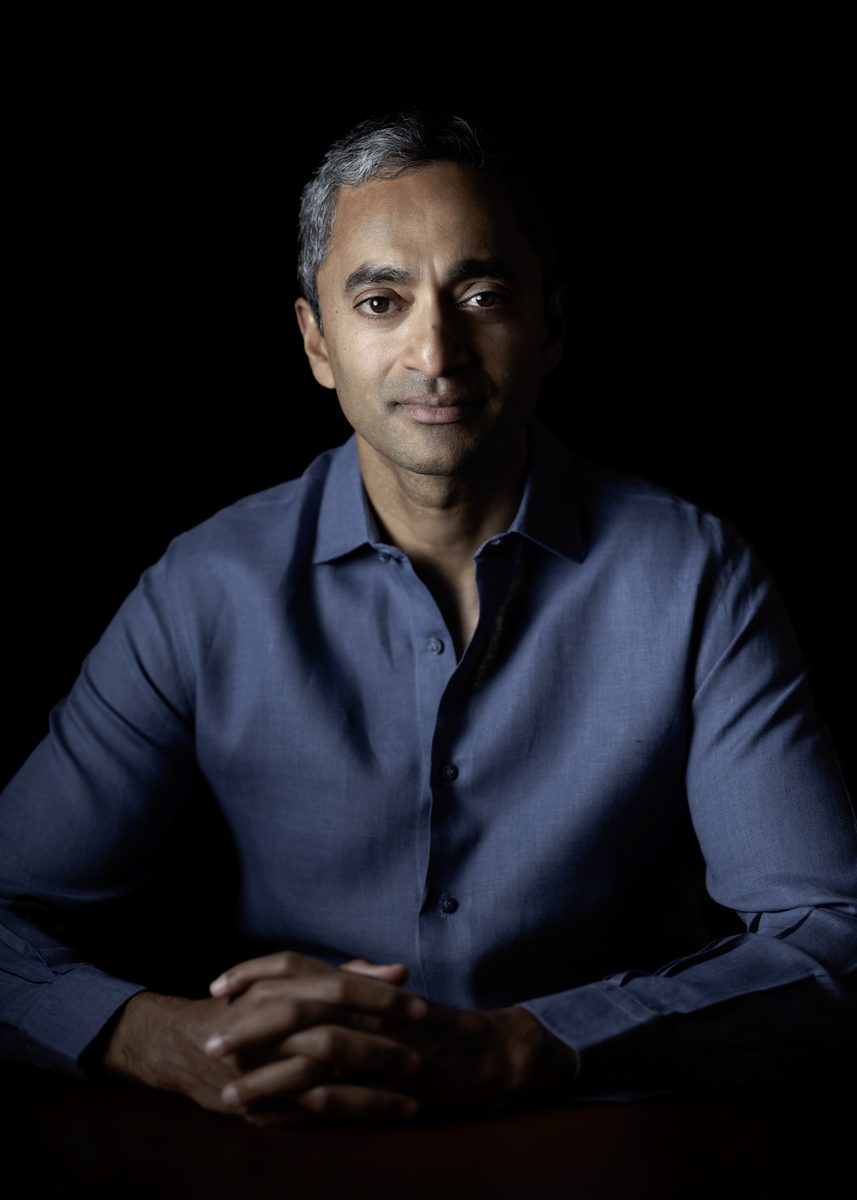
Chamath Palihapitiya last ran a company in 2011, when he left Facebook. He took the chief executive job at 8090 on June 29, 2026, after the startup raised $135 million led by Salesforce Ventures.

The company's Software Factory already has a named customer. Ernst & Young deployed it to tens of thousands of U.S. consultants in March 2026. Whether that early win scales into durable revenue, and whether Palihapitiya can run a company after 15 years as an investor, is the remaining test.

Why it matters

A famous money-raiser is now an operator: if 8090 works, AI moves from coding assistants to building the software big regulated companies actually run on.

Questions about this story

Free account needed to ask — your question is kept and asked for you right after sign-up. Answers are public.

What did he do at Facebook?

Chamath Palihapitiya was Facebook's Vice President of User Growth from 2007 to 2011, building the growth team that pushed the site from a few hundred million users toward its first billion.

That's the operating track record he's now betting he can repeat at 8090, fifteen years after he last ran anything day-to-day.

4 details3 sources1 disagreement
  • He joined Facebook in 2007 to lead user growth, and also oversaw the Facebook Platform and monetization products.
  • His team pushed data-driven tactics — viral loops, invite mechanics, platform optimizations — that helped take the user base past 750 million.
  • Revenue climbed from roughly $150 million in 2007 to about $3.7 billion by 2011, the year he left to found Social Capital.
  • The growth playbook he built there is still cited as a template (and a cautionary tale) for the 'growth hacking' era across Silicon Valley.
Room for disagreement
  • Some accounts, including a Marker/Medium retrospective by Steven Levy, credit Palihapitiya's growth team with aggressive, data-driven tactics (like invite spam and dark-pattern notifications) that boosted numbers but drew later criticism — a more mixed legacy than the clean 'growth guru' narrative he tells about himself.
0 AI answers with web search. May be wrong.

Key Indicators

$135M
Series A raised
Led by Salesforce Ventures, with Craft Ventures, WndrCo, The Production Board and Launch joining.
$12.8B
2026 AI coding tool revenue
More than double the $5.1 billion the category generated in 2024.
75%
Median loss on his past SPAC deals
Most companies Palihapitiya took public via blank-check mergers trade far below their debut price.
Jan 2024
When 8090 was founded
Palihapitiya started the company as a board member before stepping in to run it.

Voices

Curated perspectives — historical figures and your fellow readers.

Sign up to generate historical perspectives on this story.

People Involved

Organizations Involved

Timeline

2011 July 2026

8 events Latest: July 14th, 2026 · 4 months ago
Tap a bar to jump to that date
  1. Palihapitiya warns corporations about unchecked AI token spending

    Latest Business

    Palihapitiya told CNBC that corporations are burning AI tokens without measuring returns (a practice he calls 'tokenmaxxing') and will face surprise earnings misses as a result. He said token costs at 8090 are doubling every 45 days while productivity gains run about 5%.

  2. 8090 raises $135M, Palihapitiya becomes CEO

    Funding

    Salesforce Ventures leads the Series A. Palihapitiya steps into a full-time operating role for the first time since leaving Facebook.

  3. Rivals raise at giant valuations

    Market context

    Cognition raises about $1 billion at a $26 billion valuation; Cursor's parent is in talks near $50 billion. The AI coding market is hot.

  4. EY deploys 8090 to tens of thousands of consultants

    Partnership

    EY US launched EY.ai PDLC, a software delivery platform built on 8090's Software Factory, for deployment across tens of thousands of its U.S. consultants. The deal is 8090's first publicly named major enterprise customer.

  5. Palihapitiya discloses 8090's AI compute costs could hit $10M a year

    Business

    Palihapitiya disclosed 8090's AI compute costs had tripled since November 2025 and could reach $10 million annually. He named AWS inference, Cursor, and Anthropic fees as the main drivers and said 8090 planned to migrate to Claude Code to cut spending.

  6. Software Factory opens to the public

    Product

    8090 opened Software Factory publicly after an alpha and beta waitlist phase. The platform lets teams describe applications in natural language and produce production-ready code, keeping documentation and requirements in sync with the codebase.

  7. 8090 founded

    Company

    Palihapitiya starts 8090 to build AI coding tools aimed at corporate software teams, while serving as a board member.

  8. Palihapitiya leaves Facebook

    Background

    He departs the social network to start Social Capital, beginning his career as an investor.

Scenarios

1

Palihapitiya still running 8090 a year from now

Likely Resolves by Jun 29, 2027

Discussed by: TechCrunch coverage of the CEO move; Palihapitiya's own 'all in' framing

Palihapitiya stays in the operating chair and 8090 keeps shipping. He has publicly committed to the role and just put a fresh $135 million behind it, so the near-term base case is that he is still CEO when the company gives its next major update. The test is whether a known investor settles into the daily grind of running an enterprise software company.

2

8090 raises again at a billion-dollar valuation

Possible Resolves by End of 2027

Discussed by: Venture trackers PitchBook and Crunchbase; investors citing the AI coding boom

The sector's leaders are raising at eye-watering numbers, and Salesforce Ventures' backing gives 8090 a path to enterprise revenue. If customer demand grows as the company claims, a follow-on round at a $1 billion-plus valuation would be the clearest sign the bet is working. The risk is that finished-app platforms prove harder to scale than developer tools.

3

8090 names a major enterprise or government customer

Possible Resolves by Jun 29, 2027

Discussed by: 8090's own marketing, which lists regulated industries and the U.S. government as targets

8090 says it serves the hardest customers in regulated fields, but has not publicly named a marquee account. A named contract with a large bank, insurer, hospital system, or a federal agency would turn the pitch into proof. Enterprise sales in these sectors move slowly, so a public win within a year would signal real traction.

4

Palihapitiya steps back within 18 months

Uncertain Resolves by Dec 29, 2027

Discussed by: Skeptics pointing to his record as an investor rather than an operator

Palihapitiya has spent 15 years raising capital, hosting a podcast, and sitting on boards, not running daily operations. Critics note his SPAC companies mostly lost money after he handed them off. If running 8090 proves harder or less interesting than promised, he could hire an outside CEO and return to a chairman or investor role, as founders often do.

Historical Context

3 moments from history that rhyme with this story — and how they unfolded.

2020-2021

Chamath's SPAC boom (2020-2021)

Palihapitiya became the most visible figure in the SPAC boom, using blank-check companies to take Virgin Galactic, Opendoor, Clover Health, and SoFi public. He drew huge retail interest and called himself the next Warren Buffett.

Then

The deals raised billions and made him a stock-market celebrity.

Now

Most of the companies trade far below their debut price, with a median loss around 75%. SoFi is the main exception.

Why this matters now

It shows Palihapitiya can raise money and attention. The open question with 8090 is whether he can build lasting operating results, not just close a round.

August 2022

Adam Neumann's Flow raise (2022)

Andreessen Horowitz put about $350 million into Flow, a new real-estate venture from WeWork co-founder Adam Neumann, before the company had a public product. It was the firm's largest-ever single check.

Then

The deal valued Flow above $1 billion on the strength of Neumann's reputation.

Now

It became a case study in betting on a charismatic founder's brand ahead of proof, drawing heavy skepticism.

Why this matters now

Like Flow, 8090's round leans on a well-known name. Investors are paying for the founder's track record and pull as much as for the early product.

2003-2020

Palantir's enterprise and government push (2003-2020)

Palantir spent years selling data software to regulated buyers like intelligence agencies, banks, and hospitals, with heavy controls and audit features. Sales cycles were long and the company stayed private far longer than typical startups.

Then

It won government contracts but burned cash and faced doubts about its model for years.

Now

Palantir eventually went public in 2020 and became a large, profitable supplier to enterprise and government customers.

Why this matters now

8090 targets the same slow, regulated buyers Palantir chased. That market can be lucrative, but it rewards patience over the fast growth seen in consumer-facing AI tools.

Sources

(13)