

Pull to refresh
Logo
Helsinki team uses Claude to surface 663 candidate theorems in Gödel's notebooks

Helsinki team uses Claude to surface 663 candidate theorems in Gödel's notebooks

New Capabilities

A decade-long transcription project got a machine-learning assist, with caveats about what counts as proof

Overview

Updated 52 minutes ago

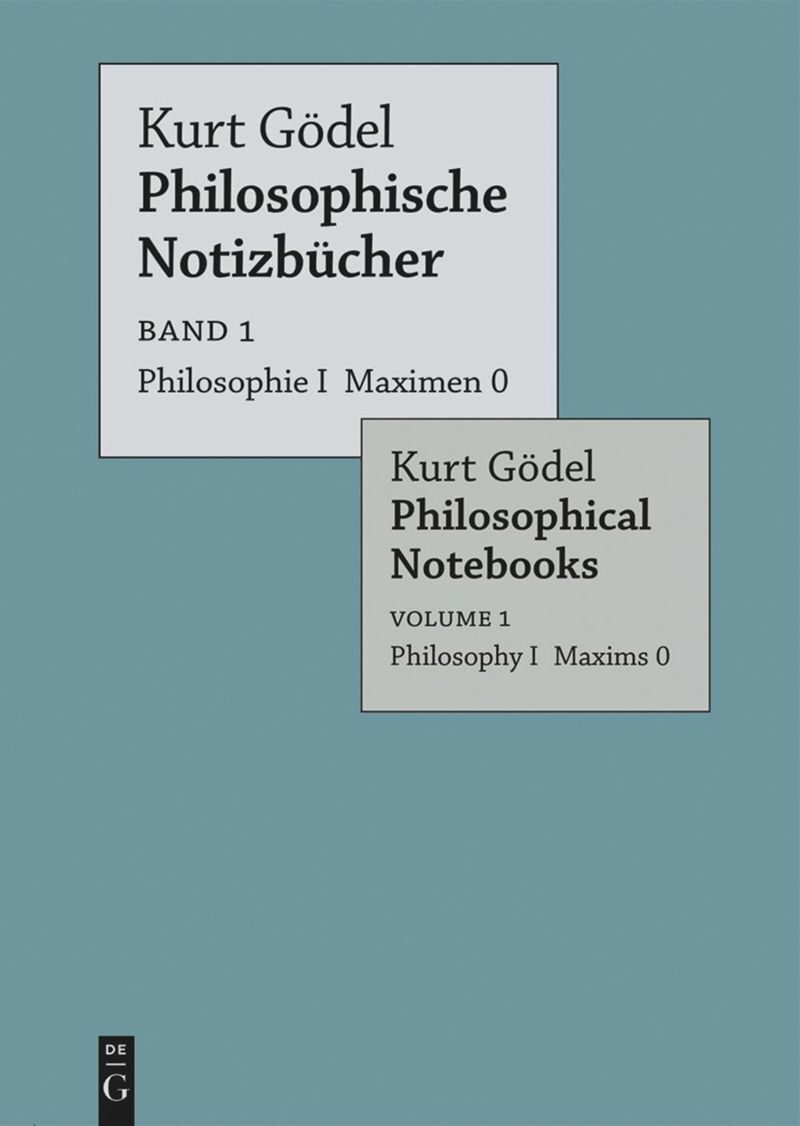
For nearly a decade, Jan von Plato transcribed Kurt Gödel's 1,009-page shorthand notebooks at about a page a week. In September 2026, the Finnish logician fed hundreds of pages of English transcription to Claude. Within days the model surfaced 663 candidate theorems.

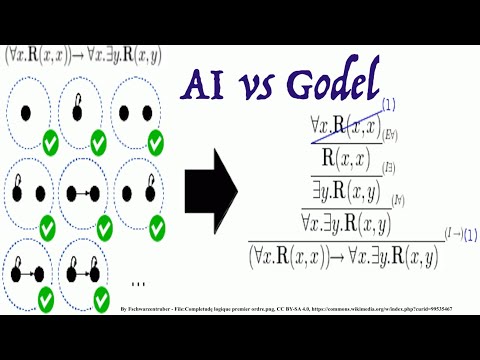
The episode shows what AI can and cannot do with historical mathematics. Claude connected a thousand pages of text, but it did not read Gödel's obsolete German shorthand. A proof assistant checked one reconstruction, but checking a proof is not the same as establishing what Gödel actually discovered.

Why it matters

AI can now index a thousand pages of shorthand in days. Deciding what counts as a proof, and who gets credit, still takes humans.

Questions about this story

Free account needed to ask — your question is kept and asked for you right after sign-up. Answers are public.

No questions yet — be the first to ask.

Key Indicators

1,009
Pages in Gödel's workbooks
Sixteen notebooks from the early 1940s, written in Gabelsberger shorthand.
663
Candidate theorems identified
The number Claude surfaced from the English transcriptions.
~400
Verified as stated
Theorems that passed checks without repair, according to the project.
16
Notebooks transcribed
The workbooks Gödel kept in the early 1940s.

Voices

Curated perspectives — historical figures and your fellow readers.

Sign up to generate historical perspectives on this story.

People Involved

Organizations Involved

Timeline

2017 November 2026

3 events Latest: Today
  1. Guardian publishes detailed account of the project

    Today Disclosure

    The report describes 663 candidate theorems, about 400 verified as stated and roughly 50 false.

  2. Von Plato feeds transcriptions to Claude

    Research

    Hundreds of pages of English transcription go to the model, which returns a 650-page analysis.

  3. Helsinki project begins on Gödel's workbooks

    Research

    Jan von Plato starts transcribing and interpreting 16 notebooks from the early 1940s.

Scenarios

1

Helsinki team publishes a peer-reviewed edition of the reconstructed theorems

Possible Resolves by End of 2027

Discussed by: Jan von Plato and the University of Helsinki project

Von Plato has said the work needs page-by-page control. If the team moves from working notes to a journal article or critical edition, the 663 candidates become citable scholarship rather than a press account.

2

Independent logicians dispute some reconstructions

Possible Resolves by Q2 2027

Discussed by: Logicians assessing the Coq checks

About 200 of the 663 candidates needed repairs and roughly 50 were false. If outside logicians publish corrections, the episode becomes a case study in how much trust to place in model-generated proofs.

3

A notebook theorem gets a complete machine-checked formalization

Possible Resolves by Q2 2027

Discussed by: Computer scientists working with proof assistants

One reconstructed proof already passed Coq. A full formalization of a notebook result, deposited publicly, would let anyone recheck it without trusting the transcription.

Historical Context

3 moments from history that rhyme with this story — and how they unfolded.

1931

Gödel's incompleteness theorems (1931)

Kurt Gödel published two theorems showing that any consistent formal system strong enough for arithmetic contains true statements it cannot prove. The result undercut the effort to ground all mathematics in a finite set of axioms.

Then

Mathematicians absorbed the limits of formal proof.

Now

The theorems became foundational to logic and computer science.

Why this matters now

They are why Gödel's unpublished notebooks draw attention: even fragmentary work from him may contain results nobody else reached.

1938–1963

The axiom of choice and its independence (1938–1963)

Gödel proved in 1938 that the axiom of choice is consistent with Zermelo–Fraenkel set theory. In 1963 Paul Cohen showed the axiom is independent: neither it nor its negation can be proved from the other axioms.

Then

Set theory gained a stable framework with choice as an optional axiom.

Now

Cohen received the Fields Medal in 1966 for the work.

Why this matters now

The Helsinki reconstruction concerns an unfinished route to Gödel's already-published consistency result, not a new solution to an open problem.

1906–2008

Archimedes Palimpsest (1906–2008)

A 10th-century copy of Archimedes' works was erased and overwritten with a 13th-century prayer book. Scholars rediscovered it in 1906; a conservation and imaging project beginning in 1998 recovered much of the erased text, including the only copy of the Method.

Then

New readings changed historians' view of Archimedes' mathematics.

Now

The project became a model for recovering erased texts with imaging.

Why this matters now

It shows that new tools can reopen old manuscripts, and that recovery is a scholarly process rather than a single scan.

Sources

(7)