



Pull to refresh
Logo
Voiso launches AI voice agents built into its contact center platform

Voiso launches AI voice agents built into its contact center platform

New Capabilities

New agents share queues, routing, and reports with human teams, a shift from standalone voice bots

Yesterday: Voiso launches AI Voice Agents for inbound and outbound calls

Overview

Updated Yesterday

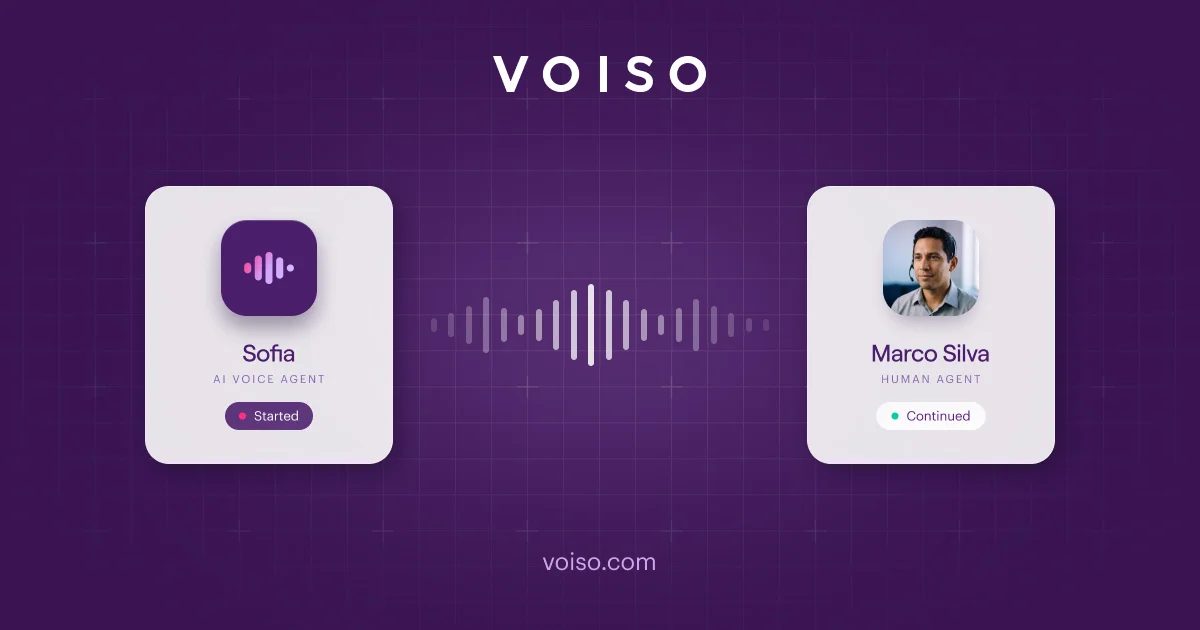
Voiso's AI voice agents now handle real phone calls inside the company's contact center platform. They share queues, routing rules, and reports with human agents. Announced September 23, the agents answer inbound calls, run outbound campaigns, and hand warm transfers to humans with context attached.

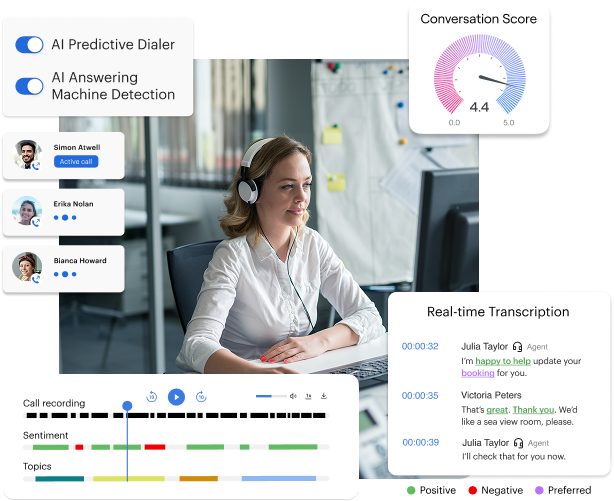
Contact centers have used voice bots for years, usually as separate systems with separate integrations and dashboards. Voiso's agents live in the same environment human teams already run. Every AI-handled call is recorded, transcribed, and summarized alongside the rest of the center's activity.

Why it matters

If AI agents live inside contact center infrastructure, mid-sized companies can add round-the-clock call handling without buying separate voice-bot systems.

Questions about this story

Free account needed to ask — your question is kept and asked for you right after sign-up. Answers are public.

No questions yet — be the first to ask.

Key Indicators

$500/mo
Starting price for AI Voice Agents
Minutes-based pricing with no per-seat fees; each plan includes unlimited AI agents.
15,000+
Calls handled by one customer's AI receptionist
Early adopter milestone cited in the September 23 launch announcement.
4,000
AI minutes ≈ talk time of two full-time agents
Voiso's volume guide for comparing AI minutes to human staffing.
30%
Discount on annual plans for early adoption
Promotional offer for businesses adopting AI Voice Agents before October 31, 2026.

Voices

Curated perspectives — historical figures and your fellow readers.

Ever wondered what historical figures would say about today's headlines?

Sign up to generate historical perspectives on this story.

People Involved

Organizations Involved

Timeline

April 2026 September 2026

2 events Latest: Yesterday
  1. Voiso launches AI Voice Agents for inbound and outbound calls

    Latest Product Launch

    Voiso launches built-in AI agents for inbound and outbound calls, priced from $500 monthly.

  2. Voiso launches Bring Your Own Bot capability

    Product Launch

    Businesses can plug external AI agents into Voiso's platform while Voiso manages routing, telephony, and analytics.

Scenarios

1

Major contact center platforms copy the integrated-agent model

Possible Resolves by Q2 2027

Discussed by: Vendors including Five9, Genesys, and Talkdesk; trade press such as No Jitter

Voiso's pitch is that AI works better when it lives in the same queues and reports as humans. If early adoption validates that claim, rivals will fold native AI agents into their core platforms rather than keep offering bolt-on voice bots. The October 31, 2026 discount deadline is an early test of demand.

2

Standalone voice bots retain their niche for targeted campaigns

Possible Resolves by Q1 2027

Discussed by: Contact center buyers weighing specialized bot vendors for specific jobs

Many organizations buy voice bots for specific roles like after-hours reception or lead qualification without changing their main platform. If that pattern holds, Voiso's integration advantage matters less, and the $500 monthly entry point becomes the real test. Adoption data will show whether bolt-on bots keep winning deals.

3

Enterprises go bring-your-own-model, pushing platforms toward pure infrastructure

Possible Resolves by Q2 2027

Discussed by: AI Journal Now, which tracks vendor concessions on the AI layer

Voiso already lets businesses plug their own AI agents into its platform via Bring Your Own Bot, launched April 2026. If enterprises insist on owning the intelligence layer, Voiso's built-in agents could defer to customer-supplied models. Platform value then shifts to routing, telephony, and analytics rather than the AI itself.

Historical Context

3 moments from history that rhyme with this story — and how they unfolded.

2025–2026

Bring-your-own-model trend (2025–2026)

Enterprise software vendors began letting customers plug in their own AI models rather than forcing vendor models. AI Journal Now documented Voiso's April 2026 BYOB launch and Salesforce's similar moves.

Then

Enterprises gained control over models, data, and compliance.

Now

The AI layer is becoming separable from application infrastructure, reshaping how vendors sell AI.

Why this matters now

It explains why Voiso offers both built-in agents and BYOB, and why the competitive outcome of this launch is not settled.

1980s–1990s

Interactive Voice Response era (1980s–1990s)

Phone systems added automated menus and attendants that routed callers and answered routine questions without human operators. Companies bolted these onto existing PBX infrastructure. IVR became the standard way to handle high call volumes cheaply.

Then

Routine inquiries shifted to machines, freeing agents for complex calls.

Now

IVR shaped customer expectations and, for many, frustration. It became core contact center infrastructure rather than an add-on.

Why this matters now

Voiso is attempting the same integration move with AI: making automation native to the platform instead of a bolt-on layer.

2010s

Cloud contact center migration (2010s)

Contact centers moved from on-premise phone systems to cloud platforms like Five9, Twilio, and Genesys Cloud. The shift consolidated channels and reporting into single dashboards, displacing point solutions.

Then

IT teams cut hardware costs and gained flexible scaling.

Now

Platform consolidation became the norm, with native features displacing add-ons.

Why this matters now

The recurring pattern of integrated platforms beating point solutions is the mechanism Voiso is trying to repeat with voice AI.

Sources

(8)