

Pull to refresh
Logo
ALCOSAN breaks ground on $1 billion Ohio River Tunnel

ALCOSAN breaks ground on $1 billion Ohio River Tunnel

Built World

First of three deep tunnels aims to cut sewage overflows into Pittsburgh's rivers

Today: ALCOSAN breaks ground on Ohio River Tunnel

Overview

Updated 1 hour ago

For decades, heavy rain in Pittsburgh has pushed untreated sewage into the Ohio, Allegheny, and Monongahela rivers. On Thursday, the Allegheny County Sanitary Authority (ALCOSAN) broke ground on a $1 billion tunnel meant to change that.

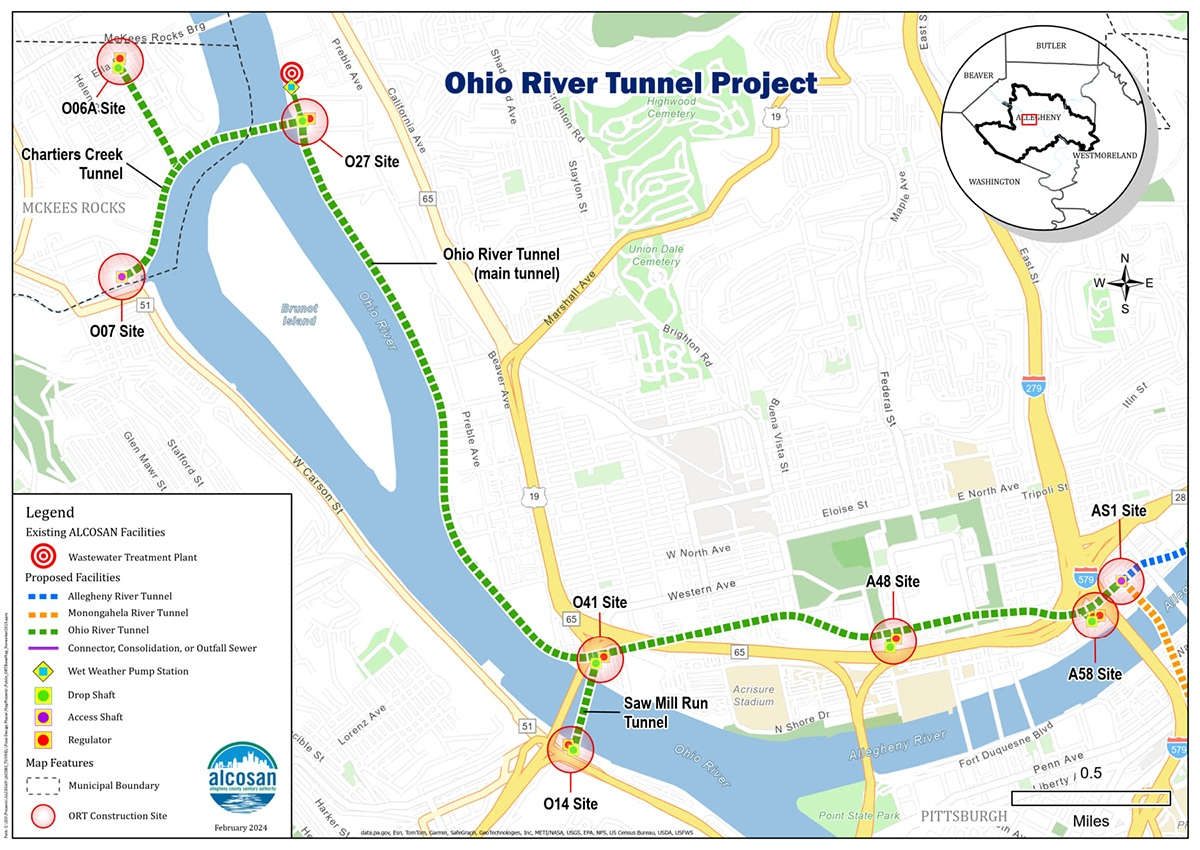
The 4.9-mile Ohio River Tunnel, buried 150 feet underground, is the first of three deep tunnels in ALCOSAN's Clean Water Plan. The full system is designed to keep 7 billion gallons of combined sewer overflow out of the region's waterways each year. Residents will pay for it through sewer bills set to rise nearly 50% by 2029.

Why it matters

Residents across Allegheny County will see sewer bills rise nearly 50% by 2029 to fund the region's largest-ever infrastructure project.

Questions about this story

Free account needed to ask — your question is kept and asked for you right after sign-up. Answers are public.

No questions yet — be the first to ask.

Key Indicators

$1 billion
Ohio River Tunnel contract value
Awarded to Steel City Tunnel Partners in April 2026.
4.9 miles
Tunnel length
Main tunnel plus branch tunnels for Saw Mill Run and Chartiers Creek.
150 feet
Tunnel depth
Buried deep enough to avoid existing infrastructure.
7 billion gallons
Annual overflow reduction (full system)
Combined sewer overflow kept out of rivers once all three tunnels are built.
14%
Sewer rate increase for 2027
First of three annual hikes totaling nearly 50% by 2029.
2032
Expected completion
Construction scheduled to end late 2032.

Voices

Curated perspectives — historical figures and your fellow readers.

Ever wondered what historical figures would say about today's headlines?

Sign up to generate historical perspectives on this story.

People Involved

Organizations Involved

Timeline

2007 2032

7 events Latest: Today
Tap a bar to jump to that date
  1. Ohio River Tunnel expected to be operational

    Upcoming Projection

    Construction scheduled to complete by the end of 2032.

  2. ALCOSAN breaks ground on Ohio River Tunnel

    Today Milestone

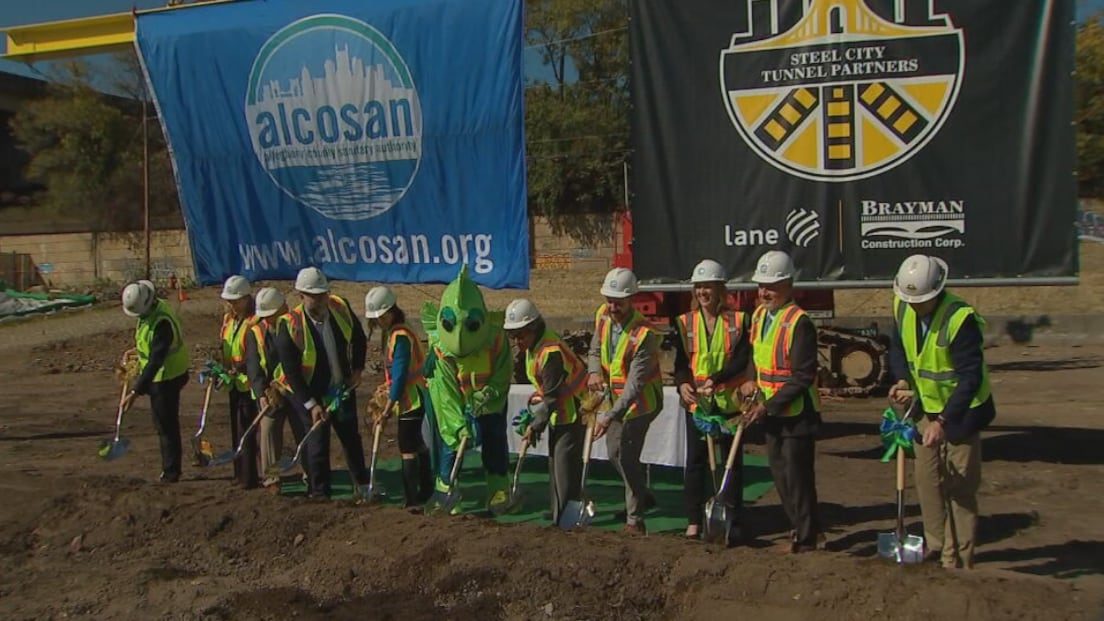
    Ceremony held near the former Heinz Factory in Troy Hill, marking the start of the largest infrastructure project in county history.

  3. ALCOSAN board approves 14% sewer rate increase

    Decision

    First of three annual hikes that will raise bills nearly 50% by 2029.

  4. ALCOSAN issues notice to proceed

    Milestone

    Work officially authorized to begin, with construction scheduled for 6 years and 5 months.

  5. ALCOSAN awards $1 billion contract to Steel City Tunnel Partners

    Contract

    The joint venture of Brayman Construction and Lane Construction was the lowest responsible bidder among three contenders.

  6. ALCOSAN releases preliminary Wet Weather Plan

    Planning

    The initial plan was estimated at $3.6 billion and went through several revisions to reduce costs.

Scenarios

1

Ohio River Tunnel completes on schedule in 2032

Likely Resolves by End of 2032

Discussed by: ALCOSAN officials and Steel City Tunnel Partners

The tunnel is scheduled for completion by the end of 2032, with a 6-year-5-month construction period. A tunnel boring machine will drill 150 feet underground along a 3.8-mile main route. If construction stays on schedule, the tunnel will begin capturing wet weather flows and reducing overflows into the Ohio River.

2

Cost overruns push tunnel past $1.1 billion

Possible Resolves by End of 2028

Discussed by: PublicSource, infrastructure analysts

Large tunnel projects frequently exceed initial budgets. The original 2012 Wet Weather Plan was estimated at $3.6 billion before being revised down. If geological conditions or construction delays drive costs up, ALCOSAN may need to amend the contract or raise rates further.

3

Rate hikes trigger political backlash

Possible Resolves by End of 2027

Discussed by: PublicSource, local elected officials

The 14% increase for 2027 is the first of three annual hikes that will push bills up nearly 50% by 2029. If residents and local officials push back, the ALCOSAN board could face pressure to delay or reduce future increases, potentially slowing the Clean Water Plan.

Historical Context

3 moments from history that rhyme with this story — and how they unfolded.

1975-present

Chicago Deep Tunnel (1975-present)

Chicago began building the Tunnel and Reservoir Plan in 1975, a network of deep tunnels designed to capture stormwater and sewage that previously flooded basements and polluted waterways. The system now spans more than 100 miles of tunnels.

Then

The tunnels captured increasing volumes of overflow as sections came online, reducing flooding and pollution.

Now

The project is still being completed decades later, with costs far exceeding initial estimates.

Why this matters now

Shows how deep tunnel sewer projects can take decades and grow in scope, offering a cautionary comparison for Pittsburgh's timeline.

2016-2025

London Thames Tideway Tunnel (2016-2025)

London built a 25-kilometer sewer tunnel under the River Thames to capture sewage overflows from the city's aging combined sewer system. The £4.5 billion project was completed in 2025.

Then

The tunnel began capturing overflows and improving Thames water quality.

Now

It demonstrated that a modern city can complete a major sewer tunnel on a defined timeline.

Why this matters now

A recent example of a similar project that was completed, showing the scale and timeline involved.

1991-2007

Boston Big Dig (1991-2007)

Boston's Central Artery/Tunnel project replaced an elevated highway with a tunnel system. The project was originally estimated at $2.8 billion but ultimately cost about $14.6 billion.

Then

The project was completed but with massive cost overruns and delays.

Now

It became a cautionary example of infrastructure cost overruns.

Why this matters now

Highlights the risk of cost escalation in large infrastructure projects, relevant to the ORT's $1 billion budget.

Sources

(12)