
Pull to refresh
Logo
World's largest battery-electric ferry arrives in South America after Pacific crossing

World's largest battery-electric ferry arrives in South America after Pacific crossing

New Capabilities

The 130-meter catamaran, built in Tasmania, will run a one-hour route across the Rio de la Plata

Today: Commissioning begins in Colonia del Sacramento

Overview

Updated 1 hour ago

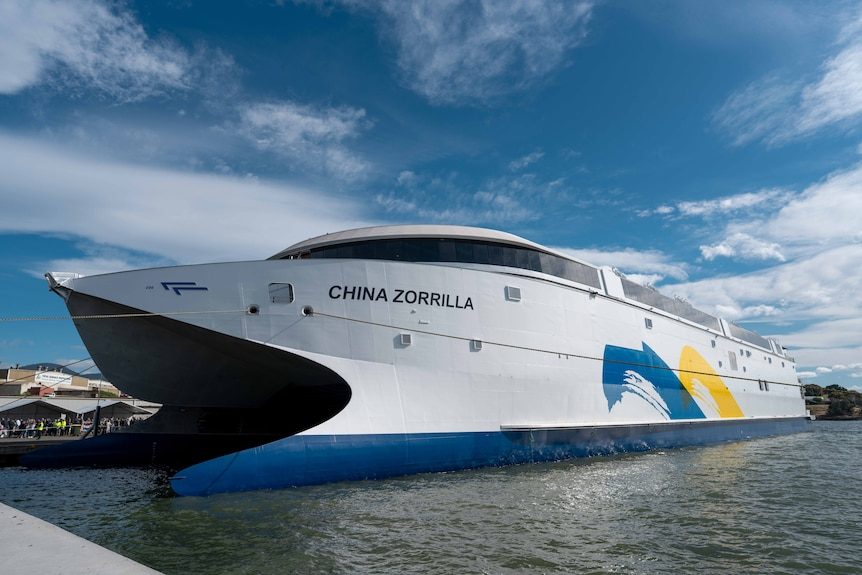
In 2019, South American ferry operator Buquebus ordered a diesel-powered ship from Tasmania's Incat. Six years later, after a pandemic pause and a full redesign, the same hull launched as the largest electric vehicle ever built on land or sea: a 130-meter catamaran running on more than 5,000 battery modules.

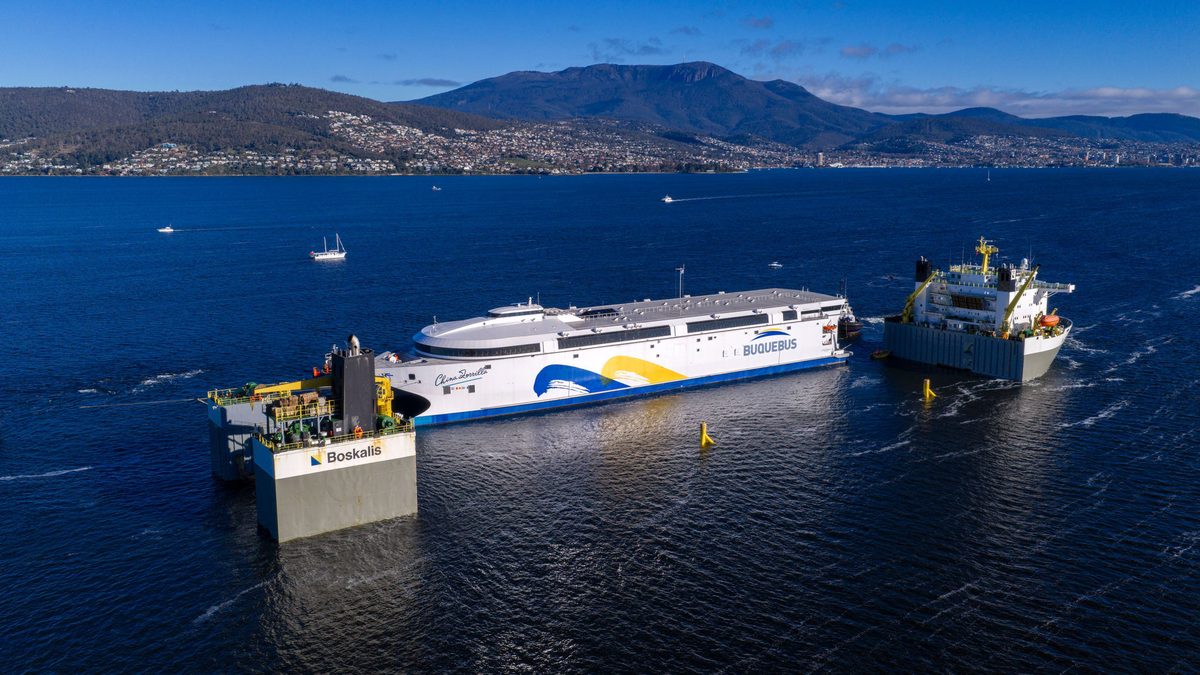
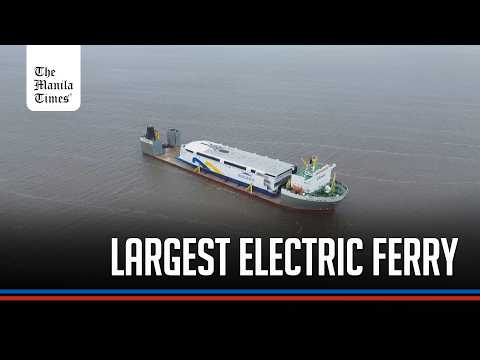
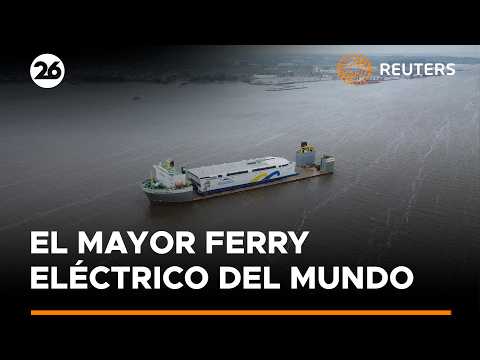
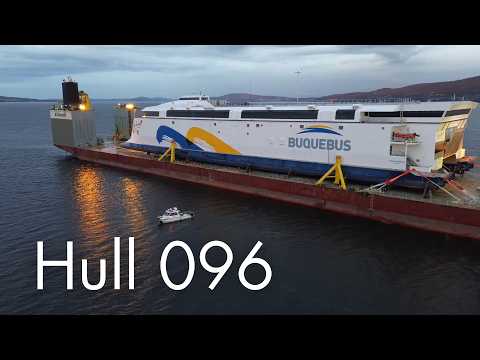
Named China Zorrilla, the ferry arrived in Uruguay in mid-September after crossing the Pacific strapped to a heavy-lift vessel. It will now carry up to 2,100 passengers and 225 vehicles across the Rio de la Plata between Colonia and Buenos Aires, a one-hour run that fits inside the ship's 90-minute battery range. Danish operator Molslinjen has already ordered three more Incat-built electric ferries, betting the platform works beyond its first customer.

Why it matters

If this 2,100-passenger ferry runs on schedule, battery-electric propulsion is proven at full commercial scale, reshaping coastal ferry routes worldwide.

Questions about this story

Free account needed to ask — your question is kept and asked for you right after sign-up. Answers are public.

No questions yet — be the first to ask.

Key Indicators

5,016
Battery modules aboard
Lithium-ion cells split across four insulated rooms, each fan-cooled so a fault in one module can't spread.
40 MWh
Installed battery capacity
Roughly four times larger than any previous maritime battery installation, weighing over 250 tonnes.
2,100
Passenger capacity
Plus 225 vehicles, on a 130-meter aluminum hull built to keep weight down.
90 min
Operating range per charge
Plenty for the hour-long crossing and for the 15 MW chargers at Colonia terminal to top it back up.

Voices

Curated perspectives — historical figures and your fellow readers.

Ever wondered what historical figures would say about today's headlines?

Sign up to generate historical perspectives on this story.

People Involved

Organizations Involved

Timeline

January 2019 September 2026

8 events Latest: Today
Tap a bar to jump to that date
  1. Commissioning begins in Colonia del Sacramento

    Today Milestone

    Ship moored at Colonia wharf after a 10-hour tow; system tests start before commercial service.

  2. Arrives in Nueva Palmira, Uruguay

    Transport

    Welcome ceremony held; ship floated off the transport vessel over the weekend.

  3. Departs Tasmania aboard Black Marlin

    Transport

    Semi-submersible heavy-lift vessel leaves Hobart for a roughly 40-day voyage to South America.

  4. Sea trials in Hobart harbour

    Milestone

    Ship reaches 29 knots at 600 tonnes of cargo, above its planned 25-knot service speed.

  5. First powered test under battery propulsion

    Milestone

    Incat chairman Robert Clifford powers the waterjets in front of Australian trade officials.

  6. China Zorrilla launched into River Derwent

    Milestone

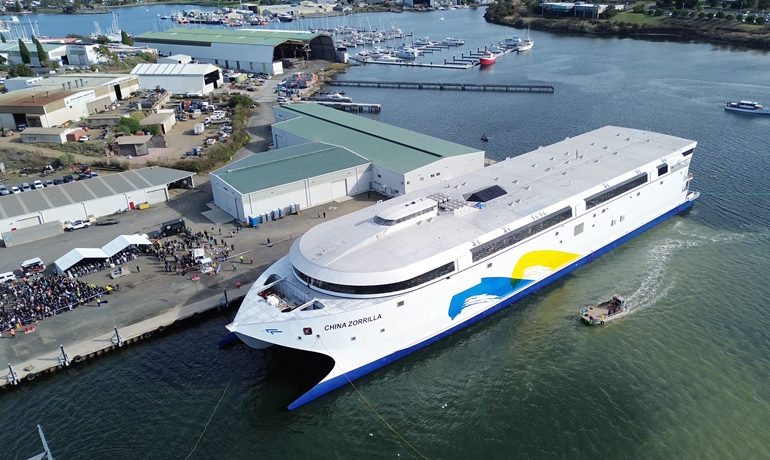
    The 130-meter aluminum catamaran is launched in Hobart ahead of testing.

  7. Contract renegotiated to full battery-electric

    Contract

    With the hull already under construction, Buquebus and Incat agree to rebuild the ship as fully electric.

  8. Buquebus orders a diesel ferry from Incat

    Contract

    South American operator commissions a diesel-powered ship designed to cruise at 20 knots.

Scenarios

1

China Zorrilla begins fare-paying service on the Rio de la Plata

Likely Resolves by Jan 31, 2027

Discussed by: Maritime Executive, The Optimist Daily

Commissioning and system tests in Colonia wrap up in the coming weeks. The ship's 90-minute battery range and the terminal's 15 MW charging capacity cover the one-hour crossing with margin. Buquebus starts scheduled crossings between Colonia and Buenos Aires, the expected outcome given the ship already hit 29 knots in trials, above its 25-knot service speed.

2

Charging bottlenecks emerge at Colonia terminal

Possible Resolves by Q2 2027

Discussed by: Dataportuaria, industry observers

The 15 MW hookup at Colonia must fully charge 40 MWh between crossings. If turnaround scheduling or charge rates slip, the ship misses scheduled departures. That would force Buquebus to keep backup diesel tonnage on the route, undercutting the carbon-free business case.

3

Molslinjen takes delivery of first Incat European electric ferry

Possible Resolves by End of 2028

Discussed by: Boating New Zealand, Incat statements

Danish operator Molslinjen ordered three Incat-built electric ferries (Hulls 102-104) for one of northern Europe's busiest corridors. If China Zorrilla proves out on the Rio de la Plata, these deliveries validate the platform beyond a single operator and push battery-electric ferries into mainstream European service.

Historical Context

3 moments from history that rhyme with this story — and how they unfolded.

2015

MS Ampere (2015)

Norway launched the world's first battery-electric car ferry, the 80-meter Ampere, carrying 120 cars across a fjord. Built by Fjellstrand, it replaced a diesel ferry on a 6 km route and cut fuel costs dramatically.

Then

The ferry proved electric propulsion viable on short, high-frequency crossings.

Now

Norway now operates roughly 80 battery or hybrid ferries, making it the global leader in electric marine transport.

Why this matters now

China Zorrilla is the scale-up from Ampere's 120-car harbor shuttle to a 130-meter, 2,100-passenger ocean-capable ferry, showing the technology moved from niche to full commercial scale.

2019

E-ferry Ellen (2019)

Denmark launched Ellen, a battery-electric ferry roughly 60 meters long, designed to cross 22 nautical miles between two islands on a single charge, setting the record for the longest-range electric ferry of its period.

Then

Ellen demonstrated that battery range could stretch well beyond short fjord crossings.

Now

It became a benchmark for mid-range electric ferry routes in the Baltic region and beyond.

Why this matters now

Ellen pushed electric ferry range to the scale China Zorrilla now needs, but at about half the length and a fraction of the passenger capacity, the Tasmanian ship advances the step change.

2022

Yara Birkeland (2022)

Norway launched the world's first autonomous, fully electric container ship, Yara Birkeland, to move fertilizer along a coastal route that had previously used diesel trucks and ships.

Then

The vessel began scheduled sailings along a 30-nautical-mile route, cutting an estimated 40,000 diesel truck journeys a year.

Now

It became the flagship demonstration that emission-free electric propulsion can carry cargo as well as passengers.

Why this matters now

Together with China Zorrilla, Yara Birkeland shows battery-electric propulsion scaling beyond ferries into freight, the next frontier for the same technology Incat is deploying.

Sources

(10)