
Pull to refresh
Logo
Daily Brief
Following
Why
Almería's plastic sea feeds half a billion from what was once desert

Almería's plastic sea feeds half a billion from what was once desert

Built World
By Newzino Staff |

How Spain's driest province became Europe's vegetable garden through low-tech greenhouse innovation

February 19th, 2026: Half-billion-fed milestone highlighted

Overview

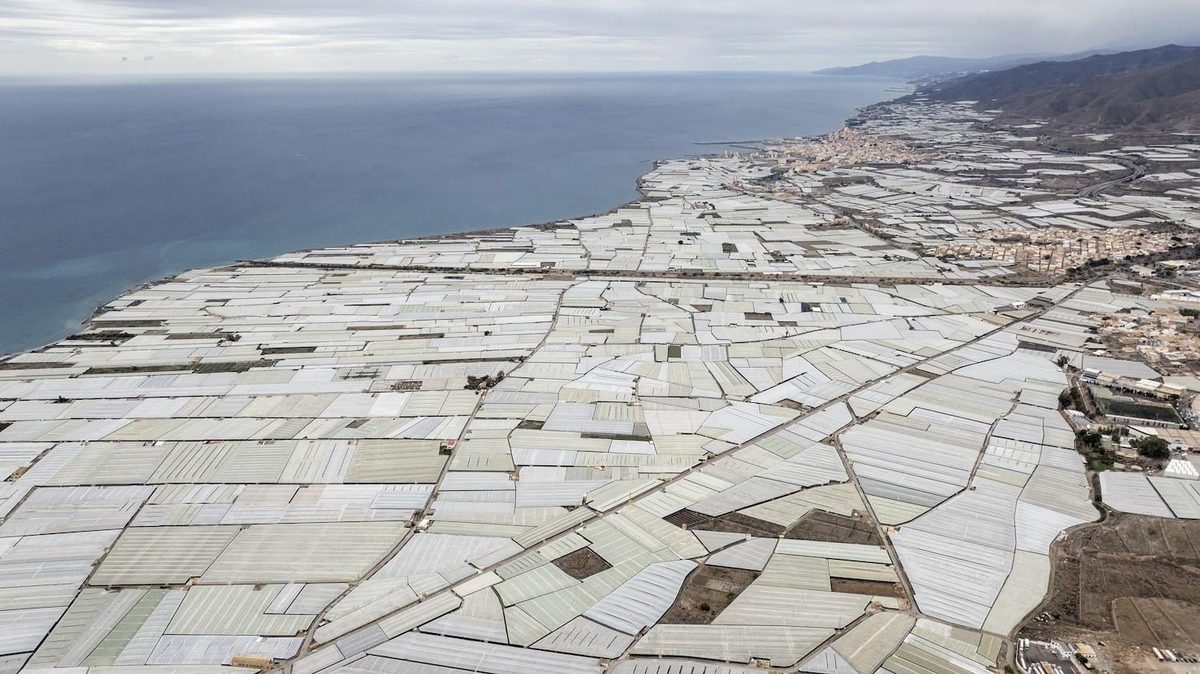
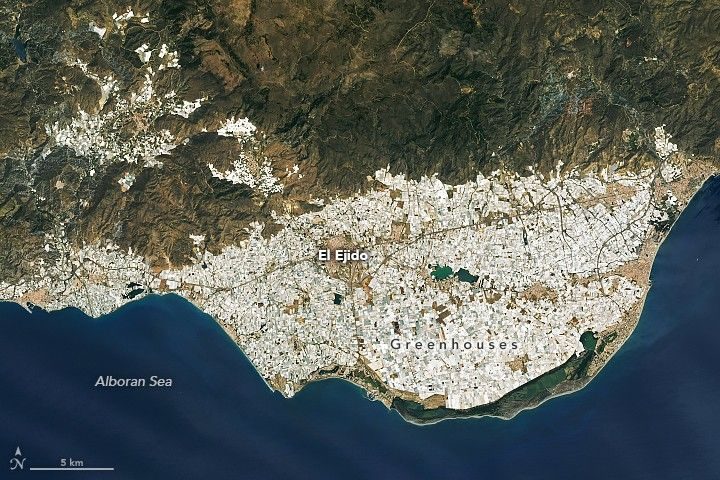
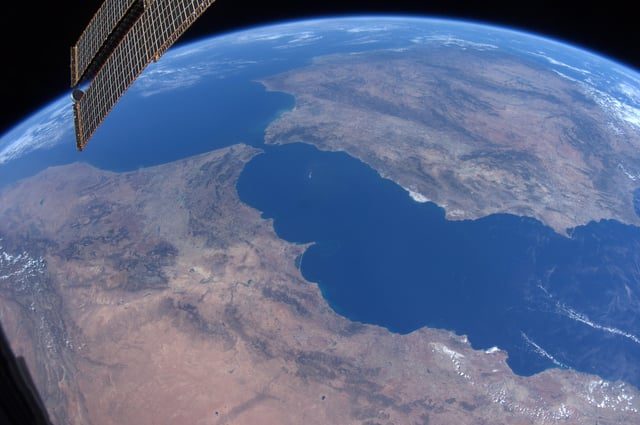
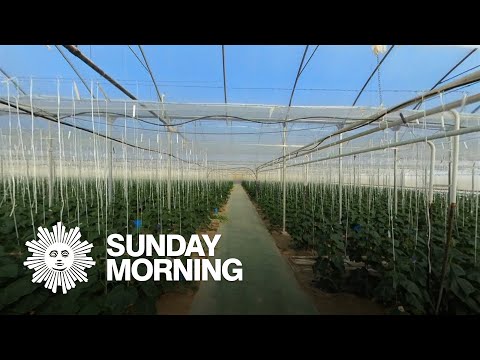
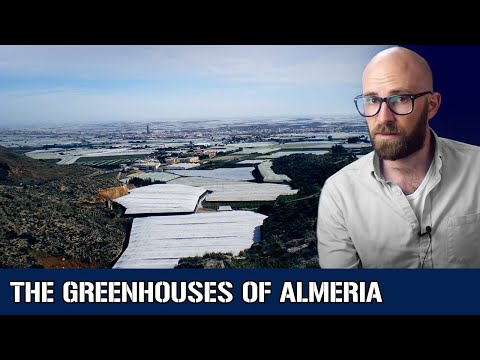
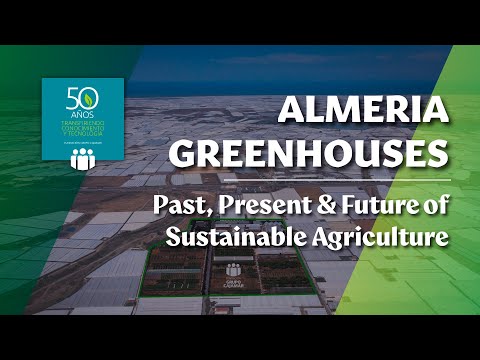
In the 1950s, the province of Almería in southeastern Spain was one of the poorest in the country — a stretch of semi-arid scrubland receiving less than 250 millimeters of rain per year. Today, more than 40,000 hectares of plastic-covered greenhouses blanket the landscape, producing over 3.5 million tons of fruits and vegetables annually and generating more than €3.7 billion in revenue. The greenhouse complex is the largest human-made structure visible from space.

Key Indicators

40,000+
Hectares of greenhouses
Covering roughly 150 square miles, nearly all of the Campo de Dalías plain
3.5M tons
Annual produce output
Fruits and vegetables exported primarily to Germany, France, the United Kingdom, and the Netherlands
30x
Productivity vs. average European farm
Greenhouse yields of 71–160 tons per hectare compared to roughly 50 tons for open-field farming
€3.7B+
Annual revenue
Approximately three-quarters of production is exported to 13 European Union countries and the United Kingdom
−0.3°C/decade
Local cooling effect
White plastic roofs increased local albedo by 9%, cooling the area while surrounding regions warmed
100,000
Migrant greenhouse workers
An estimated 80,000 lack legal status and remain absent from official records

Interactive

Exploring all sides of a story is often best achieved with Play.

Hannah Arendt

Hannah Arendt

(1906-1975) · Modernist · politics

Fictional AI pastiche — not real quote.

"What the architects of Almería's plastic sea have accomplished is precisely what modernity excels at: making the hidden conditions of our abundance invisible — the depleted aquifer, the undocumented hand, the thirty-three thousand tons of waste — while the tomato arrives at market, gleaming and blameless, as though it had grown itself."

Ever wondered what historical figures would say about today's headlines?

Sign up to generate historical perspectives on this story.

Sign Up

Debate Arena

Two rounds, two personas, one winner. You set the crossfire.

People Involved

Leandro Pérez
Leandro Pérez
Agricultural engineer, greenhouse pioneer (Historical figure)
BA
Bernabé Aguilar
Agricultural engineer, greenhouse pioneer (Historical figure)

Organizations Involved

Agrobío
Agrobío
Agricultural biotechnology company
Status: Major supplier of biological pest control organisms

Almería-based company that breeds billions of parasitic wasps, predatory mites, and other beneficial insects for biological pest control across the region and worldwide.

University of Almería
Public university and research institution
Status: Leading research center for greenhouse agriculture and sustainability

Research university that has conducted key studies on greenhouse agriculture, including the discovery that Almería's white plastic roofs increased local albedo by nearly 10%, producing a measurable cooling effect.

Timeline

  1. Half-billion-fed milestone highlighted

    Milestone

    Human Progress publishes a feature spotlighting Almería's greenhouse complex as feeding an estimated half a billion people annually — roughly half of Europe's population — with year-round fresh produce from what was once desert.

  2. NASA publishes new satellite imagery of the 'sea of plastic'

    Observation

    The Landsat 9 satellite captures updated high-resolution images showing the greenhouse complex covering more than 40,000 hectares — the largest human-made structure visible from orbit.

  3. University of Almería publishes cooling study

    Research

    Researchers use NASA satellite data to demonstrate that greenhouse albedo has increased 9% since 1983, producing a 0.3°C-per-decade local cooling trend.

  4. Biological pest control revolution begins

    Innovation

    A food safety alert triggers rapid adoption of biological pest control. Within four years, biocontrol coverage rises from 1.9% to 54% of greenhouse crops.

  5. 100% drip irrigation achieved

    Milestone

    Every greenhouse in the region now uses drip irrigation, completing a two-decade transition from flood systems.

  6. Drip irrigation adopted

    Innovation

    Farmers begin replacing flood irrigation with drip systems, cutting water use by 50% and enabling more precise nutrient delivery.

  7. First structured greenhouse built

    Innovation

    Engineers Leandro Pérez and Bernabé Aguilar construct Almería's first greenhouse, combining sand mulch with plastic covering to protect crops from wind and conserve water.

  8. Franco government launches settlement plan

    Policy

    The Spanish government initiates a program to settle rural migrants in the Campo de Dalías, aiming to boost food security in the arid southeast.

Scenarios

1

Almería greenhouses adopt desalination and recycled water at scale

Discussed by: University of Almería researchers, Spanish Ministry of Agriculture, Andalusian regional government

Aquifer depletion has been the system's most pressing constraint, with 80–85% of agricultural water drawn from underground sources being consumed faster than rainfall can replenish them. Spain has invested in desalination — the Carboneras plant can produce 30 million cubic meters per year — but farmer adoption remains low due to cost. If subsidies, tax relief, or regulatory mandates push desalination and wastewater reuse past a critical threshold, the greenhouse system becomes more sustainable long-term. Agricultural economists suggest this is the likeliest path, given growing regulatory pressure on aquifer extraction.

2

Labor reforms transform working conditions for migrant greenhouse workers

Discussed by: Ethical Consumer, European Parliament, Spanish trade unions, United Nations special rapporteurs

Investigations have documented systematic labor violations affecting an estimated 100,000 migrant workers. European supermarket supply chain audits and European Union labor directives could force structural reforms — legal status pathways, enforceable wage standards, and safety regulations. However, enforcement has historically been weak, and the economic model relies on cheap labor. Reform would likely raise produce prices, testing European consumers' willingness to pay more for ethically produced food.

3

Almería model exported to arid regions worldwide

Discussed by: United Nations Development Programme, World Bank, agricultural research institutes

The core Almería innovation — low-tech, low-cost greenhouse structures using plastic sheeting, sand mulch, and drip irrigation — is replicable in arid and semi-arid regions across North Africa, the Middle East, and South Asia. The United Nations Development Programme has identified controlled environment agriculture as a pathway to food security in climate-stressed regions. If the model spreads successfully, it could materially expand food production capacity in water-scarce areas, though it would also export the associated environmental and labor challenges.

4

Environmental costs force production limits on Almería greenhouses

Discussed by: European Environment Agency, Spanish environmental groups, Andalusian water authorities

Aquifer overexploitation, saltwater intrusion, 33,500 tons of annual plastic waste, and coastal microplastic contamination three times the Mediterranean average could trigger regulatory caps on expansion or mandatory production reductions. This would likely shift some European produce sourcing to competitors in Morocco, Turkey, or the Netherlands, while raising food prices. Environmental groups have pushed for this, but the industry's economic weight — €3.7 billion annually in a region that depends on it — makes sharp curtailment politically difficult.

Historical Context

Israel's Negev Desert Agriculture (1960s–present)

1960s–present

What Happened

Israeli settlers in the Negev Desert developed drip irrigation — thin plastic tubing delivering water and nutrients directly to plant roots — to grow crops in one of the world's most water-scarce environments. The technique, pioneered in the 1960s by engineer Simcha Blass and the Netafim company, increased yields dramatically while using a fraction of the water required by conventional irrigation. Today, more than 40% of Israel's crops are grown in the desert, with tomato yields reaching 300 tons per hectare versus a global average of 50.

Outcome

Short Term

Israel became a net food exporter despite having almost no natural freshwater surplus, proving that technology could overcome severe resource constraints.

Long Term

Drip irrigation spread worldwide, becoming the standard in water-scarce agriculture. Israel built a $2.4 billion agricultural technology export industry.

Why It's Relevant Today

Israel and Almería tackled the same problem — growing food in water-scarce environments — with complementary approaches. Israel focused on high-tech precision; Almería succeeded with low-cost plastic and sand. Both demonstrate that desert agriculture is not only possible but can achieve productivity rates that exceed temperate farming.

Netherlands Westland Greenhouse District (1950s–present)

1950s–present

What Happened

The Westland region near The Hague became the world's most technologically advanced greenhouse cluster, using heated glass structures, computer-controlled climate systems, and artificial lighting to achieve yields up to ten times those of open-field farming. The Netherlands became the world's second-largest agricultural exporter despite being smaller than the state of Maryland, generating €8.6 billion in greenhouse produce annually and controlling 60% of the global bell pepper seed trade.

Outcome

Short Term

The Netherlands demonstrated that small land area is no barrier to large-scale food production when technology compensates for natural limitations.

Long Term

Westland became the reference model for high-tech controlled environment agriculture, though its energy-intensive approach faces questions about sustainability as energy prices rise.

Why It's Relevant Today

Almería and Westland represent the two poles of European greenhouse agriculture: low-tech, sun-powered, and labor-intensive versus high-tech, energy-intensive, and capital-heavy. Almería's model is cheaper to replicate in developing countries, while the Dutch model achieves higher per-hectare yields. Both feed Europe, but from opposite design philosophies.

California Central Valley Agricultural Transformation (1930s–present)

1930s–present

What Happened

California's Central Valley was transformed from arid grassland into the most productive agricultural region in the United States through massive federal and state water infrastructure projects — dams, canals, and aqueducts — that diverted rivers from hundreds of miles away. The valley now produces more than 250 different crops worth over $17 billion annually, supplying roughly 25% of all food consumed in the United States.

Outcome

Short Term

The Central Valley became America's breadbasket, enabling year-round produce availability that reshaped American diets.

Long Term

Decades of water extraction have caused severe aquifer depletion and land subsidence — parts of the valley have sunk more than 28 feet. Ongoing water wars between agriculture, cities, and environmental needs remain unresolved.

Why It's Relevant Today

Like Almería, the Central Valley shows both the extraordinary potential and the long-term fragility of agriculture built on intensive water extraction from finite sources. Both regions face the same fundamental question: how long can productivity built on aquifer drawdown continue before the resource base collapses?

Sources

(12)