
New here? Follow stories to track developments over time. Create a free account to get updates when stories you care about change.
Overview
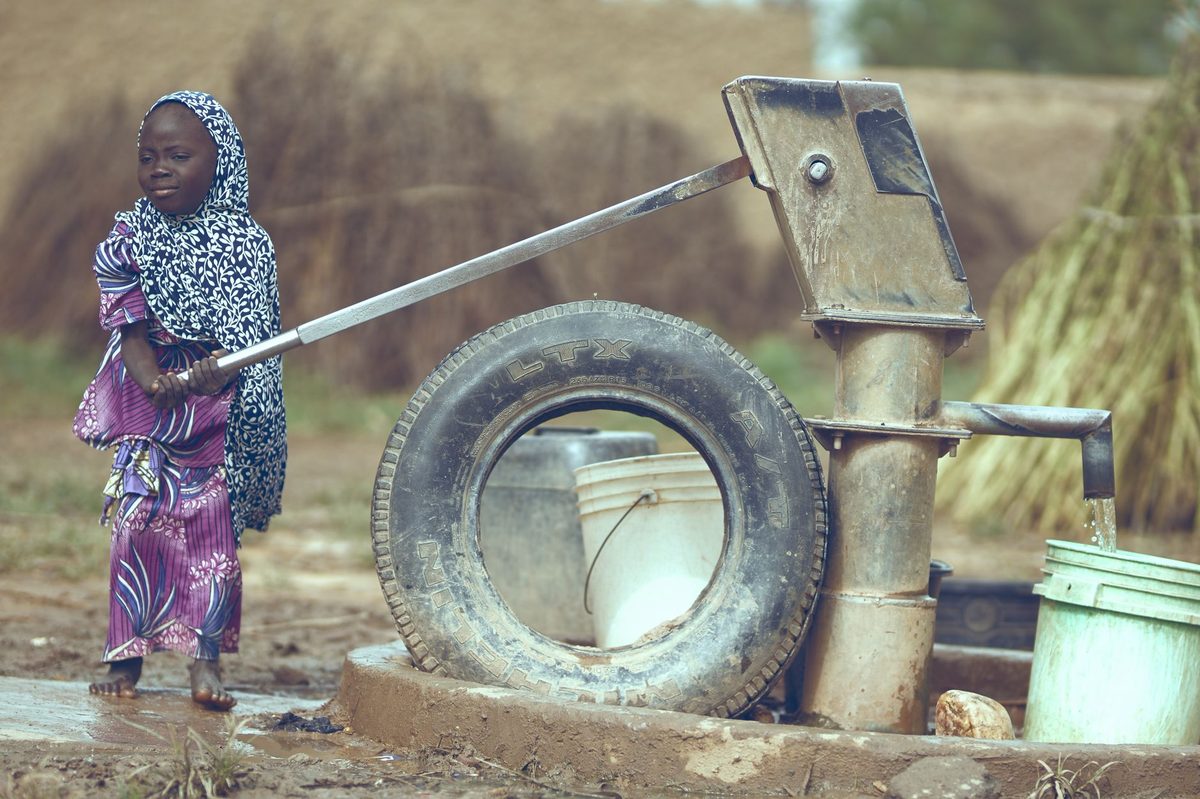
For decades the Sahel meant one thing: drought and famine. Now wells that once ran dry are filling, and in places the water table has climbed more than 13 feet.
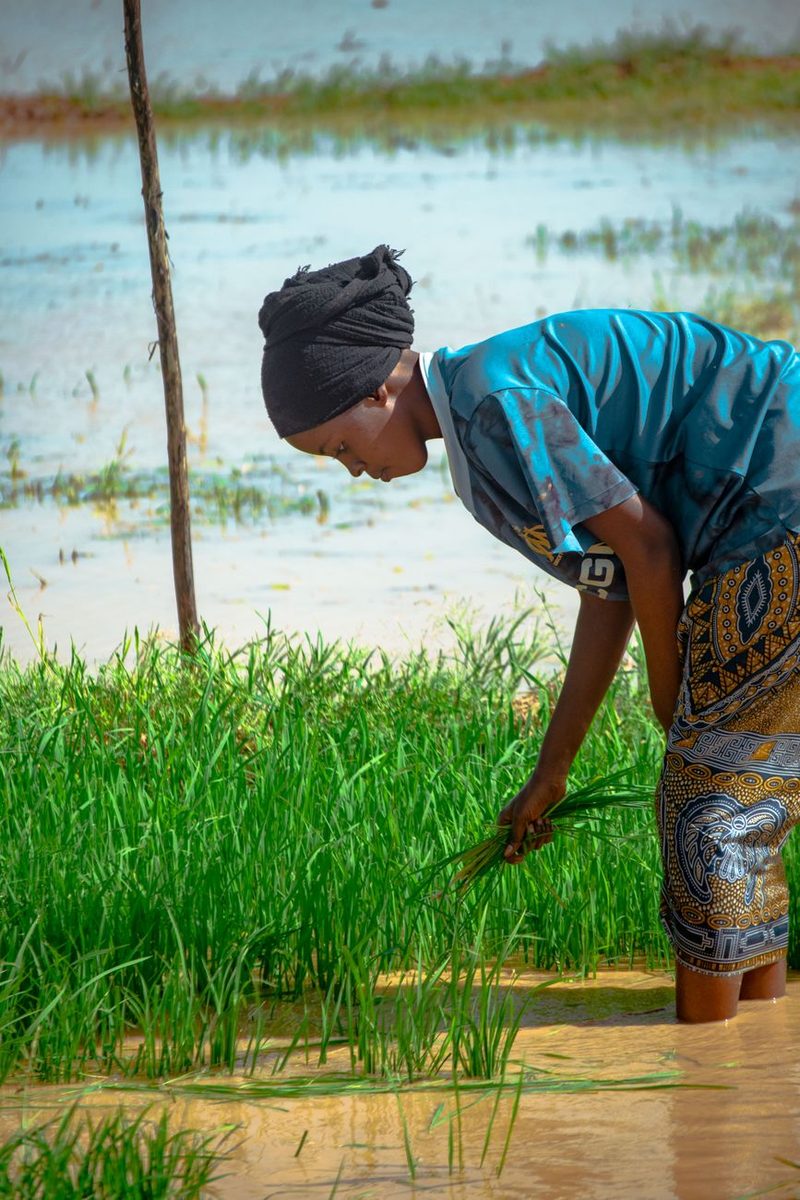
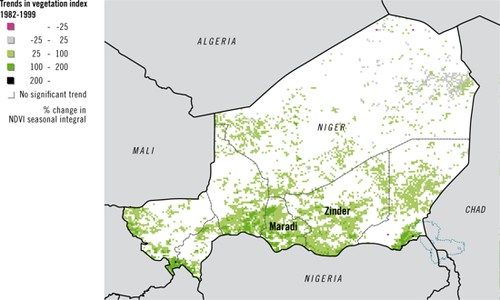
The recovery is spreading across the southern edge of the Sahara, from Niger to Lake Chad. Farmers are irrigating fields that sat parched for a generation, and a lake that nearly vanished is refilling.
Why it matters
Millions of Sahel farmers who lived through decades of drought now have wells that fill and fields they can water again.
Questions about this story
No questions yet — be the first to ask.
Key Indicators
Voices
Curated perspectives — historical figures and your fellow readers.
Play
Exploring all sides of a story is often best achieved with Play.
Higher or Lower
A number from this story, against one from elsewhere in the news — guess which is bigger, then keep the chain going. 5 rounds, 3 strikes; a miss costs a strike and resets your streak.
Keyboard: ↓/L lower · ↑/H higher
0 points — sign up to put that on the leaderboard.
Connections
Sixteen names from the news. Find the four hidden groups of four. Four mistakes max.
Sign up to keep a daily streak — a new puzzle lands every day.
Exit debate?
Your progress in this debate will be lost.
- 1 Two AI personas square off on this story.
- 2 You predict who'll win each round — correct picks earn XP.
- 3 One crossfire question is yours to fire. Pick it carefully.
Couldn't generate a topic
Select Your Champions
Choose one persona for each side of the debate
DEBATE TOPIC
Choose personas with different perspectives for a more dynamic debate.
Select debater for this side:
No debate personas available right now.
Select debater for this side:
No debate personas available right now.
Who's Got This Round?
Make your prediction before the referee scores
The referee scores both sides on
Round Results
Set the Crossfire
Pick the question both personas must answer in the final round
Debate Oracle! You called every round!
Sharp Instincts! You know your debaters!
The Coin Flip Strategist! Perfectly balanced!
The Contrarian! Bold predictions!
Inverse Genius! Try betting the opposite next time!
XP Breakdown
Prediction History
People Involved
Organizations Involved
A global environmental research group studying how Sahel farmers restore degraded land.
An African Union effort launched in 2007 to restore land across 11 Sahel countries.
Timeline
January 1950 August 2021
-
Report: water is rising across the Sahel
Latest FeatureA feature documents refilling wells, water tables up 13 feet or more, a recovering Lake Chad, and 200 million regrown trees in southern Niger.
-
Water storage keeps rising
ResearchA study of the Niger basin from 2003 to 2013 finds stored water climbing faster than rainfall alone can explain.
-
The Niamey paradox explained
ResearchHydrologists link the rising water table near Niamey to land clearing, not extra rain.
-
Great Green Wall launched
PolicyThe African Union starts a plan for a coast-to-coast tree belt across 11 Sahel countries.
-
The great Sahel droughts begin
CrisisYears of failed rains bring famine across the Sahel. Lake Chad shrinks toward a fraction of its former size.
-
Millet farming expands sixfold
BackgroundFarmers clear Sahel savannah for millet, hardening the soil and boosting rainwater runoff.
Historical Context
3 moments from history that rhyme with this story — and how they unfolded.
American Dust Bowl recovery (1930s)
Drought and over-plowing turned the U.S. southern plains into dust storms that buried farms and drove families off the land. Millions of acres lost their topsoil. The federal government responded with soil conservation and tree-planting programs.
New farming rules and windbreak tree belts slowed the erosion within a few years.
The plains largely recovered, showing that land management, not just weather, decided the outcome.
Like the Sahel, the Dust Bowl showed that how people treat the soil can turn a disaster zone back into farmland.
China's Loess Plateau restoration (1990s-2000s)
One of the most eroded regions on Earth, the Loess Plateau, was restored through terracing, tree planting, and grazing limits. The World Bank backed the work across tens of thousands of square miles.
Vegetation returned, erosion dropped, and local farm incomes rose within a decade.
The project became a global model for reversing severe land degradation at scale.
It shows what deliberate large-scale restoration can achieve, a contrast to the Sahel's more farmer-driven, bottom-up recovery.
Aral Sea desiccation (1960s-2000s)
Soviet irrigation projects diverted the rivers feeding the Aral Sea in Central Asia. The lake, once one of the world's largest, shrank to a fraction of its size, leaving dry seabed and ruined fishing towns.
Fisheries collapsed and toxic dust storms swept the exposed lakebed.
Most of the sea never returned, a warning about how water diversion can be near-permanent.
The Aral Sea is the cautionary opposite of Lake Chad: human water use can destroy a lake as surely as it can help one refill.
