





Pull to refresh
Logo
Amazon buys Decart's AI optimization software as it prepares to sell Trainium chips

Amazon buys Decart's AI optimization software as it prepares to sell Trainium chips

Money Moves

Amazon gets the Decart Optimization Stack and its founding team; Bloomberg reports the price at about $7.5 billion, close to twice Decart's last private valuation

Overview

Updated 28 minutes ago

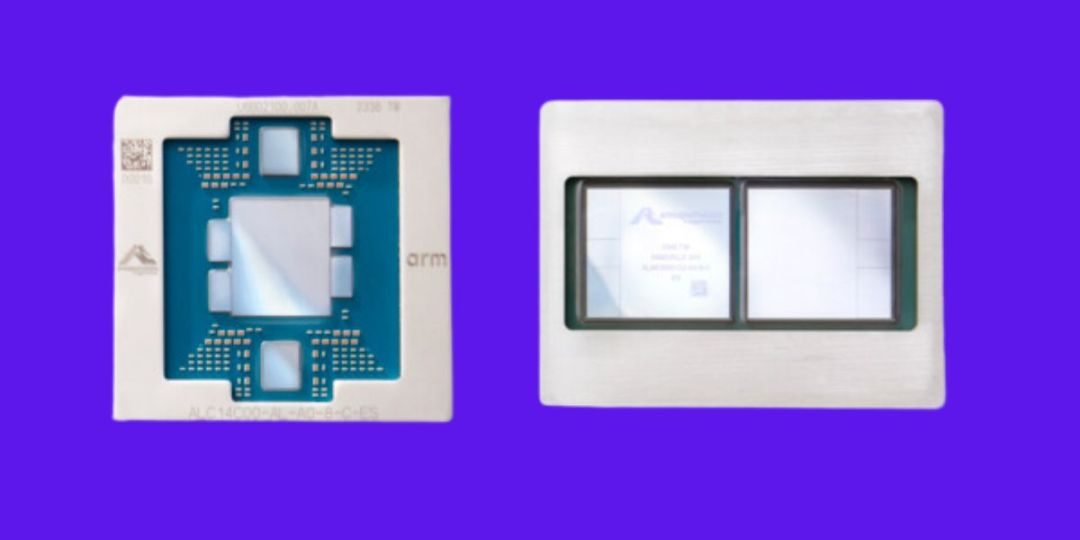
Amazon builds the chips inside its own data centers but has lacked the software that makes them easy to program. It is buying that software, and the team behind it, from Israeli startup Decart.

Bloomberg reported the price at about $7.5 billion, close to twice Decart's last private valuation of roughly $4 billion. Amazon did not disclose terms. The purchase targets Nvidia, whose processors run most AI workloads and whose programming tools keep customers tied to them.

Why it matters

If Trainium becomes easy to program, companies buying AI compute get a second supplier and Nvidia loses some pricing power.

Questions about this story

Free account needed to ask — your question is kept and asked for you right after sign-up. Answers are public.

No questions yet — be the first to ask.

Key Indicators

$7.5B
Reported price
Bloomberg's figure for the technology and team; Amazon declined to confirm it.
~$4B
Decart's last private valuation
PitchBook data cited by Reuters, before the sale talks.
$300M
Decart's May 2026 funding round
Led by Radical Ventures, with Nvidia joining as a new investor.
50 days
Expected closing window
Amazon's own estimate, reported by Calcalist, subject to regulatory clearance.
Late 2027
Target for selling Trainium outside AWS
Andy Jassy's stated timetable on the October 2026 earnings call.
80%+
Nvidia's share of the AI chip market
Calcalist describes Nvidia GPUs as holding more than 80% of the market.

Voices

Curated perspectives — historical figures and your fellow readers.

Sign up to generate historical perspectives on this story.

People Involved

Organizations Involved

Timeline

2023 November 2026

9 events Latest: 2 days ago
Tap a bar to jump to that date
  1. Amazon agrees to buy Decart's optimization stack and hire its team

    Latest Acquisition

    Amazon says it will purchase the technology behind DOS and bring Decart's three founders and engineers aboard.

  2. Jassy sets a Trainium sales target outside AWS

    Statement

    Amazon's chief executive says external sales begin late in 2027.

  3. Anthropic walks away

    Report

    Bloomberg reports Anthropic stopped after due diligence; the reasons were not made public.

  4. AWS adopts Nvidia's NVLink Fusion for next-generation Trainium

    Product decision

    The interconnect choice lowers the cost of switching hardware for potential buyers.

  5. Anthropic reported in talks to buy Decart

    Report

    Bloomberg and Reuters put the discussed price at about $6 billion.

  6. Calcalist reports Decart is exploring a sale

    Report

    The Israeli business outlet is first to report that Decart is in sale discussions.

  7. Decart raises $300 million

    Funding

    Radical Ventures leads the round; Nvidia joins as a new investor.

  8. Decart starts tuning models for Trainium

    Partnership

    Amazon later says the collaboration produced strong performance results on its own chips.

  9. Decart is founded

    Company founding

    The startup begins building real-time world models and software that speeds AI models across different chips.

Scenarios

1

Deal closes and DOS disappears into AWS's Neuron toolkit

Likely Resolves by Q1 2027

Discussed by: Futurum Group analysts, who expect the stack to stop being sold as a standalone product

Amazon says closing depends on regulatory clearance and expects it within about 50 days. Futurum expects the Decart software to resurface inside Neuron, the kit developers use to run models on Amazon chips, where it would be tuned for Trainium first. The trigger is Amazon's own completion announcement.

2

The stack keeps running on Nvidia and Google chips, not just Trainium

Uncertain Resolves by End of 2027

Discussed by: Futurum Group, which flags the open question of whether DOS stays hardware-neutral

Decart's selling point was that the same model ran faster on Nvidia, Google or Amazon hardware without locking a customer to one vendor. Amazon has not said whether that neutrality survives, or what happens to existing DOS customers. Keeping it would make Amazon's tools attractive to firms hedging across chip suppliers; dropping it would push those firms back to Nvidia.

3

Trainium goes on sale outside AWS

Possible Resolves by Q1 2028

Discussed by: Andy Jassy, on Amazon's October 2026 earnings call

Jassy said Amazon plans to sell Trainium to customers who run their own data centers late in 2027. Those buyers install the software themselves, with no Annapurna engineer on call, so the optimization work has to ship as tools a customer's team can operate. The Decart engineers are the beginning of that effort, not the end of it.

4

A competition regulator slows the purchase

Unlikely Resolves by Q2 2027

Discussed by: Calcalist, which notes Amazon structured the deal as a technology purchase plus hiring rather than a full merger

Buying assets and hiring staff can draw less scrutiny than buying a whole company, which is part of why Amazon chose this shape and why it expects to close in about 50 days. A regulator can still open a formal review or demand conditions, which would push the closing past Amazon's own timetable.

Historical Context

3 moments from history that rhyme with this story — and how they unfolded.

April 2008

Apple buys PA Semi (2008)

Apple bought a small chip-design firm, PA Semi, and put its engineers to work on a processor of its own. At the time, Apple's devices depended on chips designed by other companies, which set the pace of its hardware roadmap.

Then

Apple shipped its first in-house phone processor, the A4, in 2010.

Now

Apple now designs the main processors in most of its devices, which lets it tune software and hardware together.

Why this matters now

Amazon is doing a version of this one layer up: buying software talent so its own silicon is easier to use than the market leader's.

March 2019

Nvidia buys Mellanox (2019)

Nvidia agreed to pay $6.9 billion for Mellanox, a networking company whose switches let thousands of processors work together as one machine. The chips were Nvidia's; the plumbing that made them useful at data-center scale was not.

Then

The deal closed in 2020 and Nvidia's data-center business grew into its largest revenue line.

Now

The purchase reinforced the idea that the moat around an AI chip is the system built around it, not the transistor.

Why this matters now

Decart's compiler and performance software is that same kind of layer for Amazon: not the chip, but what makes the chip usable.

April 2003 to 2006

AMD's Opteron takes server share from Intel (2003-2006)

AMD shipped Opteron, a server processor that ran existing 64-bit software without rewriting it. Server makers began offering Opteron machines, and AMD won share in a market Intel had held almost entirely.

Then

AMD gained ground in servers for the first time in years.

Now

Intel's counterattack pushed AMD's server share back down; AMD only returned at scale with Epyc in 2017.

Why this matters now

A cheaper compatible chip can win share, but only if existing software runs on it without changes. That is the test Trainium faces once it leaves Amazon's own data centers.

Sources

(10)