

Pull to refresh
Logo
A lichen fungus gene lifts wheat, rice and maize yields under drought

A lichen fungus gene lifts wheat, rice and maize yields under drought

New Capabilities

Northwest A&F University researchers report that EpTFIIAγ, a transcription factor from an extremophile lichen fungus, breaks the drought-tolerance-versus-yield trade-off in three cereals

Overview

Updated 1 hour ago

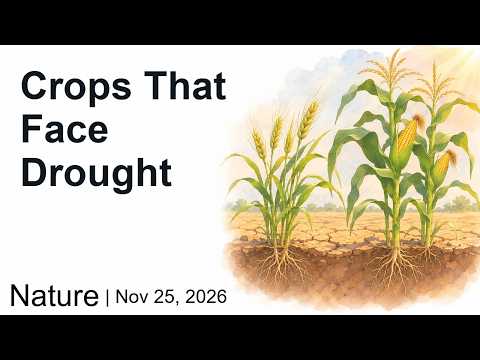
Plant breeders have spent decades chasing drought tolerance and usually paid for it with smaller harvests. A team at Northwest A&F University reports the reverse in Nature: a gene borrowed from a lichen-dwelling fungus raised grain yields in wheat, rice and maize, and the gain grew larger when water ran short.

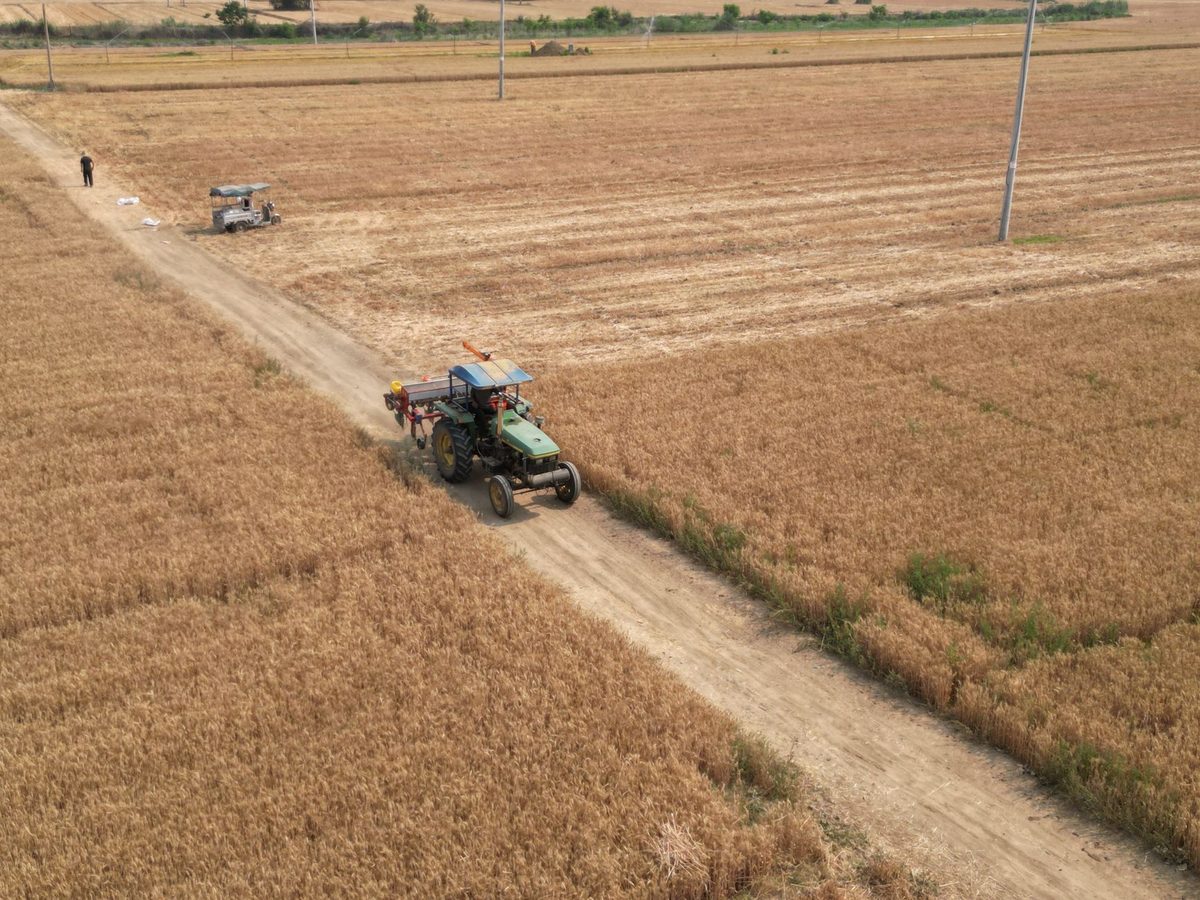
The gene, EpTFIIAγ, codes for a transcription factor that the lichen fungus Endocarpon pusillum switches on when it dries out. In three seasons of field trials at Yangling, Shaanxi, five transgenic wheat cultivars out-yielded their own controls by 19.4% to 32.8% per plot when water was short. With full irrigation they still gained 7.9% to 13.5%, which is the part that matters to a farmer who cannot risk a bad year.

Why it matters

If it holds in other soils and varieties, drought tolerance stops costing farmers yield, the trade-off that has blocked drought breeding for decades.

Questions about this story

Free account needed to ask — your question is kept and asked for you right after sign-up. Answers are public.

No questions yet — be the first to ask.

Key Indicators

32.8%
Highest wheat plot-yield gain, water-limited
Top of the 19.4% to 32.8% range across five cultivars over three seasons.
13.5%
Highest wheat plot-yield gain, full irrigation
The lines also beat their controls with ample water, where drought transgenes usually lose yield.
42.4%
Highest maize per-plant gain, water-limited
Measured at Changji, Xinjiang; other sites showed 27.9% to 37.2%.
24.1%
Highest rice per-plant gain, water deficit
Two seasons at Hanzhong, Shaanxi; full irrigation gave 10.2% to 11.9%.
5
Wheat cultivars tested
Each transgenic line was compared with its own wild-type control.
3
Field seasons for wheat trials
2023 to 2025, with 2025 the hottest and driest of the three.

Voices

Curated perspectives — historical figures and your fellow readers.

Sign up to generate historical perspectives on this story.

People Involved

Organizations Involved

Timeline

2023 November 2026

3 events Latest: 2 days ago
  1. Nature publishes the EpTFIIAγ results

    Latest Publication

    Five wheat cultivars gain 19.4% to 32.8% per plot under water limitation; rice and maize also yield more.

  2. Genome data for the project deposited

    Data

    China's National Genomics Data Center lists BioProject PRJCA047420 covering wheat, rice and maize.

  3. Wheat field trials begin in Yangling

    Research

    Three seasons of rain-shelter trials start, each transgenic line against its own wild-type control.

Scenarios

1

China approves a transgenic wheat line carrying EpTFIIAγ

Possible Resolves by End of 2029

Discussed by: Chinese state media, which framed the gene as a genetic resource for drought-resistant breeding

Transgenic wheat cannot be sold in China without a biosafety certificate from the Ministry of Agriculture and Rural Affairs, and none has been issued for these lines. Approval would take multi-season trials of a specific event, then committee review. The paper reports field data, not a regulatory filing.

2

A seed company licenses the gene and runs its own field trials

Possible Resolves by End of 2028

Discussed by: Trade coverage of the paper, which noted the study does not establish that seed is commercially available

The value of EpTFIIAγ to a breeder depends on whether it transfers into elite backgrounds without dragging yield. A licensing deal, or a public breeding program outside China adopting the construct, would show the result is being pushed past the five cultivars in the paper.

3

An outside lab reproduces the yield gain in a new wheat background

Uncertain Resolves by End of 2029

Discussed by: Not yet publicly debated; the paper reports no independent replication and relies on five cultivars and controlled field sites

The mechanism runs through interactions with the plant's own transcriptional activators, so the size of the gain may depend on the variety it lands in. Replication by an unaffiliated group would separate a robust effect from one tuned to these specific lines and locations.

Historical Context

3 moments from history that rhyme with this story — and how they unfolded.

2009-2011

Sub1 rice (2009-2011)

Breeders moved SUB1A, a submergence-tolerance gene from the Indian landrace FR13A, into Swarna, the dominant rice variety in eastern India. Under roughly two weeks of flooding the new line yielded about a tonne per hectare more. In normal years it matched Swarna.

Then

Swarna-Sub1 reached farmers in India in 2009 and in Bangladesh in 2011.

Now

It became the standard case of a single stress-tolerance gene deployed without a yield penalty.

Why this matters now

EpTFIIAγ is pitched the same way: one gene that costs nothing in good conditions and pays off in bad ones.

2011-2013

DroughtGard corn (2011-2013)

Monsanto's MON 87460 became the first drought-tolerant biotech corn cleared in the United States, reaching the market in 2013. It was sold to protect against yield loss in moderate drought, not to raise output.

Then

The trait was framed as risk management, with little or no gain in well-watered fields.

Now

It set the expectation that drought transgenes reduce losses rather than increase harvests.

Why this matters now

The EpTFIIAγ numbers claim both at once, which is what makes the full-irrigation gains as notable as the drought ones.

1950-1968

Semidwarf wheat and the Green Revolution (1950s-1960s)

Norin 10, a Japanese wheat with semidwarf genes, reached Norman Borlaug's Mexican breeding program through Orville Vogel. Shorter stems put more of the plant's energy into grain and kept fields from collapsing under heavy fertilizer. Mexican wheat output rose sharply through the 1960s.

Then

Semidwarf varieties spread across Mexico, India and Pakistan within a decade.

Now

The change in harvest index, the share of above-ground biomass that becomes grain, became the template for raising yield potential.

Why this matters now

The EpTFIIAγ lines also showed harvest indices 6% to 15% higher than controls, the same lever Borlaug's wheat pulled.

Sources

(4)