
Pull to refresh
Logo
Orphan rice gene confers drought tolerance across five crop species

Orphan rice gene confers drought tolerance across five crop species

New Capabilities

ROAD1 arose in wild rice, was kept during japonica domestication, and improves drought tolerance when moved into other plants

2 days ago: Paper appears in Cell's October issue

Overview

Updated 58 minutes ago

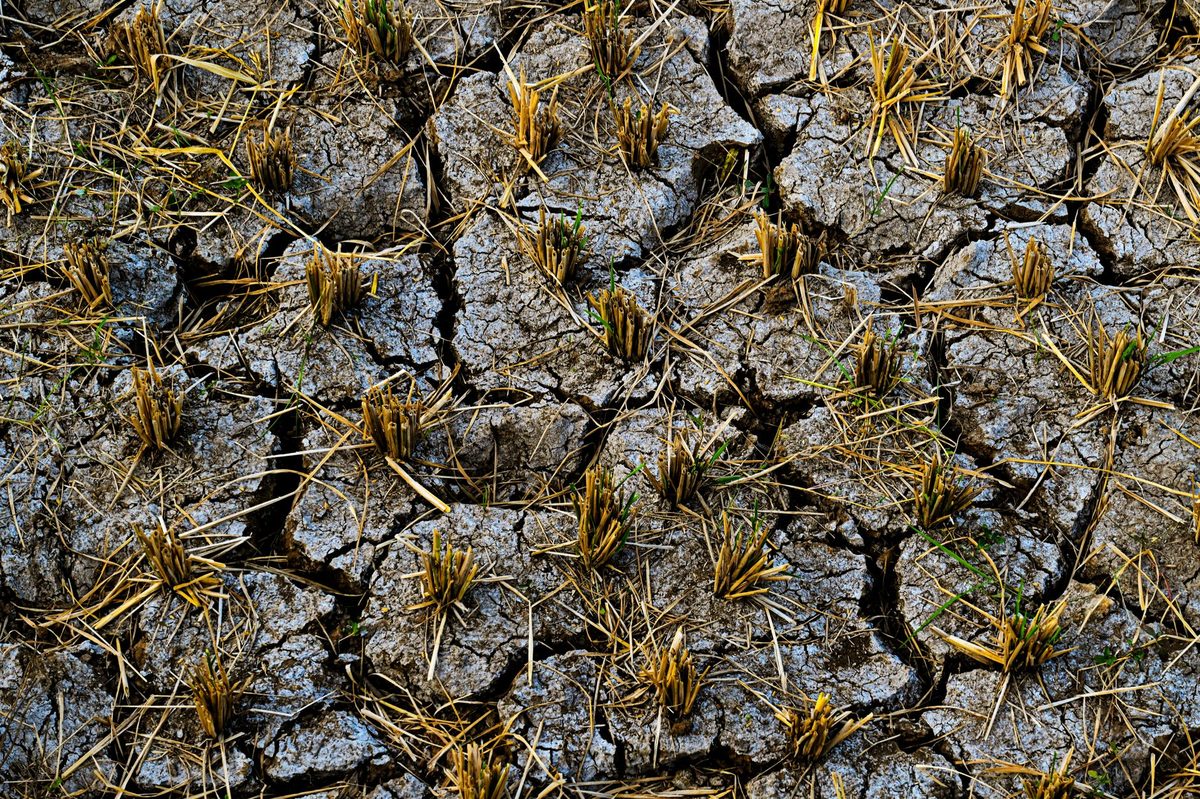
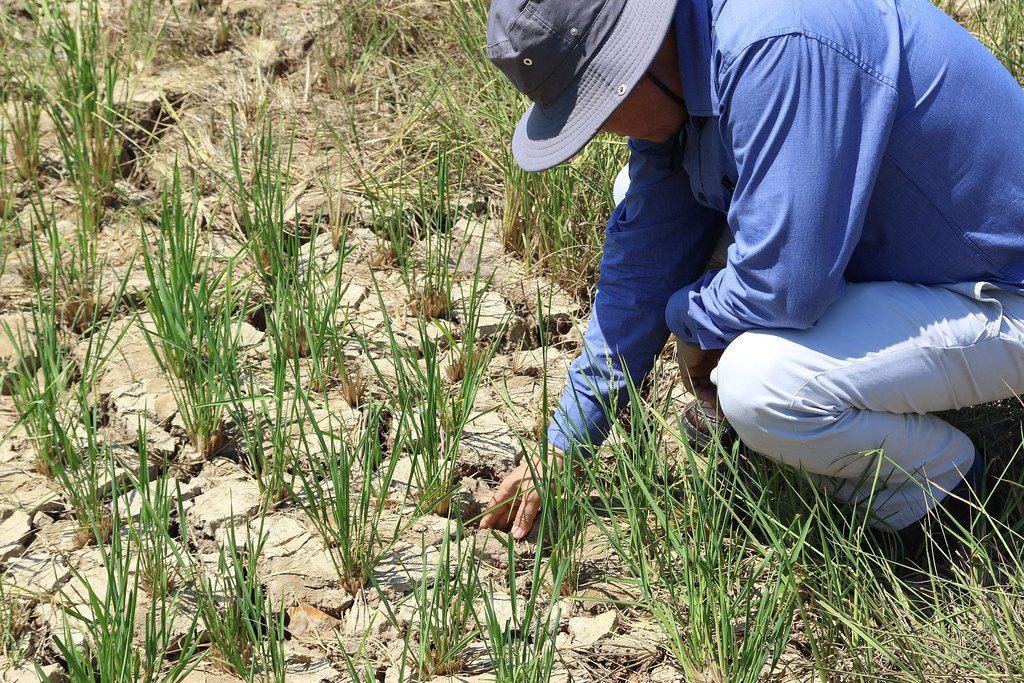
Breeders have spent decades looking for drought-tolerance genes that don't cost yield in normal years. Most candidates fail half the test. Rice lines carrying a newly described gene, ROAD1, yielded up to 34.75% more grain under field drought with no growth penalty when conditions were normal.

ROAD1 exists only in the Oryza genus. It arose as a new gene in wild Oryza meridionalis and was selected during japonica domestication — the functional version is concentrated in northern China. The gene works by blocking a protein, OsPP2C68, that normally switches off drought responses, which may explain why it functions across plant families.

Moved into Arabidopsis, rapeseed, maize, wheat, and poplar, ROAD1 improved drought tolerance in each. The finding suggests a rice-specific gene can be transferred to improve drought resilience in other crops without the yield trade-offs that have blocked earlier candidates.

Why it matters

If ROAD1 C holds up in larger trials, wheat and maize growers gain a rare drought tool that doesn't shrink normal-season harvests.

Questions about this story

Free account needed to ask — your question is kept and asked for you right after sign-up. Answers are public.

No questions yet — be the first to ask.

Key Indicators

34.75%
Grain yield increase under field drought
Maximum yield advantage of rice lines carrying ROAD1 C over controls in field drought trials, reported in the Cell paper.
5
Crop species enhanced by ROAD1 C
Arabidopsis, rapeseed, maize, wheat, and poplar showed improved drought tolerance with heterologous ROAD1 C expression.
2
ROAD1 alleles in cultivated rice
The C and T alleles are distributed in northern and southern China respectively, with allele frequencies correlating with precipitation.

Voices

Curated perspectives — historical figures and your fellow readers.

Ever wondered what historical figures would say about today's headlines?

Sign up to generate historical perspectives on this story.

People Involved

Organizations Involved

Timeline

February 2026 October 2026

4 events Latest: 2 days ago
Tap a bar to jump to that date
  1. Paper appears in Cell's October issue

    Latest Publication

    The ROAD1 study appears in Cell Volume 189, Issue 21.

  2. ROAD1 paper published online in Cell

    Publication

    The paper becomes publicly available online before the print issue.

  3. Cell accepts the paper after revisions

    Decision

    The manuscript passes peer review and is accepted for publication.

  4. Cell receives ROAD1 manuscript

    Submission

    Haifu Tu and colleagues submit the ROAD1 paper to Cell.

Scenarios

1

ROAD1 C enters multi-location field trials in wheat and maize

Likely Resolves by End of 2028

Discussed by: Nature Plants commentary; Huazhong Agricultural University research team

The paper demonstrates trans-species function in controlled conditions. Multi-location field trials in wheat and maize, under realistic drought stress, are the natural next step. If results confirm the paper's findings, ROAD1 C becomes a candidate for marker-assisted breeding in rice and transgenic deployment in other crops.

2

Regulatory review shapes ROAD1 deployment path

Possible Resolves by End of 2028

Discussed by: Plant biotechnology researchers; GM crop regulatory precedent

ROAD1 C in transgenic wheat, maize, or rapeseed would require regulatory approval in each target country. The United States, the European Union, and China have different review processes and timelines for genetically modified crops. Public and retailer acceptance in some markets could also shape whether the gene reaches fields.

3

Independent studies question ROAD1 field performance

Unlikely Resolves by End of 2029

Discussed by: Drought-breeding literature documenting past replication failures at field scale

Many drought-tolerance genes that showed promise in controlled conditions failed to improve yields in large-scale field tests. Independent research groups may test ROAD1 C in different genetic backgrounds and environments. The gene's mechanism is clear, but field performance across diverse environments remains untested.

Historical Context

3 moments from history that rhyme with this story — and how they unfolded.

2006–2013

Sub1A flood tolerance gene (2006)

Researchers at the International Rice Research Institute identified Sub1A, a gene from a traditional Indian rice variety that confers tolerance to submergence. Through marker-assisted backcrossing, the gene was moved into popular rice varieties without disrupting their other traits.

Then

Sub1 varieties, released starting around 2009, survived flooding that killed conventional lines in farmers' fields across South Asia.

Now

Sub1A became the standard example of a single stress-tolerance gene deployed through breeding — a template ROAD1 might follow.

Why this matters now

Like ROAD1, Sub1A is a single gene for a major stress that was bred into elite varieties without a yield penalty. Its path from discovery to farmers' fields took roughly a decade.

1960s–1970s

Green revolution rice dwarfing gene sd1 (1960s)

The semi-dwarfing gene sd1 in rice underpinned high-yielding varieties like IR8 that launched the green revolution in Asia. The gene shortened plant height, allowing more grain production without lodging, and was quickly spread through international breeding programs.

Then

IR8 and its successors doubled or tripled rice yields in Asia within two decades.

Now

sd1 is now nearly universal in irrigated rice varieties — a single gene that transformed a continent's food supply.

Why this matters now

ROAD1, like sd1, is one gene with outsized potential agricultural impact. Its selection during japonica domestication mirrors how sd1 spread through breeding programs.

2014–2026

Orphan gene field matures (2014–2026)

A 2014 review in Trends in Plant Science, 'Coming of age: orphan genes in plants,' helped establish the framework for studying genes unique to a species or lineage. Over the following decade, the field moved from cataloging these genes to finding functional examples with agronomic significance.

Then

Orphan genes were initially often dismissed as genomic noise or annotation errors.

Now

ROAD1 is among the first orphan genes with demonstrated trans-species function for a major agronomic trait.

Why this matters now

ROAD1 validates the orphan gene concept: a recent, lineage-specific gene can carry significant adaptive value, and the Oryza genus evolved a stress-tolerance gene with cross-family utility.

Sources

(4)