

Pull to refresh
Logo
Houthi attacks on Saudi airports kill civilians, disrupt Gulf air travel

Houthi attacks on Saudi airports kill civilians, disrupt Gulf air travel

Force in Play

An Indian national died from injuries in the October 10 attack on Riyadh's King Khalid International Airport, raising the toll to 13 and drawing condemnation from New Delhi.

Yesterday: Indian national dies, toll rises to 13

Overview

Updated 1 hour ago

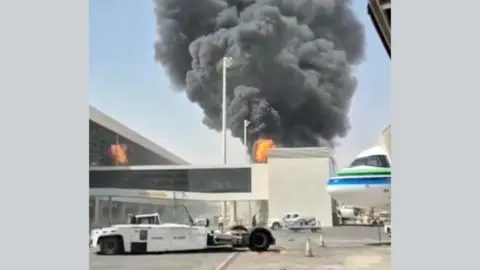
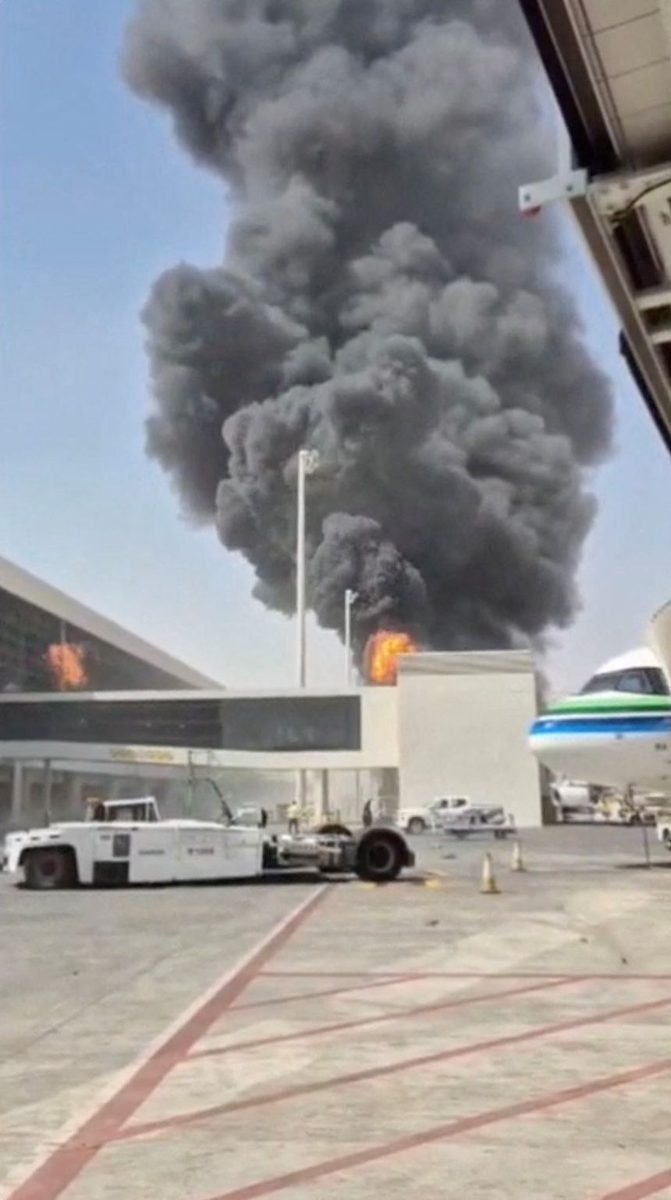
An Indian national died Sunday from injuries sustained in Saturday's missile attack on King Khalid International Airport in Riyadh. The death raised the toll from the attack, claimed by Yemen's Iran-backed Houthis, to 13.

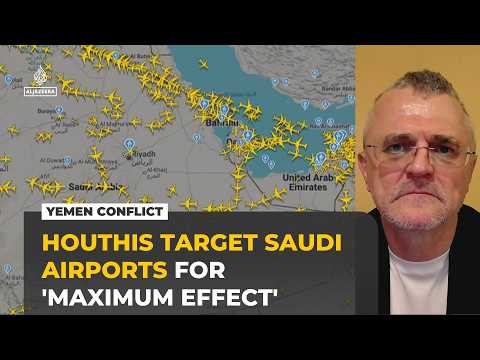
The strikes have disrupted air travel to Riyadh, with UAE carriers suspending flights. The United States is considering joining Saudi strikes on the Houthis, and India has condemned the attacks as 'completely unacceptable.'

Why it matters

If Houthi strikes on Saudi airports continue, Gulf air travel faces disruption and the US may enter a wider war with Iran.

Questions about this story

Free account needed to ask — your question is kept and asked for you right after sign-up. Answers are public.

No questions yet — be the first to ask.

Key Indicators

13
People killed in October 10 attack
Death toll rose from 12 to 13 after an Indian national died from his injuries.
309
People injured in October 10 attack
GACA reported 309 injuries from the missile strike on King Khalid International Airport.
11
Indian nationals injured
Three remain in intensive care, two in general wards, the rest discharged.
3
Indian nationals in intensive care
All three are in stable condition, per the Indian Embassy.

Voices

Curated perspectives — historical figures and your fellow readers.

Ever wondered what historical figures would say about today's headlines?

Sign up to generate historical perspectives on this story.

People Involved

Organizations Involved

Timeline

5 events Latest: Yesterday
Tap a bar to jump to that date
  1. Indian national dies, toll rises to 13

    Latest Casualty

    Mohammed Yusuf Ali dies from injuries; Indian Embassy confirms, toll reaches 13.

  2. Second projectile hits airport terminal

    Attack

    Projectile hits Terminal 4, igniting a fire; air defenses intercept a cruise missile nearby.

  3. India condemns attacks

    Statement

    The MEA calls the attacks 'completely unacceptable' and demands they cease immediately.

  4. Major missile attack on Riyadh airport

    Attack

    Missile strikes King Khalid International Airport, killing 12 and injuring over 300. Houthis claim responsibility.

  5. Houthis attack two Saudi airports

    Attack

    Attacks on King Khalid and Abha airports kill 3 and injure 36, according to GACA.

Scenarios

1

US joins Saudi strikes on Houthis

Possible Resolves by End of 2026

Discussed by: Reuters, The Indian Express

Trump said Washington was considering joining Saudi strikes on the Houthis. If the US commits military force, it would mark a direct US-Houthi confrontation and a significant escalation of the conflict that began with the US-Israel war on Iran in February.

2

Houthis continue attacks on Saudi infrastructure

Likely Resolves by End of 2026

Discussed by: BBC, Khaleej Times

The Houthis have warned airlines to stay away from Saudi airports and have shown they can strike despite Saudi air defenses. Further attacks on airports, oil facilities, or other civilian infrastructure would deepen the disruption to Gulf air travel and energy markets.

3

Diplomatic de-escalation

Unlikely Resolves by Q2 2027

Discussed by: No major analyst has predicted this outcome in available sources

International pressure for a ceasefire could grow as civilian casualties mount. However, no major diplomatic initiative has been announced, and the Houthis have shown little interest in de-escalation while their attacks appear to be succeeding.

Historical Context

3 moments from history that rhyme with this story — and how they unfolded.

September 2019

Abqaiq-Khurais attack (September 2019)

Drones and cruise missiles struck Saudi Aramco's Abqaiq and Khurais oil facilities, temporarily halving Saudi oil production. The attack showed that Saudi Arabia's most critical infrastructure was vulnerable to precision strikes.

Then

Saudi oil production was cut by about 5.7 million barrels per day, roughly half of output. Oil prices spiked before recovering.

Now

The attack demonstrated that Iran-backed forces could strike deep inside Saudi Arabia, a vulnerability that persists today.

Why this matters now

Like the airport attacks, the 2019 strike showed that Houthi or Iranian forces can hit Saudi civilian infrastructure despite air defenses.

2017-2018

Houthi missile attacks on Riyadh (2017-2018)

The Houthis fired a series of ballistic missiles at Riyadh, most of which were intercepted by Saudi air defenses. One missile was shot down near the airport in 2017.

Then

The attacks caused limited damage but raised fears about the safety of the Saudi capital.

Now

They established a pattern of Houthi missile attacks on Saudi cities that has continued intermittently.

Why this matters now

The current attacks on King Khalid International Airport follow this pattern but have proven more deadly, with the October 10 strike killing 13 people.

March 2015 - present

Saudi-led intervention in Yemen (2015-present)

A Saudi-led coalition intervened in Yemen's civil war to restore the internationally recognized government, which the Houthis had ousted from Sanaa. The conflict has since become a proxy war between Saudi Arabia and Iran.

Then

The intervention failed to quickly defeat the Houthis, and the war has dragged on for over a decade.

Now

The conflict has created a humanitarian crisis and given Iran a foothold on the Arabian Peninsula.

Why this matters now

The airport attacks are the latest escalation in this long-running proxy war, which has now spilled over into attacks on Saudi civilian infrastructure.

Sources

(11)