New antibiotics reach advanced trials as drug-resistant infections kill over a million per year
New Capabilities
After decades of underinvestment, a handful of drugs targeting the world's most dangerous bacteria are entering final-stage testing—but the broken economics of antibiotic development threaten to strand them before they reach patients
After decades of underinvestment, a handful of drugs targeting the world's most dangerous bacteria are entering final-stage testing—but the broken economics of antibiotic development threaten to strand them before they reach patients
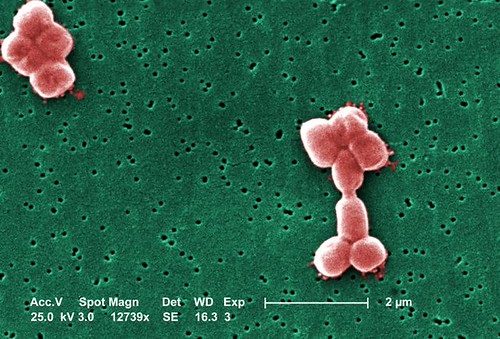
No genuinely new class of antibiotic has reached patients since 1987, and in the nearly four decades since, bacteria have steadily evolved resistance to existing drugs. Carbapenem-resistant Acinetobacter baumannii—a hospital-acquired pathogen that kills up to 60 percent of ventilated pneumonia patients—is at the top of the WHO's list of critical-priority threats. On March 16, 2026, Swiss biotech BioVersys received FDA clearance to enroll American patients in a Phase 3 pivotal trial of BV100, which reduced 28-day mortality by half in earlier testing.
BV100 and Roche's zosurabalpin are the major Phase 3 entrants among only a few drugs in late-stage development against the deadliest gram-negative bacteria. Both face a paradox: new antibiotics are deliberately used sparingly, preventing them from generating enough revenue to recoup development costs. Without pull-incentive legislation like the reintroduced PASTEUR Act or the UK's subscription model, these drugs could remain out of reach even if they work.
Questions about this story
Free account needed to ask — your question is kept and asked for you right after sign-up. Answers are public.
No questions yet — be the first to ask.
Key Indicators
1.27M
Annual deaths directly caused by antibiotic-resistant infections (2019)
A Lancet study found antimicrobial resistance (AMR) directly killed 1.27 million people in 2019 and was associated with 4.95 million deaths.
50%
Relative reduction in 28-day mortality with BV100
In Phase 2, BV100 plus polymyxin B reduced 28-day mortality to 25 percent versus 60 percent for best available therapy in confirmed CRAB pneumonia patients.
39 years
Time since last new antibiotic class reached patients
The last genuinely new class of antibiotics was introduced in 1987, creating a 'discovery void' that bacteria have exploited.
$6B
Proposed PASTEUR Act funding for antibiotic subscriptions
The reintroduced bill would create federal subscription contracts worth $750 million to $3 billion each, decoupling antibiotic revenue from sales volume.
6
Innovative antibiotics in clinical development targeting WHO priority pathogens
Of 27 antibiotics in clinical development against priority pathogens, the WHO classified only 6 as truly innovative.
Images from Openverse under Creative Commons licenses.
Videos from YouTube.
Voices
Curated perspectives — historical figures and your fellow readers.
Oscar Wilde
(1854-1900) ·Victorian · wit
Fictional AI pastiche — not real quote.
"How dreadfully modern of us — to discover the cure for death only to find we cannot afford to sell it. The bacteria, at least, have mastered the one economic principle that eludes our legislators: they invest in themselves continuously, and never once go bankrupt doing so."
0% found this insightful
Ever wondered what historical figures would say about today's headlines?
Sign up to generate historical perspectives on this story.
15 events
Latest: March 16th, 2026 · 6 months ago
Showing 8 of 15
JK to step
Tap a bar to jump to that date
Jump to
March 2026
FDA clears BV100 Phase 3 trial for US patient enrollment
LatestRegulatory
The FDA cleared BioVersys to begin enrolling United States patients in the RIV-TARGET Phase 3 pivotal trial of BV100 for hospital-acquired and ventilator-associated pneumonia caused by CRAB. Results are expected by end of 2027, with regulatory submissions planned for 2028.
BV100 Phase 1 safety data published in peer-reviewed journal
Research
BioVersys published BV100's single ascending dose and multiple ascending dose Phase 1 data in Antimicrobial Agents and Chemotherapy, showing dose-proportional pharmacokinetics and a favorable safety profile in healthy volunteers.
January 2026
PASTEUR Act reintroduced in Congress with bipartisan support
Policy
Lawmakers reintroduced the Pioneering Antimicrobial Subscriptions to End Upsurging Resistance Act, proposing up to $6 billion in federal subscription contracts for new antibiotics, with updated qualification criteria and expanded stewardship provisions.
December 2025
BV100 Phase 3 pivotal trial initiated globally
Clinical
BioVersys announced the initiation of RIV-TARGET, the global Phase 3 pivotal trial of BV100 for hospital-acquired and ventilator-associated bacterial pneumonia caused by CRAB.
Roche launches zosurabalpin Phase 3 trial
Clinical
Roche began a Phase 3 trial of zosurabalpin, a first-in-class tethered macrocyclic peptide that blocks lipopolysaccharide transport in Acinetobacter baumannii, targeting approximately 400 patients.
February 2025
BioVersys IPO raises CHF 76.7 million
Commercial
BioVersys listed on the SIX Swiss Exchange under the ticker BIOV, raising 76.7 million Swiss francs to fund the BV100 program through planned regulatory submissions in 2028.
October 2024
BioVersys completes BV100 Phase 2 enrollment
Clinical
BioVersys announced last-patient-last-visit in its Phase 2 trial of BV100 for ventilator-associated pneumonia caused by CRAB. Results showed 28-day mortality of 25 percent versus 60 percent with best available therapy.
September 2024
Lancet study forecasts 39 million AMR deaths by 2050
Research
A landmark Lancet study projected that antimicrobial resistance would directly cause over 39 million deaths between 2025 and 2050, with annual mortality rising roughly 70 percent compared to 2022 levels.
2023
FDA approves sulbactam-durlobactam for CRAB
Regulatory
The FDA approved Xacduro (sulbactam-durlobactam) for hospital-acquired and ventilator-associated pneumonia caused by Acinetobacter baumannii, providing the first targeted treatment. However, it is ineffective against strains producing metallo-beta-lactamases.
July 2022
United Kingdom launches world's first antibiotic subscription model
Policy
The National Health Service began piloting a subscription payment model for antimicrobials, paying fixed annual fees of 5 to 20 million pounds per drug regardless of volume used—decoupling revenue from sales for the first time.
November 2019
CDC elevates CRAB to 'urgent threat' status
Public Health
The United States Centers for Disease Control and Prevention classified carbapenem-resistant Acinetobacter as an urgent public health threat in its 2019 Antibiotic Resistance Threats Report, the agency's highest threat level.
May 2019
FDA grants BV100 Qualified Infectious Disease Product designation
Regulatory
The FDA designated BV100 as a Qualified Infectious Disease Product, making it eligible for priority review, Fast Track status, and five additional years of market exclusivity upon approval.
April 2019
Achaogen files bankruptcy one year after FDA approval
Commercial
Achaogen, maker of the antibiotic plazomicin, filed for bankruptcy after generating only $800,000 in sales despite spending $300 million on development. The failure became a defining example of the broken economics of antibiotic development.
February 2017
WHO publishes first priority pathogen list
Policy
The World Health Organization released its first-ever list of antibiotic-resistant bacteria posing the greatest threat to human health, placing carbapenem-resistant Acinetobacter baumannii at the top of the 'critical' category.
January 1987
Last new antibiotic class reaches patients
Scientific
The last genuinely new class of antibiotics was introduced to clinical use. Every antibiotic approved since has been a derivative of existing classes, marking the start of a discovery void that persists nearly four decades later.
Scenarios
1
BV100 confirms survival benefit, wins approval by 2028
Possible
Discussed by: BioVersys leadership and infectious disease analysts tracking the CRAB pipeline
If the Phase 3 trial replicates the Phase 2 mortality reduction—or comes close—BV100 would likely receive expedited FDA approval under its QIDP designation, potentially becoming the most effective treatment for CRAB pneumonia. The company's funding runway extends through 2028 regulatory submissions. Combined with Roche's zosurabalpin, doctors treating CRAB infections would have meaningfully more options for the first time in decades. This outcome depends on BioVersys successfully enrolling enough CRAB patients, which is historically difficult for rare-pathogen trials.
2
Phase 3 fails to replicate Phase 2 mortality signal
Phase 2 results came from a relatively small, open-label trial, and the 60 percent mortality rate in the control arm was high even by CRAB standards—raising the possibility that the comparison group was unusually sick. A larger, more controlled Phase 3 could show a smaller effect that fails to reach statistical significance. The open-label design also introduces potential bias in treatment decisions. BioVersys has partially hedged against this risk by launching a separate Phase 2b differentiation trial (RIV-CARE) that could provide supporting data.
3
Approved drugs cannot generate revenue, repeating the Achaogen pattern
Likely
Discussed by: Health economists, the Infectious Diseases Society of America, and PASTEUR Act sponsors
Even if BV100 and zosurabalpin both succeed clinically, they face the same market failure that bankrupted Achaogen and Melinta Therapeutics: new antibiotics are used sparingly and for short courses, making it nearly impossible to recoup development costs through sales alone. Without passage of the PASTEUR Act, expansion of the United Kingdom subscription model internationally, or similar pull-incentive mechanisms, approved drugs may fail commercially—discouraging the next generation of antibiotic investment. The PASTEUR Act has been reintroduced multiple times since 2020 without passing.
4
Pull incentives pass, creating sustainable antibiotic economics for the first time
Uncertain
Discussed by: Bipartisan PASTEUR Act sponsors, G7 health ministers, United Kingdom health policy officials
The United Kingdom's subscription model—paying fixed annual fees regardless of volume—began full-scale contracts in April 2026 with 100 million pounds per year in budget. If the PASTEUR Act passes in the United States, creating $6 billion in subscription-style contracts, it would fundamentally change antibiotic economics by ensuring developers earn returns even when their drugs are appropriately held in reserve. This combination could attract major pharmaceutical companies back into antibiotic development for the first time in years.
Historical Context
3 moments from history that rhyme with this story — and how they unfolded.
1 of 3
June 2018 – April 2019
Achaogen bankruptcy after plazomicin approval (2019)
Achaogen spent roughly $300 million developing plazomicin (Zemdri), an aminoglycoside antibiotic for drug-resistant urinary tract infections, and secured FDA approval in June 2018. Within a year, the drug had generated only $800,000 in revenue. The company's stock fell 95 percent, and Achaogen filed for bankruptcy in April 2019, selling its assets for $16 million.
Then
Plazomicin was acquired by a smaller firm at a fraction of its development cost. Multiple other antibiotic developers, including Melinta Therapeutics, filed bankruptcy in the same period.
Now
The Achaogen collapse became the defining cautionary tale for antibiotic economics, directly motivating legislative proposals like the PASTEUR Act and demonstrating that FDA approval alone cannot sustain antibiotic companies.
Why this matters now
BioVersys faces the same structural challenge: BV100 targets a rare pathogen and would be used sparingly even if approved, making traditional sales-based revenue inadequate. The difference is that pull-incentive mechanisms like the United Kingdom subscription model now exist and the PASTEUR Act is further along in Congress—but neither has yet proven sufficient at scale.
2 of 3
July 2022 – April 2026
United Kingdom antibiotic subscription model pilot (2022–2026)
The United Kingdom's National Health Service launched the world's first subscription payment model for antimicrobials, paying fixed annual fees of 5 to 20 million pounds per antibiotic regardless of how many doses were used. The pilot, evaluated by the National Institute for Health and Care Excellence, was deemed successful. In 2024, the government committed 100 million pounds per year to scale the program across England, Scotland, Wales, and Northern Ireland, with full procurement contracts beginning April 2026.
Then
Two antibiotics—ceftazidime-avibactam and cefiderocol—were enrolled in the pilot, providing a revenue floor that removed volume-based risk for their manufacturers.
Now
The model established proof of concept that governments can decouple antibiotic revenue from prescription volume, influencing the design of the PASTEUR Act in the United States and prompting G7 discussions on coordinated international pull incentives.
Why this matters now
The subscription model directly addresses the commercial failure pattern that threatens BV100 and every other antibiotic in development. Its expansion to full scale in April 2026—the same month BV100 begins US enrollment—could make the United Kingdom an early commercial market if BV100 wins approval.
3 of 3
May 2023
Sulbactam-durlobactam approval as first targeted CRAB therapy (2023)
The FDA approved Xacduro (sulbactam-durlobactam), developed originally by Entasis Therapeutics and later acquired by Pfizer, as the first antibiotic specifically indicated for hospital-acquired and ventilator-associated pneumonia caused by Acinetobacter baumannii. Clinical trials showed non-inferiority to colistin—the toxic last-resort treatment—with higher clinical cure rates and significantly less kidney damage.
Then
Hospitals gained a less toxic alternative to colistin for susceptible CRAB strains. However, the drug is ineffective against strains that produce metallo-beta-lactamase enzymes, limiting its coverage.
Now
The approval demonstrated that targeted CRAB therapies could clear FDA scrutiny but also highlighted coverage gaps that the next generation of drugs—BV100, zosurabalpin—would need to address.
Why this matters now
Xacduro's limitations—particularly its inability to treat metallo-beta-lactamase-producing CRAB—create the medical rationale for BV100, which uses an entirely different mechanism (active uptake of rifabutin) and is not affected by the same resistance pathways.