

Pull to refresh
Logo
Bacterial antiviral enzyme builds DNA repeats like telomerase

Bacterial antiviral enzyme builds DNA repeats like telomerase

New Capabilities

Nature study describes DRT10, a bacterial defense system that writes repetitive DNA from an RNA template

Yesterday: Nature publishes DRT10 study

Overview

Updated Yesterday

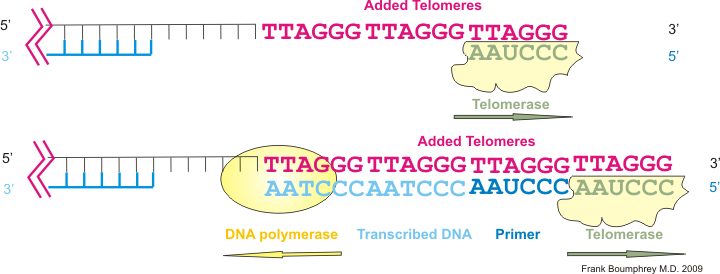
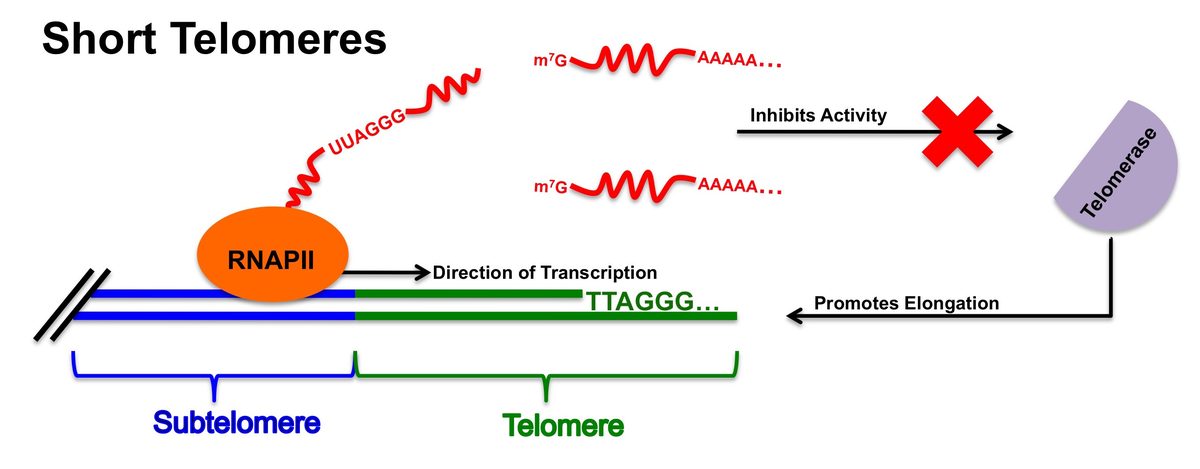
Bacteria fight viruses with an enzyme that writes repetitive DNA from an RNA template. The system, called DRT10, works much like telomerase, the enzyme that protects chromosome ends in humans and most other eukaryotes.

The finding, published in Nature on October 12, links bacterial antiviral immunity to eukaryotic chromosome maintenance. It also gives researchers a new way to write telomeric DNA into human cells, with potential applications in aging research and cell therapy.

Why it matters

A bacterial enzyme that writes telomeric DNA could become a tool for rebuilding chromosome ends in human cells, with uses in aging and cell therapy.

Questions about this story

Free account needed to ask — your question is kept and asked for you right after sign-up. Answers are public.

No questions yet — be the first to ask.

Key Indicators

2:1
RT:ncRNA stoichiometry
Two reverse transcriptase monomers bind one noncoding RNA in the DRT10 complex, revealed by cryo-EM.
10
DRT families identified
DRT10 is the tenth defense-associated reverse transcriptase system characterized; DRT2, DRT3, and DRT9 were studied earlier.

Voices

Curated perspectives — historical figures and your fellow readers.

Ever wondered what historical figures would say about today's headlines?

Sign up to generate historical perspectives on this story.

People Involved

Organizations Involved

Timeline

1 event Latest: Yesterday
  1. Nature publishes DRT10 study

    Latest Publication

    Nature publishes the DRT10 paper online, showing bacteria use a telomerase-like reverse transcriptase to fight viruses.

Scenarios

1

Sternberg lab shows DRT10 lengthens telomeres in human cells

Possible Resolves by End of 2027

Discussed by: Columbia University Irving Medical Center (the lab's own announcement)

The Sternberg lab has already used DRT10 to synthesize human telomeric DNA repeats in human cells. The next step is showing that chromosome lengthening prevents cell senescence. If successful, this would demonstrate a new tool for telomere engineering.

2

DRT10 enters preclinical development for cell therapy

Unlikely Resolves by End of 2028

Discussed by: Samuel Sternberg (in the Columbia University announcement)

Sternberg expressed interest in whether maintaining telomeres could help therapeutic T cells remain active longer in CAR-T cell therapy. This would require adapting DRT10 for use in human T cells and demonstrating that it extends their functional lifespan.

3

Independent research confirms DRT-telomerase evolutionary link

Likely Resolves by End of 2027

Discussed by: The Nature paper's phylogenetic analyses

The paper places telomerase in a monophyletic clade with bacterial DRTs, suggesting a common evolutionary origin. Independent research groups could confirm or challenge this by analyzing additional reverse transcriptase sequences or testing functional similarities in other DRT systems.

Historical Context

3 moments from history that rhyme with this story — and how they unfolded.

June 2012

CRISPR-Cas9 (2012)

Jennifer Doudna and Emmanuelle Charpentier published the CRISPR-Cas9 gene editing paper in Science. The system was discovered as a bacterial antiviral defense mechanism that cuts invading viral DNA.

Then

CRISPR-Cas9 became the most widely used genome engineering tool within a few years.

Now

Doudna and Charpentier won the Nobel Prize in Chemistry in 2020. CRISPR-based therapies are now in clinical trials.

Why this matters now

DRT10 is also a bacterial antiviral system. Like CRISPR, it could become a genome engineering tool, but it writes DNA from an RNA template instead of cutting it.

December 1984

Telomerase discovery (1984)

Carol Greider and Elizabeth Blackburn discovered telomerase while studying chromosome ends in the single-celled organism Tetrahymena. The enzyme adds repetitive DNA to chromosome ends, preventing them from shortening with each cell division.

Then

The discovery opened a new field of chromosome biology and aging research.

Now

Greider, Blackburn, and Jack Szostak won the Nobel Prize in Physiology or Medicine in 2009. Telomere shortening is now linked to cellular aging and age-related disease.

Why this matters now

The DRT10 paper shows that telomerase likely evolved from bacterial antiviral reverse transcriptases, linking the two fields directly.

1970

Reverse transcriptase discovery (1970)

Howard Temin and David Baltimore independently discovered reverse transcriptase, an enzyme that copies RNA into DNA. The finding overturned the central dogma of molecular biology, which held that genetic information flows only from DNA to RNA to protein.

Then

Reverse transcriptase became a cornerstone of molecular biology and enabled the development of retroviral diagnostics and treatments.

Now

Temin, Baltimore, and Renato Dulbecco won the Nobel Prize in Physiology or Medicine in 1975. Reverse transcriptases are now used in tools like RT-PCR and in gene editing.

Why this matters now

DRT10 is a reverse transcriptase with a new function: writing repetitive DNA for antiviral defense. The discovery expands the known capabilities of this enzyme class.

Sources

(8)