

Pull to refresh
Logo
Scientists find cells that survive their own death program to rebuild tissue

Scientists find cells that survive their own death program to rebuild tissue

New Capabilities

Weizmann Institute study suggests the survival trait, inherited by descendants, may explain post-radiation cancer recurrence

Today: DARE cells identified in fruit fly study

Overview

Updated 2 hours ago

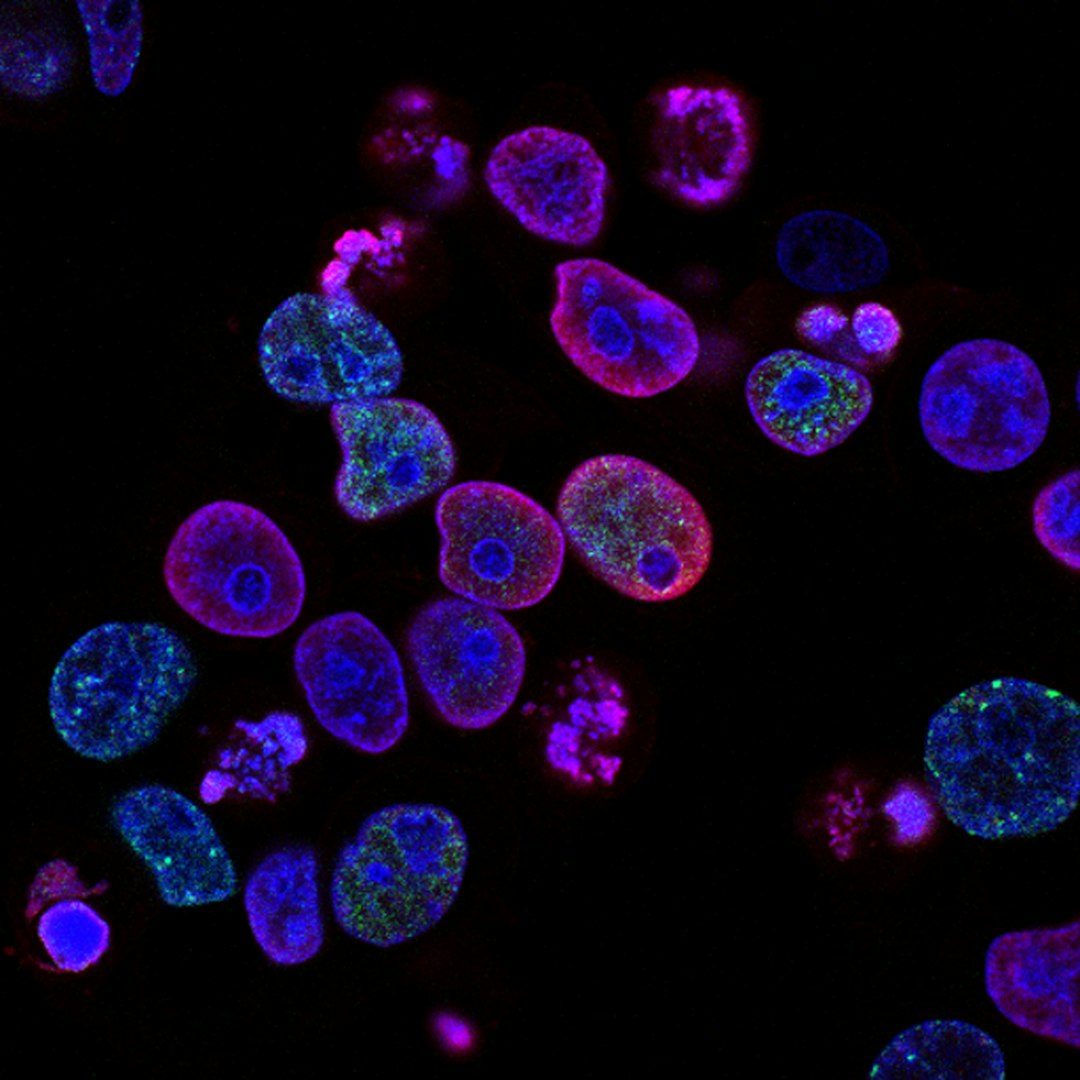
Cells in fruit fly larvae can start their own death program, stop partway through it, and survive to rebuild damaged tissue. Researchers at the Weizmann Institute of Science named these cells DARE cells and found they replenished nearly half of the damaged tissue within 48 hours.

The survival trait passes to descendants, who became seven times more resistant to cell death. That could speed healing of injured tissue. It may also explain why cancers that survive radiation often return in a more aggressive, treatment-resistant form.

Why it matters

If the same mechanism operates in humans, it could speed wound healing — and explain why some cancers return more resistant to radiation.

Questions about this story

Free account needed to ask — your question is kept and asked for you right after sign-up. Answers are public.

No questions yet — be the first to ask.

Key Indicators

~50%
Tissue replenished by DARE cells in 48 hours
DARE cells multiplied, repaired damaged epithelial tissue, and provided nearly half of its regeneration within two days.
7x
Death resistance of DARE cell descendants
Descendants of DARE cells were seven times more resistant to cell death than cells in the original tissue.
50%
Fewer cells died after second radiation dose
When the same tissue was irradiated a second time, cell death in the first hours was half that of the first exposure.

Voices

Curated perspectives — historical figures and your fellow readers.

Ever wondered what historical figures would say about today's headlines?

Sign up to generate historical perspectives on this story.

People Involved

Organizations Involved

Timeline

1 event Latest: Today
  1. DARE cells identified in fruit fly study

    Today Scientific publication

    Study in Nature Communications reports cells that activate the death program but survive to rebuild tissue.

Scenarios

1

DARE-like cells found in human tumors

Possible Resolves by Q2 2028

Discussed by: Weizmann Institute researchers

The team says fruit fly models have repeatedly translated to human biology. If DARE-like cells exist in human tumors, they could explain why radiation-resistant recurrences are more aggressive. Cancer researchers would search for cells with stalled initiator-caspase activation in tumor samples before and after radiation.

2

Regeneration therapy targeting survival pathway enters trials

Unlikely Resolves by End of 2028

Discussed by: Eli Arama and study team

The survival mechanism could be harnessed to accelerate healing of healthy tissue after injury. If researchers can activate the molecular motor that stalls the death program in human epithelial cells, it might speed regeneration. This would first require mammalian validation, then clinical trials.

3

Survival mechanism fails to translate to mammals

Possible Resolves by End of 2027

Discussed by: Study authors' caution about Drosophila-only findings

The researchers note the experiments were in fruit flies. If human or mouse cells lack the same molecular-motor tethering, the mechanism may not operate in humans. That would limit its relevance to both regeneration and cancer treatment.

Historical Context

3 moments from history that rhyme with this story — and how they unfolded.

1970s-2002

Apoptosis discovery (Nobel Prize, 2002)

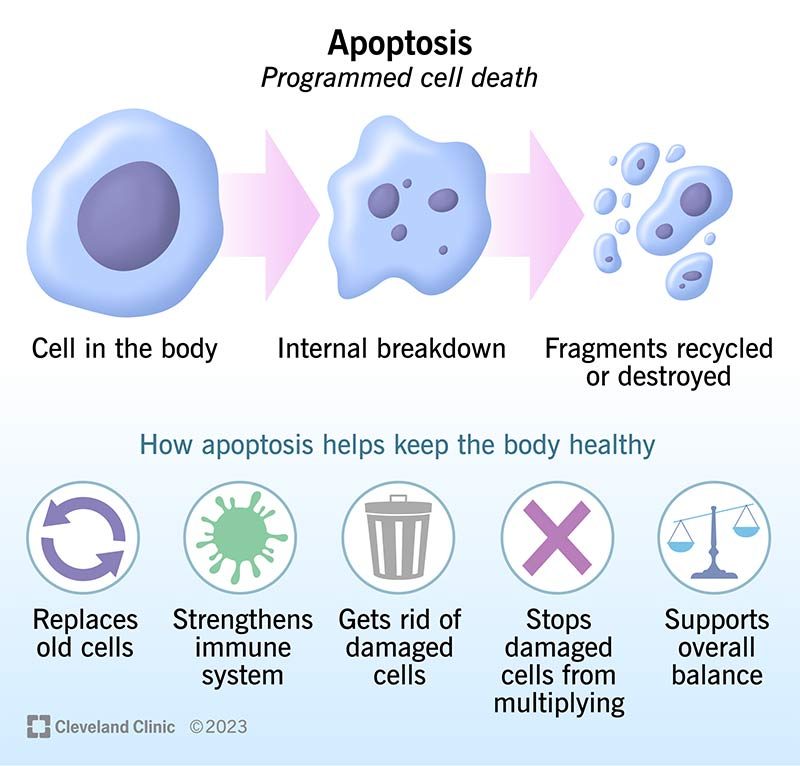
Sydney Brenner, H. Robert Horvitz, and John Sulston mapped the cell death machinery in roundworms, showing cells carry a built-in suicide program. They received the 2002 Nobel Prize in Physiology or Medicine for the work.

Then

Cell death became a primary target for cancer therapy; many chemotherapy drugs work by triggering apoptosis.

Now

The discovery established that cells actively kill themselves, reshaping developmental biology and oncology.

Why this matters now

The new study shows this suicide program can stall partway, letting cells survive and rebuild tissue — a finding the Nobel-era model did not predict.

20th century

Compensatory proliferation experiments (Drosophila)

Classic radiation experiments in fruit fly larvae revealed that dying cells send signals to neighboring survivors, prompting them to divide and replace lost tissue. The process became known as compensatory proliferation.

Then

Established that cell death is not just removal; dying cells actively drive regeneration.

Now

Became a foundation for modern regeneration biology and cancer research.

Why this matters now

The new study recreated these classic experiments with modern genetic tools, identifying the specific cell populations and the molecular brake that makes survival possible.

Clinical observation, ongoing

Tumor recurrence after radiotherapy

Oncologists have long observed that tumors surviving initial radiation or chemotherapy often return more aggressive and harder to treat. The pattern is a major problem in clinical oncology.

Then

Recurrence drives research into why surviving cancer cells become resistant.

Now

Understanding minimal residual disease is a central goal in cancer biology.

Why this matters now

DARE cell descendants' inherited death resistance — seven times higher — offers a molecular model for this clinical pattern.

Sources

(6)