


Pull to refresh
Logo
Construction begins on Bangladesh's first foreign-built container terminal

Construction begins on Bangladesh's first foreign-built container terminal

Built World

APM Terminals breaks ground on the $550 million Laldia project at Chattogram, with operations targeted for 2030

Yesterday: Groundbreaking at Laldia Char

Overview

Updated 2 hours ago

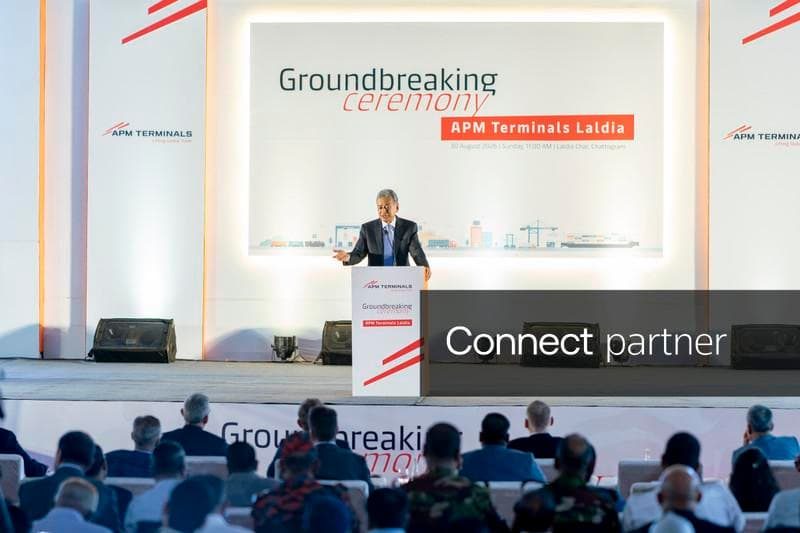
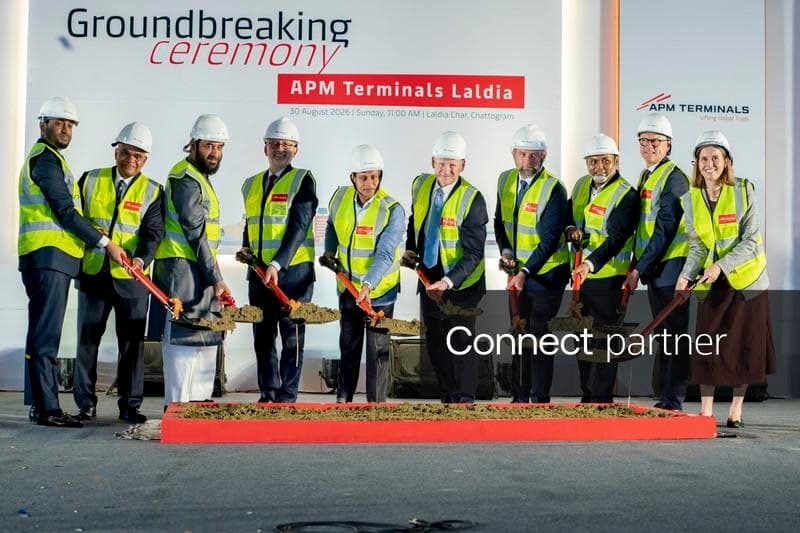
Bangladesh's main seaport has followed the same playbook for decades: the state builds terminals, then hands operations to private firms. On August 30, Danish port operator APM Terminals broke ground on Laldia, the country's first terminal built from vacant land by a foreign-led consortium.

The $550 million project adds 800,000 TEUs of annual capacity, nearly a 23% jump. It will handle ships of up to 6,000 TEUs, more than double the largest vessels Chattogram receives today. The concession runs 30 years, extendable to 45, and port-protection groups have called for the deal to be reviewed.

Why it matters

This terminal more than doubles the ship size at Bangladesh's main port, the gateway for its garment exports, and adds 23% capacity.

Questions about this story

Free account needed to ask — your question is kept and asked for you right after sign-up. Answers are public.

No questions yet — be the first to ask.

Key Indicators

$550 million
Investment in the Laldia terminal
APM Terminals and its local partner finance, build, and operate the terminal under a 30-year concession.
800,000 TEUs
Annual container capacity added
About a 23% increase over Chattogram port's current annual handling capacity.
6,000 TEUs
Maximum vessel size the terminal can handle
More than double the roughly 2,700-TEU ships the port receives today.
2030
Target opening year
Commercial operations are targeted for 2030 after about three years of construction.
30 + 15 years
Concession length
APM Terminals operates the terminal for 30 years after construction, extendable by 15 more.

Voices

Curated perspectives — historical figures and your fellow readers.

Ever wondered what historical figures would say about today's headlines?

Sign up to generate historical perspectives on this story.

Play

Exploring all sides of a story is often best achieved with Play.

Most of these play right now — no account needed. Sign up to save scores, keep a streak, and unlock Debate and Predict. Log in Sign Up
Predict 3 ways this could play out. Back the one you believe — contrarian picks score more when a scenario has a resolution date. Log in to play

People Involved

Organizations Involved

Timeline

June 2021 2030 (t

5 events Latest: Yesterday
Tap a bar to jump to that date
  1. Terminal commissioning

    Upcoming Target

    Laldia is scheduled to begin commercial operations, adding 800,000 TEUs of capacity to Chattogram port.

  2. Groundbreaking at Laldia Char

    Latest Construction

    An 11am ceremony marks the official start of construction on Bangladesh's first greenfield container terminal.

  3. Land handed over to APM Terminals

    Milestone

    The port authority transfers the Laldia Char site to APM Terminals, clearing the way for construction.

  4. Concession signed with APM Terminals

    Deal

    The Chattogram Port Authority signs a 30-year concession with APM Terminals during the interim government's tenure.

  5. Bangladesh and Denmark sign G2G agreement

    Agreement

    The two governments agree to develop a container terminal at Laldia, opening the door for Danish port investment.

Historical Context

3 moments from history that rhyme with this story — and how they unfolded.

November 1999

South Asia Gateway Terminals, Colombo (1999)

Sri Lanka's first privately built container terminal opened at Colombo port, constructed by a consortium including P&O Ports and John Keells Holdings under a 30-year build-operate-transfer deal.

Then

SAGT added modern capacity that helped Colombo defend its position as South Asia's main transshipment hub.

Now

Private terminals are now standard at Colombo, and the model spread across the region.

Why this matters now

Laldia is Bangladesh's first use of this model — foreign-built terminal infrastructure on state-owned land, operated for a fixed term, then transferred back.

July 2017

Hambantota port lease (2017)

Sri Lanka built Hambantota port on its south coast with Chinese loans it could not repay. In July 2017 it sold 85% of the port to China Merchants Port Holdings for $1.12 billion under a 99-year lease.

Then

Sri Lanka reduced its debt burden and kept the port operating under Chinese management.

Now

The lease became the most cited example of sovereignty concerns over foreign port investment in South Asia and remains a domestic political issue in Sri Lanka.

Why this matters now

Laldia's protesters warn of a similar loss of control over strategic port assets. The key difference: Bangladesh keeps the land, and the concession is finite — 30 years, extendable to 45.

February 2018

Djibouti seizes Doraleh terminal (2018)

Djibouti's government unilaterally ended DP World's 30-year concession at the Doraleh Container Terminal in February 2018, after years of disputes over fees and governance, and took over operations.

Then

DP World retained a minority stake and pursued international arbitration; the terminal operates under state control.

Now

The seizure became a benchmark case on sovereign risk for foreign terminal operators.

Why this matters now

APM Terminals' 30-to-45-year horizon in Bangladesh depends on the host government honoring the deal — Doraleh shows that is not guaranteed.

Sources

(10)