


Pull to refresh
Logo
Saronic breaks ground on Port Alpha, a shipyard built to revive U.S. shipbuilding

Saronic breaks ground on Port Alpha, a shipyard built to revive U.S. shipbuilding

Built World

Vance and Abbott join the groundbreaking as a startup aims to double U.S. commercial shipbuilding capacity.

Yesterday: Port Alpha groundbreaking

Overview

Updated 1 hour ago

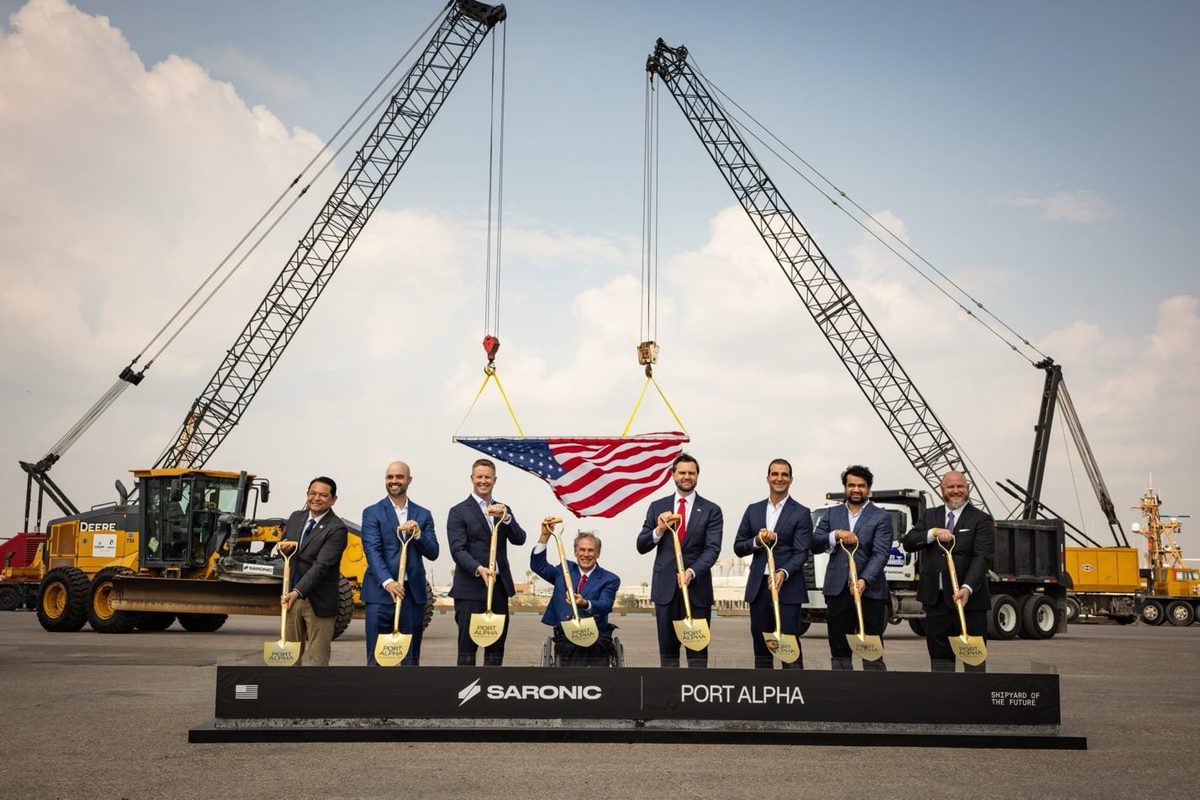
America built its last major federal shipyard during World War II. On September 30, 2026, Saronic, an Austin maker of autonomous vessels, broke ground on Port Alpha, a shipyard designed to end that drought.

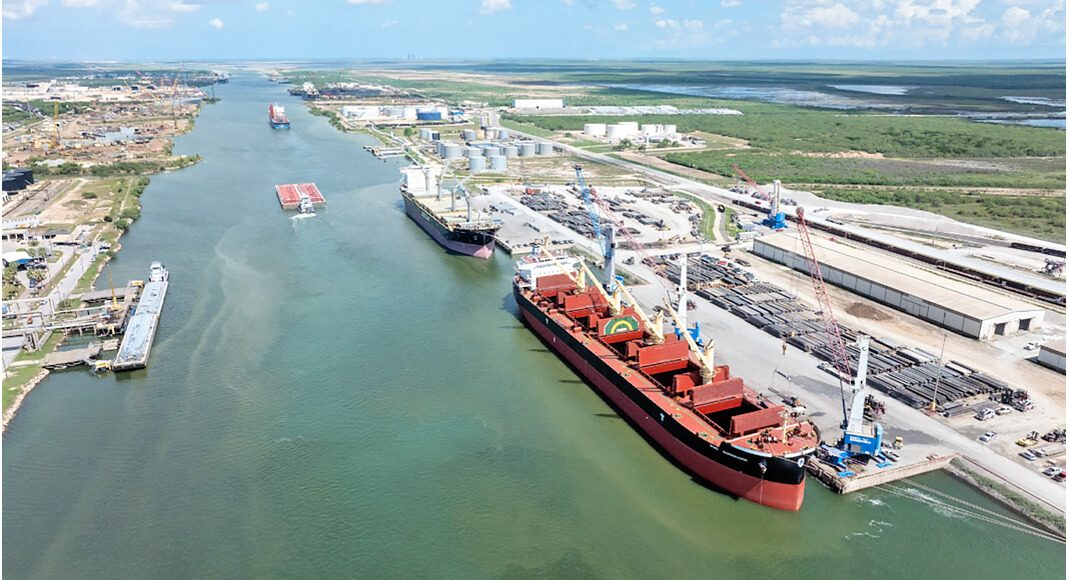
The more than $3 billion yard at the Port of Brownsville adds 150,000 gross tons of annual shipbuilding capacity at opening, more than double the current U.S. commercial total, with room to expand toward 4,400 acres and 2 million gross tons. Its early customers include the U.S. Navy, which in September gave Saronic a contract to build Landing Craft Utility vessels.

Why it matters

If Port Alpha hits its planned scale, it doubles U.S. commercial shipbuilding capacity and hands the Navy domestically built landing craft.

Questions about this story

Free account needed to ask — your question is kept and asked for you right after sign-up. Answers are public.

No questions yet — be the first to ask.

Key Indicators

$3B+
Private capital commitment
Saronic's investment in the Port Alpha shipyard at the Port of Brownsville.
10,000
Direct jobs expected
Over the next decade, from welding and machining to robotics and naval architecture.
$264.5B
Projected Texas economic impact
Saronic's estimate for Port Alpha's eventual full build-out.
150,000 gross tons
Annual capacity at opening
More than double current U.S. commercial shipbuilding capacity.
20
Marauder vessels per year by January 2027
Production rate Saronic says it will reach three months after groundbreaking.

Voices

Curated perspectives — historical figures and your fellow readers.

Ever wondered what historical figures would say about today's headlines?

Sign up to generate historical perspectives on this story.

People Involved

Organizations Involved

Timeline

January 2022 December 2028

6 events Latest: Yesterday
Tap a bar to jump to that date
  1. First LCU deliveries due

    Upcoming Milestone

    Navy expects first Landing Craft Utility deliveries; first phase becomes operational.

  2. Marauder production target

    Upcoming Production target

    Saronic plans capacity to build 20 Marauder autonomous vessels per year.

  3. Port Alpha groundbreaking

    Latest Milestone

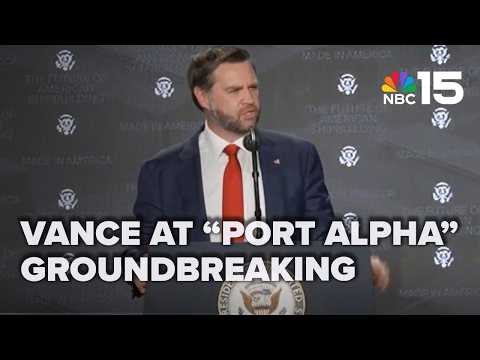
    Vance, Abbott join CEO Dino Mavrookas to break ground on the $3 billion shipyard.

  4. Navy awards LCU contract

    Contract

    Navy names Saronic one of three builders of Landing Craft Utility vessels.

  5. Brownsville site selected

    Decision

    Abbott's office announces Saronic chose the Port of Brownsville for Port Alpha.

  6. Saronic founded

    Company founding

    Austin startup formed to build autonomous surface vessels for military and commercial use.

Scenarios

1

Port Alpha delivers first Navy LCUs on schedule

Likely Resolves by End of 2028

Discussed by: Saronic leadership; Breaking Defense

The first phase comes online in 2028 with 150,000 gross tons of annual capacity, two to four build positions, and 75,000 tonnes of steel processing per year. Navy LCU deliveries begin late 2028 as announced, validating the private-capital model for U.S. shipbuilding.

2

Saronic exercises expansion toward 2 million gross tons

Possible Resolves by End of 2031

Discussed by: Saronic; Texas economic development officials

With Navy demand holding, Saronic moves beyond the 835-acre initial phase toward the 4,400-acre option, adding the ability to build vessels over 1,200 feet. Gross-ton capability passes 2 million, which would make Port Alpha the largest shipyard in America.

3

Workforce shortage stalls Port Alpha's ramp

Possible Resolves by End of 2029

Discussed by: Breaking Defense; industry labor analysts

The national shortfall of roughly 250,000 skilled shipbuilding workers tightens hiring in Brownsville, pushing back the operational date and first Navy deliveries past 2029. Saronic's training pipelines with Cameron County and regional schools grow but cannot fill 10,000 positions fast enough.

Historical Context

2 moments from history that rhyme with this story — and how they unfolded.

1941–1945

Liberty ship program (1941–1945)

Facing a U-boat threat to Atlantic supply lines, the U.S. launched the Emergency Shipbuilding Program. Henry Kaiser's yards pioneered welding and prefabrication, cutting construction from months to weeks and producing nearly 2,700 Liberty ships.

Then

America outbuilt its rivals, and the merchant fleet swelled to support the war effort.

Now

Those yards sustained U.S. maritime dominance for decades, then closed and atrophied after the war.

Why this matters now

Mavrookas cites that World War II-era output, thousands of vessels a year, as the benchmark Port Alpha aims to recapture with modular, high-throughput construction.

2000s–2020s

China's state-subsidized shipbuilding rise (2000s–2020s)

Starting in the 2000s, Beijing subsidized shipbuilding with cheap financing, raw materials, and labor. By the 2010s it overtook South Korea as the world's largest builder; Mavrookas puts its current global share near 60%, with some reports as high as 80%.

Then

Chinese yards captured commercial and defense-adjacent markets while U.S. capacity shrank to under 1% of global output.

Now

The U.S. Navy now depends in part on foreign-built or foreign-repaired vessels, and domestic yards face years-long backlogs.

Why this matters now

Port Alpha is positioned as the domestic alternative to the capacity gap that China's growth exposed.

Sources

(10)