
Pull to refresh
Logo
China's largest offshore LNG hub adds two new terminals

China's largest offshore LNG hub adds two new terminals

Built World

Sunshine Island at Yangkou Port edges toward 26 million tonnes of annual capacity, about 10% of China's LNG imports

Today: Terminal completion announced

Overview

Updated 1 hour ago

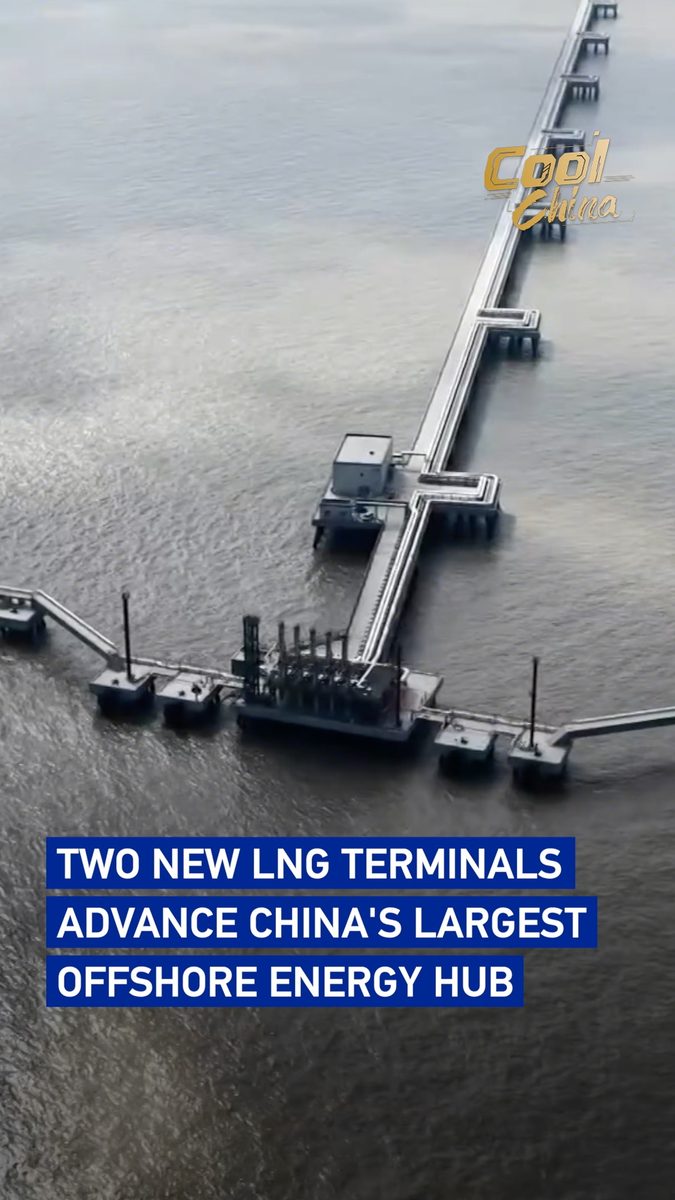
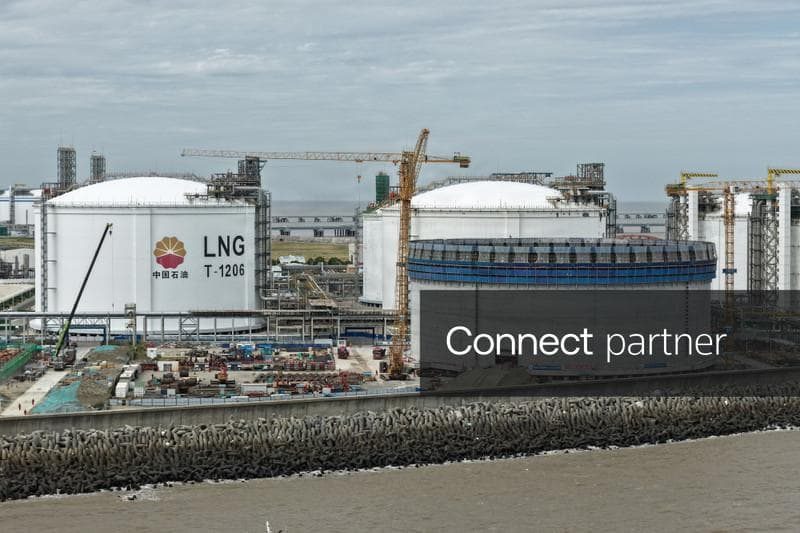
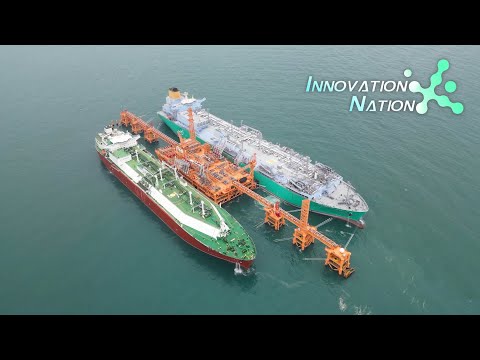
China's largest offshore energy hub just gained two new LNG terminals. The 150,000-tonne-class facilities at Yangkou Port in Jiangsu completed their main structures on October 15, each with a 410-meter butterfly-shaped berth.

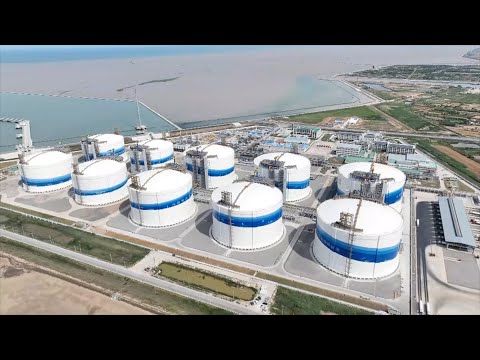
One is China's first shared LNG terminal, supplying two receiving stations from a single berth. When all four planned stations on Sunshine Island are running, the island will accept about 26 million tonnes of LNG a year, roughly 10% of China's total. It already delivers nearly 30% of Jiangsu's natural gas.

Why it matters

The hub will process about 10% of China's LNG imports, anchoring the Yangtze River Delta's shift from coal to natural gas.

Questions about this story

Free account needed to ask — your question is kept and asked for you right after sign-up. Answers are public.

No questions yet — be the first to ask.

Key Indicators

26M tonnes
Planned annual LNG receiving capacity
About 10% of China's total once all four stations run
900+
LNG vessel berthings
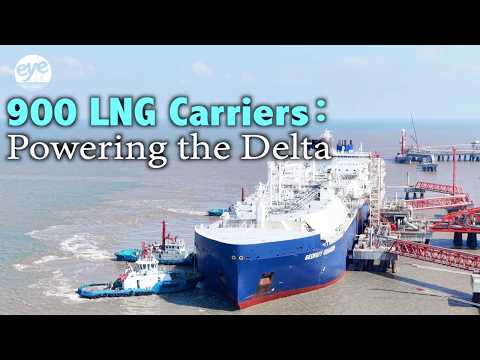
At Sunshine Island since 2011; milestone reached October 9, 2026
75M tonnes
LNG received since 2011
Delivered from 29 countries and regions
100B m³
Natural gas delivered
Cumulative pipeline deliveries since 2011
30%
Share of Jiangsu's gas supply
Share of the province's natural gas flowing through the island
2
LNG terminals completed
Both handed over main structures in October 2026

Voices

Curated perspectives — historical figures and your fellow readers.

Ever wondered what historical figures would say about today's headlines?

Sign up to generate historical perspectives on this story.

People Involved

Organizations Involved

Timeline

2006 October 2026

11 events Latest: Today Showing 8 of 11
Tap a bar to jump to that date
  1. Terminal completion announced

    Today Announcement

    News breaks that the two terminals advance China's largest offshore LNG hub.

  2. Two LNG terminals hand over main structures

    Construction

    Guoxin and GCL Huidong terminals complete main structures with 410-meter berths.

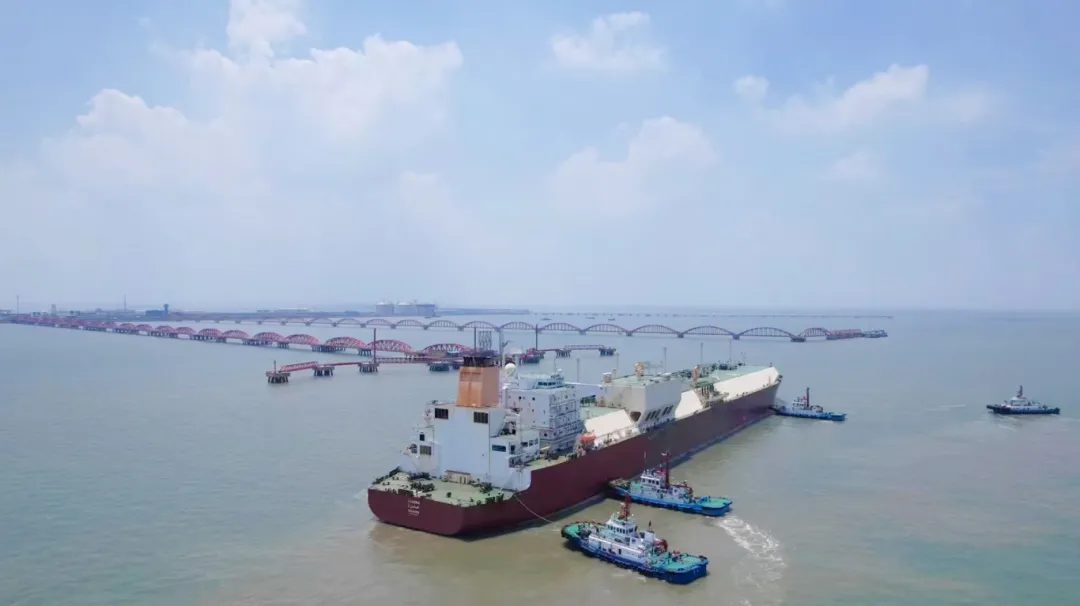
  3. 900th LNG vessel berths

    Milestone

    Georgiy Ushakov arrives; 900th berthing, reached 394 days after the 800th.

  4. PetroChina Phase III jetty completed

    Construction

    2,800-meter jetty bridge finished for the terminal's third phase, planned to handle 6.5 million tonnes annually.

  5. Gas deliveries pass 100 billion cubic meters

    Milestone

    PetroChina Jiangsu terminal becomes Jiangsu's first '100-billion' LNG station.

  6. 800th LNG vessel berthing

    Milestone

    Yangkou Port records its 800th LNG vessel arrival at Sunshine Island.

  7. China Resources Gas breaks ground

    Construction

    Groundbreaking on an 8-billion-yuan LNG terminal, the island's fourth station project.

  8. Two new receiving stations recruited

    Investment

    Rudong attracts Guoxin and GCL Huidong LNG receiving station projects.

  9. Island written into national plan

    Policy

    Sunshine Island listed in the Yangtze River Delta regional integration plan.

  10. First LNG vessel arrives

    Milestone

    PetroChina Jiangsu terminal begins operations with its first LNG carrier.

  11. Sunshine Island construction begins

    Construction

    CCCC Second Harbor Engineering starts building Sunshine Island at Yangkou Port.

Scenarios

1

Sunshine Island hits full capacity with four stations by 2029

Likely Resolves by Jan 15, 2029

Discussed by: CGTN and China Daily construction reporting

PetroChina's operating phases plus its Phase IV, Guoxin, GCL Huidong, and China Resources terminals would put the island at its 26-million-tonne target. Two terminals just wrapped up, PetroChina's Phase III jetty finished in June 2026, and Guoxin's station was expected to start receiving vessels in the first half of 2026. Most pieces are in place; the open question is commissioning speed.

2

Offshore conditions delay the island's full buildout past 2030

Possible Resolves by Jan 15, 2031

Discussed by: Construction reports on Yangkou's harsh marine environment

Yangkou's waters have tide swings near 8 meters, constant swell even without wind, and typhoons that leave a working window of only a few months each year. Effective working days average under 12 per month. If China Resources' terminal or PetroChina Phase IV slip, full capacity slides past 2030.

3

Cold-energy industries push the island beyond LNG imports

Possible Resolves by Q2 2029

Discussed by: Rudong county government development plans

Rudong is building a 'thousand-billion-yuan' clean-energy industry around the island, using LNG cold energy for data centers, hydrogen, and air separation. China Telecom and VNET have already signed on for green computing projects. Fast demand growth could prompt a fifth station or capacity expansion before the planned four finish.

Historical Context

2 moments from history that rhyme with this story — and how they unfolded.

March 2011 – 2014

Japan's LNG buildout after Fukushima (2011)

After the March 2011 Fukushima nuclear disaster, Japan shut down nearly all of its nuclear reactors, which had supplied roughly 30% of its electricity. Japan, already the world's largest LNG importer, ramped up receiving capacity and signed new supply deals to keep the grid running. LNG imports rose by double digits within two years.

Then

Japan raced to secure cargoes and expand terminals, keeping the lights on through imported gas.

Now

LNG's share of Japan's power mix roughly doubled, and the episode became the template for energy-security-driven gas infrastructure buildout.

Why this matters now

China's Sunshine Island follows the same logic: lock in LNG import capacity ahead of demand, driven by energy security and a shift away from coal.

2002–2017

Shanghai's Yangshan offshore port (2002–2017)

Shanghai built a massive container port on islands roughly 30 km offshore in Hangzhou Bay, connected to the mainland by the 32-km Donghai Bridge. Phase one opened in 2005, and by the mid-2010s the port made Shanghai the world's busiest container hub.

Then

The port relieved Shanghai's crowded river docks and gave mega-ships deep-water berths.

Now

It became the model for China's offshore logistics hubs, proving that building on open-water islands works at scale.

Why this matters now

Sunshine Island uses the same playbook: an offshore island in the Yangtze Delta, linked by 5,056 meters of bridges, built for strategic energy rather than containers.

Sources

(9)