Anchor

First surgery using FDA-authorized Apple Vision Pro app performed at Duke Health
New CapabilitiesStryker's SportSuite Vision, cleared by the FDA in July, displayed arthroscopic video and CT imaging inside the headset during a hip arthroscopy.
Yesterday: First surgery with SportSuite Vision completedNew here? Follow stories to track developments over time. Create a free account to get updates when stories you care about change.
Overview
Updated YesterdayAn orthopedic surgeon at Duke Health performed a hip arthroscopy (keyhole surgery on the hip joint) while wearing Apple's Vision Pro headset. Stryker's SportSuite Vision software showed him the arthroscope's live video, computed tomography (CT) scans, and surgical analysis tools floating beside the patient.
The Food and Drug Administration (FDA) authorized the software on July 17, the first surgical app cleared for use with the Vision Pro during an operation. The decision created a new device category for augmented reality display systems in surgery, giving competitors a defined path to market.
Why it matters
Surgeons can now view live surgical video inside a headset, and the FDA created a regulatory pathway for augmented reality in operating rooms.
Questions about this story
Free account needed to ask — your question is kept and asked for you right after sign-up. Answers are public.
No questions yet — be the first to ask.
Key Indicators
1st
FDA-authorized surgical app for Apple Vision Pro
SportSuite Vision is the first application authorized for use during surgery with the headset.
318 days
FDA review time for the De Novo request
Stryker Endoscopy filed on September 2, 2025; the FDA authorized the device on July 17, 2026.
1
Completed procedures using SportSuite Vision
A hip arthroscopy at Duke Health, announced on September 1, 2026.
Related Media
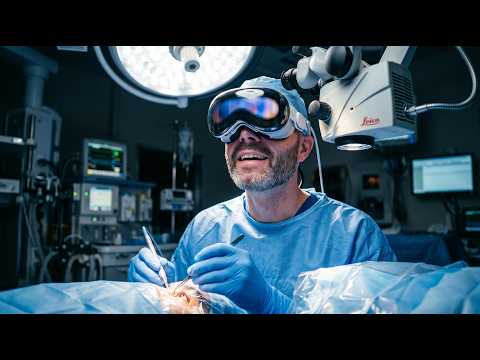
9.8K views
33:12
Apple Vision Pro is Now Being Used in Surgery (Exclusive ...
Spatial Insider ᯅ
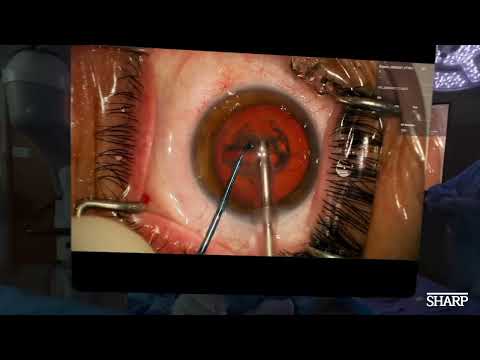
57 views
2:26
Apple Vision Pro for Complete Cataract Surgery
Dove Medical Press
547 views
2:21
First in NC: How Duke's Innovation Helped Yvette Keep Her ...
Duke Health
Videos from YouTube.
Voices
Curated perspectives — historical figures and your fellow readers.
Play
Exploring all sides of a story is often best achieved with Play.
Most of these play right now — no account needed. Sign up to save scores, keep a streak, and unlock Debate and Predict.
Log in
Sign Up
Higher or Lower
A number from this story, against one from elsewhere in the news — guess which is bigger, then keep the chain going. 5 rounds, 3 strikes; a miss costs a strike and resets your streak.
Example
Anchor
EU tariff revenue
$52B
Big for this kind of number
Mystery
Pentagon AI contract
?
Round 1
Streak: 0
Mystery
?
Keyboard: ↓/L lower · ↑/H higher
0 pts
Best streak: 0 · Rounds: 0
0 points — sign up to put that on the leaderboard.
Now try on this story
Connections
Sixteen names from the news. Find the four hidden groups of four. Four mistakes max.
Loading today's puzzle…
0/4 groups
Mistakes
Sign up to keep a daily streak — a new puzzle lands every day.
Now try on this story
Exit debate?
Your progress in this debate will be lost.
How it works
- 1 Two AI personas square off on this story.
- 2 You predict who'll win each round — correct picks earn XP.
- 3 One crossfire question is yours to fire. Pick it carefully.
Couldn't generate a topic
Select Your Champions
Choose one persona for each side of the debate
DEBATE TOPIC
Choose personas with different perspectives for a more dynamic debate.
SIDE A (PRO)
Select debater for this side:
No debate personas available right now.
SIDE B (CON)
Select debater for this side:
No debate personas available right now.
VS
Get ready to make your prediction...
Round of
Claim
Evidence
Stakes
Crossfire Answer
Closing Statement
Claim
Evidence
Stakes
Crossfire Answer
Closing Statement
Your Crossfire Question
Generating arguments...
Who's Got This Round?
Make your prediction before the referee scores
The referee scores both sides on
Correct predictions earn +20 XP
· Press 1 or 2 to pick
Evidence
40%
Logic
30%
Detail
20%
Style
10%
Round Results
Your Pick
Not this time
(%)
Overall Score
/10
Your Pick
Not this time
(%)
Overall Score
/10
Set the Crossfire
Pick the question both personas must answer in the final round
Crafting crossfire questions...
Choosing a question earns +10 XP crossfire bonus
🏆
Total XP Earned
Cred Change
Predictions
Debate Oracle! You called every round!
Sharp Instincts! You know your debaters!
The Coin Flip Strategist! Perfectly balanced!
The Contrarian! Bold predictions!
Inverse Genius! Try betting the opposite next time!
XP Breakdown
Base completion
+20 XP
Rounds played ( rounds x 5 XP)
+ XP
Correct predictions ( correct x 20 XP)
+ XP
Crossfire bonus
+10 XP
Accuracy
%
Prediction History
Round
You picked:
✓
✗
Now try on this story
Keep debating to level up your credibility and unlock achievements
People Involved
CM
Chad Mather III, M.D., M.B.A.
Orthopedic surgeon at Duke Health who performed the first SportSuite Vision procedure
Practicing orthopedic surgeon at Duke Health
Matt Moreau
Vice president and general manager of Stryker's Sports Medicine business
Leads the division that developed SportSuite Vision
Organizations Involved
Stryker
Medical technology company
Developer of SportSuite Vision; first authorized procedure completed September 2026
Medical technology company that developed SportSuite Vision, the first surgical app authorized for Apple Vision Pro.
U.S. Food and Drug Administration
Federal regulatory agency
Granted De Novo authorization to SportSuite Vision on July 17, 2026
Federal agency that regulates medical devices and created the new device category for augmented reality displays used during surgery.
Duke Health / Duke Cancer Institute
Academic medical center
Site of the first SportSuite Vision procedure
Academic medical center in Durham, North Carolina, where the first SportSuite Vision procedure was performed.
Timeline
February 2024 September 2026
4 events
Latest: Yesterday
Tap a bar to jump to that date
-
First surgery with SportSuite Vision completed
Latest MilestoneChad Mather performs a hip arthroscopy at Duke Health using SportSuite Vision on Apple Vision Pro.
-
FDA authorizes SportSuite Vision
RegulatoryFDA grants De Novo authorization, creating a Class II category for augmented reality display systems used during surgery.
-
Stryker files for FDA authorization
RegulatoryStryker Endoscopy submits De Novo request DEN250040 for SportSuite Vision, seeking first-of-its-kind classification.
-
Apple Vision Pro launches
Product LaunchApple's $3,499 mixed-reality headset goes on sale in the United States, bringing spatial computing to consumers.
Historical Context
3 moments from history that rhyme with this story — and how they unfolded.
July 2000
da Vinci robot wins FDA clearance (2000)
Intuitive Surgical's da Vinci system received FDA clearance in July 2000 for general laparoscopic surgery, becoming the first robotic platform to reach broad use in American operating rooms. Intuitive spent the next decade building surgeon training programs and hospital sales infrastructure.
Then
Hospitals adopted the robot gradually, driven by patient demand and hospital marketing as much as by clinical evidence.
Now
Robotic surgery is now routine in urology and gynecology, and Intuitive still dominates the category.
Why this matters now
The clearance was the starting gun, not the finish line. SportSuite Vision's authorization is a similarly early step whose adoption pace is unknown.
2013-2015
Google Glass in the operating room (2013-2015)
Surgeons at several academic hospitals tested Google Glass to stream procedures, view scans, and consult colleagues hands-free. The consumer headset was never built for clinical use, and the experiments ended after Google stopped selling the first-generation device in 2015.
Then
The pilots showed demand for heads-up displays in surgery but exposed problems with battery life, privacy, and durability.
Now
The failures pushed later augmented reality efforts toward purpose-built medical software and formal regulatory review.
Why this matters now
SportSuite Vision takes the opposite route: a regulated, procedure-specific app running on a commercial headset, with the FDA category Google Glass never had.
September 2018
Apple Watch ECG clearance (2018)
The FDA cleared an electrocardiogram feature on Apple Watch Series 4 in September 2018, allowing the watch to detect atrial fibrillation. The clearance came through the De Novo pathway, the same route Stryker used for SportSuite Vision.
Then
Apple marketed the ECG as a medical feature on a consumer device; cardiologists debated how useful the readings would be.
Now
The clearance opened the door to more health features on consumer wearables and established De Novo as the route for novel device-software combinations.
Why this matters now
Like the watch ECG, SportSuite Vision puts consumer hardware into a regulated medical role, with questions about clinical benefit still open.
Sources
(6)Related Stories
FDA authorizes first standalone robotic blood-draw device
New Capabilities
Updated Aug 24
Premium lens technology closes the gap between cataract surgery and natural vision
New Capabilities
Updated May 30
Andromeda Surgical launches autonomous surgery platform for prostate procedures
New Capabilities
Updated Aug 10
FDA clears first wearable that monitors both glucose and ketones
New Capabilities
Updated 7 days ago
FDA begins charting a regulatory path for generative AI in patient care
Rule Changes
Updated May 30
The race to restore sight
New Capabilities
Updated May 19