



Pull to refresh
Logo
Poxvirus core's transcription machinery and export portal mapped

Poxvirus core's transcription machinery and export portal mapped

New Capabilities

Cryo-electron tomography shows paired RNA polymerases and a three-part portal inside intact vaccinia cores

Overview

Updated 26 minutes ago

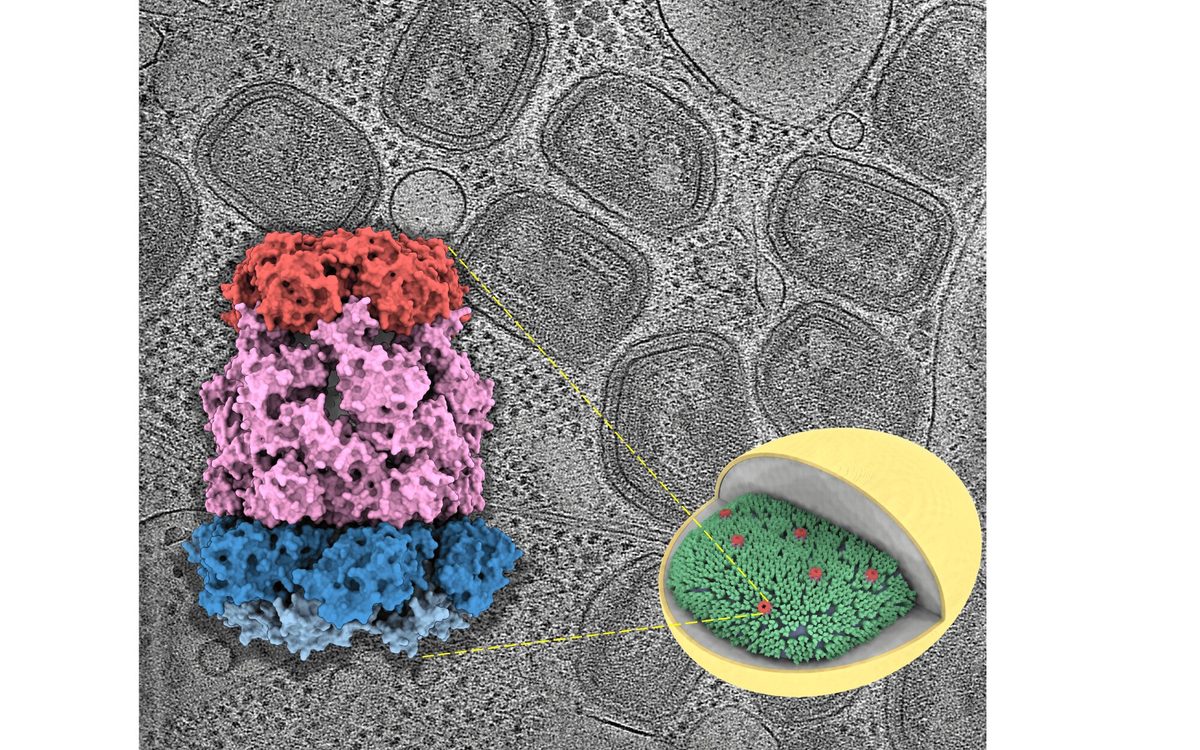
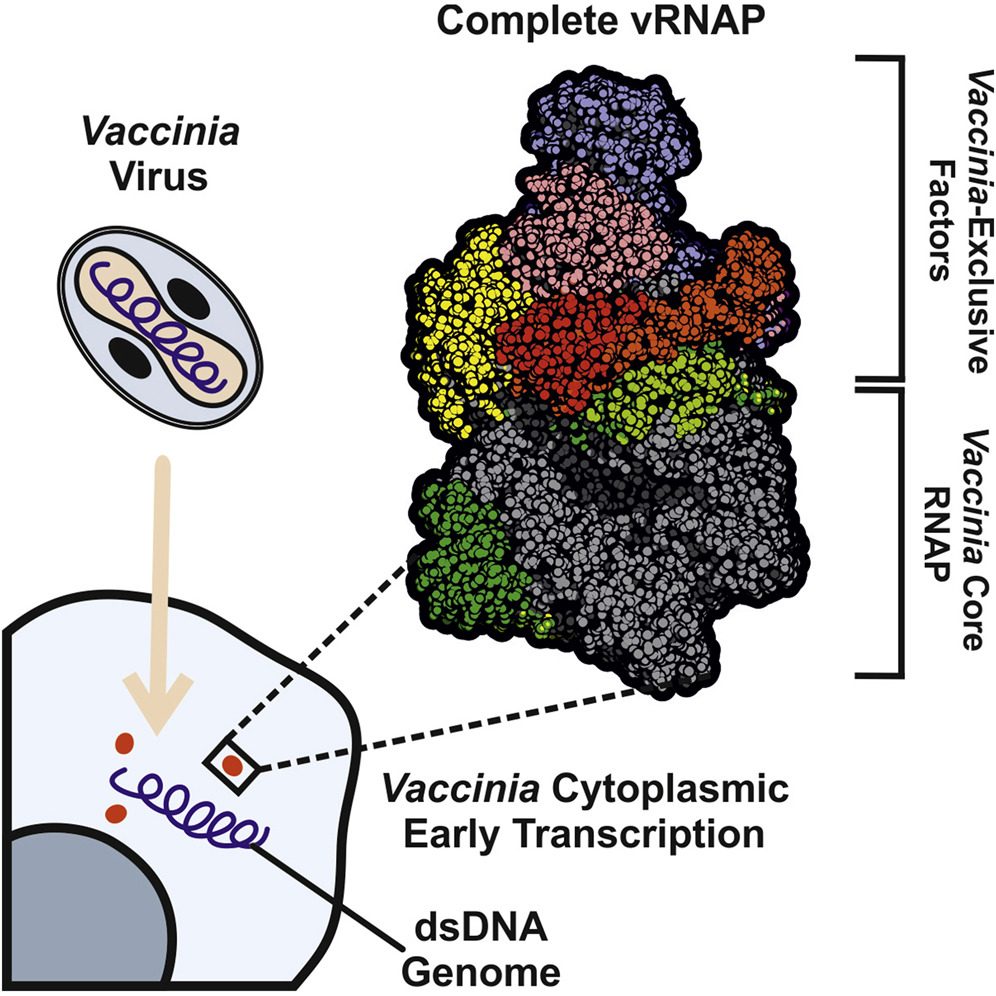
Poxviruses carry a working copy machine inside their protective core, ready to print viral instructions the moment they enter a cell. Until now, researchers had only seen that machine in isolation, not where it sits or how it is stored inside the intact virus.

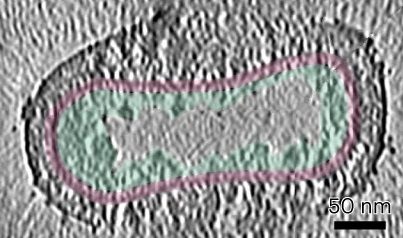
On November 23, 2026, a team at the Institute of Science and Technology Austria published 3D structures captured inside vaccinia cores. The images show the RNA polymerase packed as paired dimers tethered near the core wall, plus a portal complex built from three proteins that likely exports mRNA.

Why it matters

Disrupting these structures could give antivirals a target against smallpox, mpox, and related viruses before infection takes hold.

Questions about this story

Free account needed to ask — your question is kept and asked for you right after sign-up. Answers are public.

No questions yet — be the first to ask.

Key Indicators

1.8
Mass of the resting-state RNA polymerase dimer (megadaltons)
Two polymerase units bridged by the vaccinia early transcription factor.
3
Protein components of the portal complex
E8 forms the crown, E6 the central hub, and L3 the basal channel.
~20
Resolution of earlier mpox core images (angstroms)
A 2024 Tsinghua study could not identify the complex's proteins at this resolution.

Voices

Curated perspectives — historical figures and your fellow readers.

Sign up to generate historical perspectives on this story.

People Involved

Organizations Involved

Timeline

May 1980 November 2026

4 events Latest: Today
Tap a bar to jump to that date
  1. Nature publishes poxvirus transcription dimer and portal structures

    Today Research

    Cryo-electron tomography reveals paired RNA polymerases and a three-protein export portal inside vaccinia cores.

  2. Tsinghua team images mpox core complex at low resolution

    Research

    Cryo-electron tomography of inactivated mpox reveals a petal-shaped complex at roughly 20 angstroms.

  3. In vitro structure of poxvirus transcription initiation solved

    Research

    A Nature Structural & Molecular Biology paper describes the isolated polymerase in a pre-initiation complex.

  4. WHO declares smallpox eradicated

    Public health

    After a global vaccination campaign using vaccinia, the World Health Organization certifies smallpox eliminated.

Scenarios

1

Higher-resolution mpox core structure published

Likely Resolves by End of 2028

Discussed by: ISTA and Tsinghua researchers

The 2024 Tsinghua imaging of inactivated mpox reached only about 20 angstroms and could not identify the proteins. Because poxviruses share similar core architecture, applying the same cryo-ET methods that worked on vaccinia to mpox should yield a sharper structure.

2

Small molecule blocks the poxvirus portal complex

Possible Resolves by End of 2030

Discussed by: Crick Institute researchers

The Crick team said it is screening for drugs that block release of genetic material and that poxviruses are similar enough for one drug to work across the family. A confirmed inhibitor binding E8, E6, or L3 would turn the structure into a therapeutic lead.

3

Engineered poxvirus enters clinical testing for cancer

Possible Resolves by End of 2030

Discussed by: ISTA press materials

ISTA noted the findings could improve efforts to engineer poxviruses as biomedical tools, including cancer therapies. A clinical trial registration would signal that the structural insights moved from the lab into development.

Historical Context

3 moments from history that rhyme with this story — and how they unfolded.

May 1980

Smallpox eradication (1980)

A global vaccination campaign using vaccinia virus pushed smallpox cases to zero. The World Health Organization declared the disease eradicated, ending a pathogen that had killed roughly 30 percent of those infected.

Then

Routine smallpox vaccination ended in most countries.

Now

Vaccinia became the standard laboratory model for studying poxviruses, including mpox and lumpy skin disease.

Why this matters now

The vaccinia cores used in the new study are the same model system that made eradication possible.

2021

In vitro polymerase structure (2021)

A Nature Structural & Molecular Biology paper described the vaccinia RNA polymerase in a pre-initiation complex, using purified protein rather than intact virus. It showed the polymerase as a single unit with the early transcription factor spanning the cleft.

Then

The structure clarified how the polymerase recognizes promoter DNA in a test tube.

Now

It set the expectation that the packaged polymerase existed as a monomer.

Why this matters now

The 2026 study overturns that expectation by showing the polymerase is stored as a bridged dimer inside the core.

2022-2024

Mpox outbreaks (2022-2024)

Mpox clusters appeared in countries where the virus had not previously spread widely, including Brazil, Thailand, and Austria, with ongoing hotspots in several African countries. The outbreaks renewed interest in poxvirus antivirals and vaccines.

Then

Public health agencies increased surveillance and vaccination efforts.

Now

Poxvirus research funding and drug development interest rose.

Why this matters now

The structural findings are pitched as a starting point for antivirals that could work against mpox and other poxviruses.

Sources

(8)