
Pull to refresh
Logo
Argentina identifies dozens of victims killed in its 'Dirty War'

Argentina identifies dozens of victims killed in its 'Dirty War'

New Capabilities

Eight more names from a Córdoba mass grave bring the identified total to 38

Yesterday: Eight new victims identified from Córdoba grave

Overview

Updated 1 hour ago

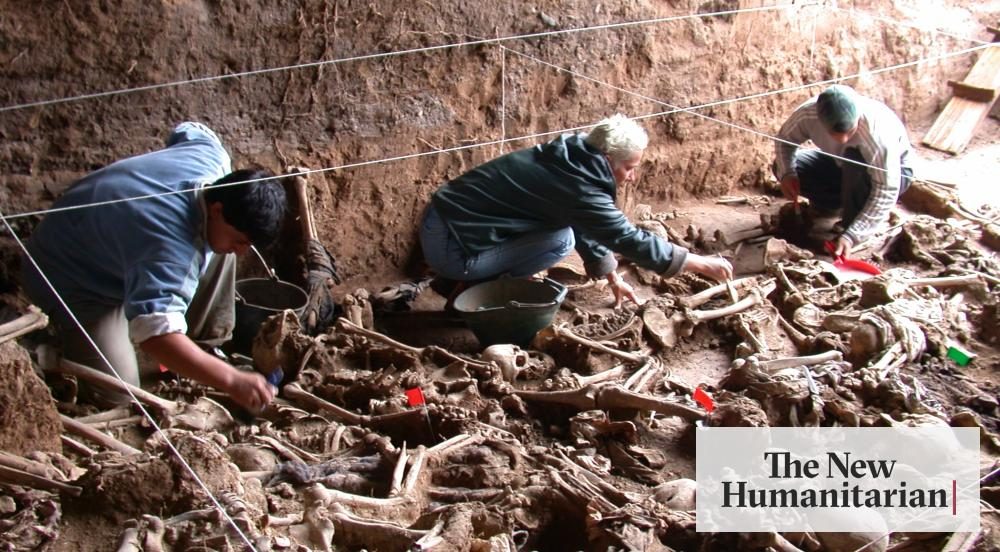
On October 23, a federal judge in Córdoba named eight more people killed under Argentina's 1976-83 military dictatorship. Forensic anthropologists matched their remains, recovered from a mass grave at the La Calera military garrison, to family DNA samples. The total identified at the site since September 2025 now stands at 38.

The identifications close a half-century gap. In 1979 the army moved bodies to the site to hide them from an inspection by the Organization of American States. DNA analysis of small bone fragments has defeated that plan, and the Argentine Forensic Anthropology Team says it will keep working until the task is complete.

Why it matters

Each new name gives a family a grave to mourn and adds evidence for prosecuting crimes committed a half-century ago.

Questions about this story

Free account needed to ask — your question is kept and asked for you right after sign-up. Answers are public.

No questions yet — be the first to ask.

Key Indicators

38
Identified victims since September 2025
Remains recovered from the La Calera mass grave site near Córdoba.
8
Newly identified in the October 2026 announcement
Four women and four men named by Federal Judge Miguel Hugo Vaca Narvaja.
2,200–2,500
Estimated people tortured and killed at La Perla
The clandestine detention centre operated from 1976 to 1978.
30,000
Disappeared under the dictatorship (human rights estimate)
President Javier Milei's government has said the true number is lower.

Voices

Curated perspectives — historical figures and your fellow readers.

Ever wondered what historical figures would say about today's headlines?

Sign up to generate historical perspectives on this story.

People Involved

Organizations Involved

Timeline

March 1976 October 2026

4 events Latest: Yesterday
Tap a bar to jump to that date
  1. Eight new victims identified from Córdoba grave

    Latest Statement

    Judge Vaca Narvaja announces four women and four men identified; total reaches 38 since September 2025.

  2. Army moves remains to Loma del Torito

    Historical

    Military relocates bodies from detention sites before the 1979 OAS inspection, seeking to hide evidence.

  3. Military seizes power in Argentina

    Historical

    Armed forces overthrow the government, launch the 'Dirty War' against opposition groups.

Scenarios

1

More victims named as excavations at La Calera continue

Likely Resolves by Mar 24, 2027

Discussed by: The EAAF, which says work will continue until complete; Judge Vaca Narvaja's public appeal for family blood samples

The mass grave still holds unidentified remains. The judge has launched a public campaign asking relatives of the disappeared to submit blood samples, and the EAAF keeps matching DNA. Each new family sample can produce another name, so further announcements are expected as the excavation continues.

2

La Perla identifications spur new crimes-against-humanity charges

Possible Resolves by End of 2027

Discussed by: Human rights organizations and federal prosecutors, following forensic findings that the centre was active before the 1976 coup

The identifications confirm details about how La Perla operated, including that it was repressive before the coup formally began the dictatorship. Human rights groups could push prosecutors to file new charges against former officials tied to the evidence now recovered. New names make new cases possible.

3

Milei government formally revises desaparecidos death toll

Unlikely Resolves by End of 2027

Discussed by: Buenos Aires Times reporting on the government's position; human rights organizations rejecting it

The government has said the 30,000 figure overstates the number of disappeared. If it publishes a formal, lower count in official records, it would set off a direct confrontation with human rights groups that the new identifications are validating. A formal revision would be a deliberate political act, not an administrative one.

Historical Context

3 moments from history that rhyme with this story — and how they unfolded.

1983-1984

Nunca Más report (1984)

After democracy returned, President Raúl Alfonsín created CONADEP, a truth commission that documented thousands of disappearances across Argentina and published its findings as the Nunca Más report.

Then

The report became the basis for the 1985 trial of the junta leaders, who were convicted of crimes against humanity.

Now

It established the pattern that systematically documenting the disappeared converts buried crimes into prosecutable evidence.

Why this matters now

Today's identifications play the same role: each recovered name adds to the record that holds perpetrators accountable.

1995-2010s

Srebrenica mass grave identifications (1995-2010s)

After the 1995 Srebrenica massacre, forensic teams exhumed mass graves and used DNA to identify thousands of victims over the following decade, including bodies moved to secondary graves to hide evidence.

Then

Families received remains and burials years after the massacre, and the identifications supported war crimes prosecutions.

Now

It proved that DNA analysis can defeat the tactic of relocating bodies to conceal crimes.

Why this matters now

The same mechanism is at work at Loma del Torito, where the Argentine military moved remains in 1979 and DNA identification has now found them.

April 1977

First Mothers of Plaza de Mayo march (1977)

Fourteen mothers of disappeared people began marching weekly in Buenos Aires' Plaza de Mayo, demanding the government reveal their children's fate. They refused to accept official silence.

Then

The marches drew international attention to the disappearances during the dictatorship.

Now

The movement kept the disappeared visible for half a century and anchored the demand for truth that drives the current identifications.

Why this matters now

The families who campaigned for decades are the ones receiving names and graves now.

Sources

(8)