
Pull to refresh
Logo
Police fire tear gas at Argentine university funding protest

Police fire tear gas at Argentine university funding protest

Rule Changes

Fifth march since 2023 draws tear gas as government ignores overridden, court-ordered funding law

Yesterday: Fifth university march turns violent in Buenos Aires

Overview

Updated 1 hour ago

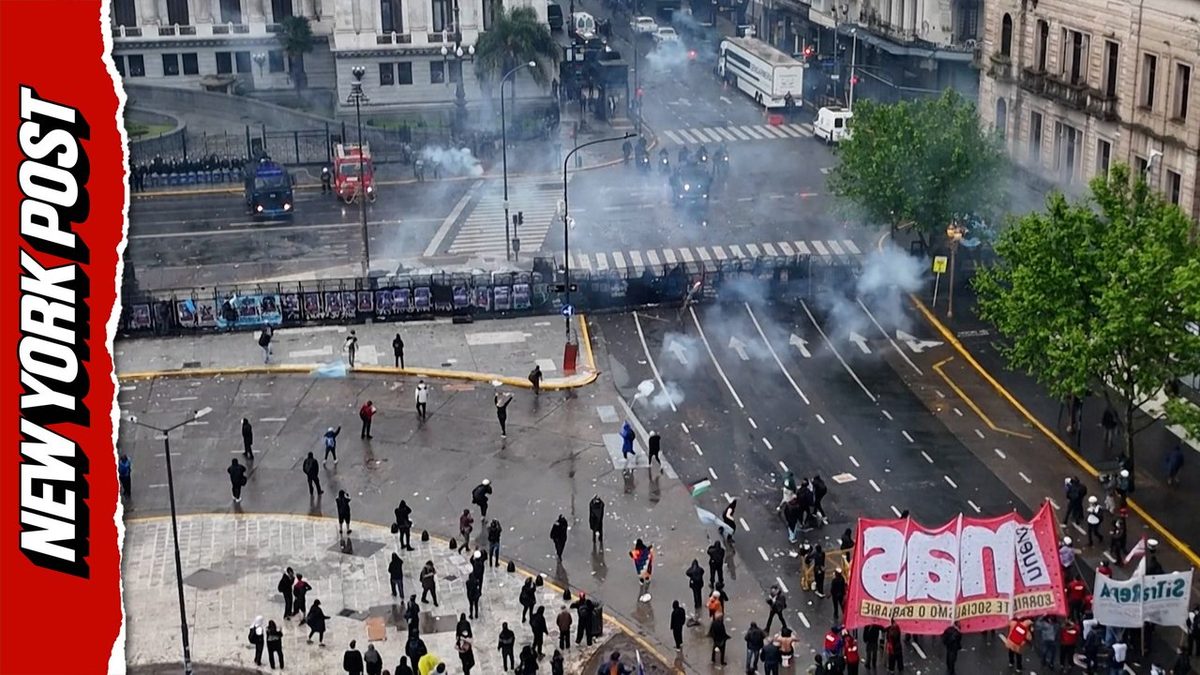
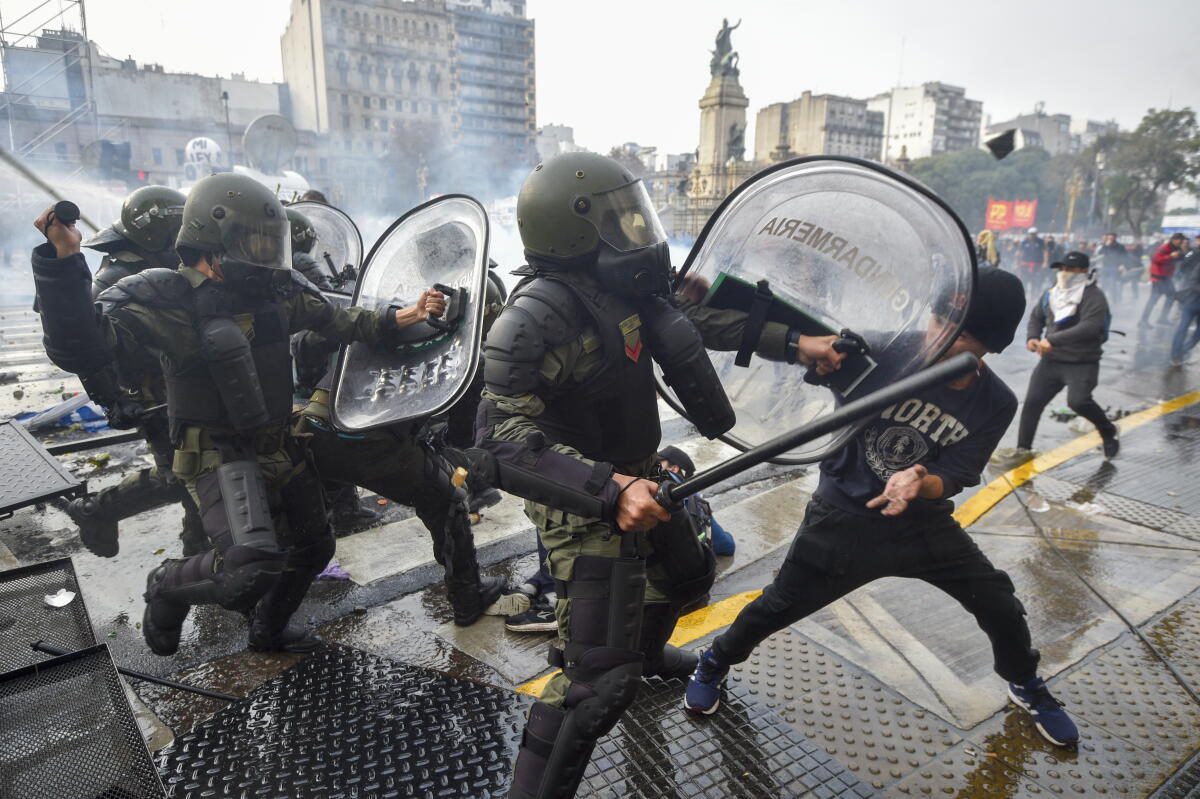
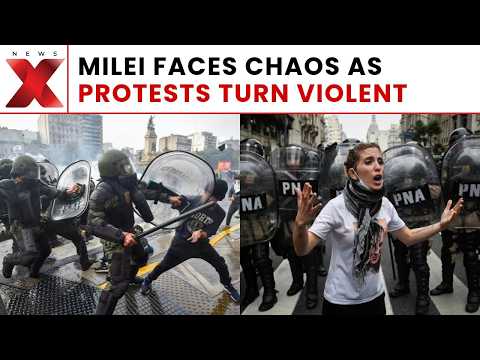
Buenos Aires police fired tear gas and water cannons into a crowd of students, professors and university staff outside Congress on October 15, 2026. It was the fifth mass march for public universities since Milei took office, and it ended with at least 25 people detained.

The fight centers on the 2025 University Funding Law, which Congress passed, Milei vetoed, and Parliament overrode. The government still won't implement it, citing the roughly 11 trillion pesos it would cost. A federal judge fined cabinet chief Diego Santilli 100,000 pesos per day until that penalty was provisionally suspended hours before the march.

Why it matters

The outcome decides whether Argentina's free public university system survives one of the country's harshest austerity drives in decades.

Questions about this story

Free account needed to ask — your question is kept and asked for you right after sign-up. Answers are public.

No questions yet — be the first to ask.

Key Indicators

5
University funding marches since late 2023
October 15 was the fifth mass march in defense of public universities under Milei.
41%
Real-terms cut in university public spending, H1 2026 vs H1 2023
Calculated by the Center for National Economic Research of the University of Buenos Aires.
100K pesos/day
Daily fine on cabinet chief for funding non-compliance
Imposed by federal judge Martín Cormick; suspended provisionally on October 15.
25+
Detained in October 15 protest
Some reports put the total above 30; several security force members were also injured.
11 trillion
Pesos universities demand for 2027 budget
The amount the government would need to allocate to comply with the funding law.
2%
Monthly inflation rate
Milei's austerity has brought inflation down to roughly 2% per month from much higher levels.

Voices

Curated perspectives — historical figures and your fellow readers.

Ever wondered what historical figures would say about today's headlines?

Sign up to generate historical perspectives on this story.

People Involved

Organizations Involved

Timeline

December 2023 October 2026

6 events Latest: Yesterday
Tap a bar to jump to that date
  1. Fifth university march turns violent in Buenos Aires

    Latest Protest

    Police fire tear gas at marchers near Congress; at least 25 detained. Judge suspends Santilli's fine. Opposition loses quorum for DNU repeal vote.

  2. Government grants 21.33% salary increase

    Policy

    Administration says cumulative raises since December 2023 total 226.80%, arguing court orders are satisfied.

  3. Congress passes University Funding Law over veto

    Legislation

    Law requires inflation-indexed salaries, restored scholarships. Congress overrides Milei's veto.

  4. First massive university march under Milei

    Protest

    Hundreds of thousands march in the first Marcha Federal Universitaria against education funding cuts.

  5. Milei inaugurated; austerity program begins

    Political transition

    Milei takes office and begins sweeping cuts: state layoffs, closed ministries, reduced subsidies.

Scenarios

1

Milei commits university funding in 2027 budget

Possible Resolves by Jan 31, 2027

Discussed by: Infobae reports the Casa Rosada is considering modifying the 2027 budget to move 11 trillion pesos from other budget lines to universities.

Trapped between court orders, daily fines, and a public protest movement, the government relents and includes the university funding allocation in the 2027 budget. It would be framed as a budget adjustment rather than surrendering to political pressure, preserving the fiscal-balance narrative while ending the institutional standoff.

2

Court fines resume; legal standoff grinds on

Likely Resolves by Apr 30, 2027

Discussed by: La Nacion counts 13 judicial instances in the dispute; the government has filed at least nine appeals against court rulings.

The provisional suspension of the 100,000-peso daily fine expires, and the judge either reinstates it or issues a new enforcement order. Whether the government faces renewed penalties or wins an appellate reprieve, the conflict continues through courts and protests without resolution — each side entrenched, no branch backing down.

3

University conflict merges into broader anti-austerity crisis

Unlikely Resolves by Q1 2027

Discussed by: Al Jazeera reports protesters called for a general strike during the October 15 march; TeleSUR notes government resistance extending to disability welfare and pensioners.

The university funding fight becomes the organizing thread for wider opposition to austerity — pensioners' groups, disability welfare recipients, and unions already affected by cuts. A general strike or mass mobilization combining these sectors would turn a single-issue dispute into a broader challenge to Milei's economic program.

Historical Context

3 moments from history that rhyme with this story — and how they unfolded.

April 2024

First Marcha Federal Universitaria (April 2024)

Hundreds of thousands of students, professors, and staff took to the streets across Argentina on April 23, 2024, in the first mass protest against Milei's university budget cuts. The march drew far more people than the government expected, becoming the first major organized resistance to the austerity program.

Then

The government conceded modest salary adjustments but held the structural funding line.

Now

The march established the university community as the most organized opposition force to Milei's cuts, and the series of marches that followed (five by October 2026) shows the conflict escalating rather than fading.

Why this matters now

Today's October 2026 clash is the fifth in that series — the same fight, two years later, with the stakes raised from protest to institutional standoff involving courts, fines, and an overridden law.

December 2001

Argentine economic collapse (December 2001)

After years of recession and austerity measures tied to the currency board system, Argentina's economy collapsed in late 2001. Riots and looting erupted nationwide; when the government declared a state of siege and police killed protesters in Buenos Aires, President Fernando de la Rúa resigned, fleeing the Casa Rosada by helicopter on December 20.

Then

Five presidents in two weeks, a sovereign default, and the end of the peso's dollar peg.

Now

The 2001 crisis made fiscal austerity deeply unpopular in Argentina and embedded distrust of economic orthodoxy in the country's political culture.

Why this matters now

It shows how austerity-driven unrest can, under the right conditions, unravel governments in Argentina. Milei's adjustment is the harshest since that era, and the university funding conflict is the most organized resistance to it so far.

July 1966

Night of the Long Batons (1966)

After General Juan Carlos Onganía's military coup, police stormed the University of Buenos Aires on July 29, 1966, beating students and professors who resisted the regime's takeover of the university. Dozens were injured and many academics fled into exile.

Then

University autonomy was suppressed, but the repression radicalized the academic community and fueled broader resistance to the dictatorship.

Now

The event became a symbol of state violence against education in Argentina and reinforced the tradition of university autonomy and student mobilization as core national values.

Why this matters now

It's the benchmark reference point for state force against the university community in Argentina — the historical frame through which many understand today's tear gas and detentions outside Congress.

Sources

(10)